

Tuwo Shinkafa (Hausa Rice Swallow)
Aperçu
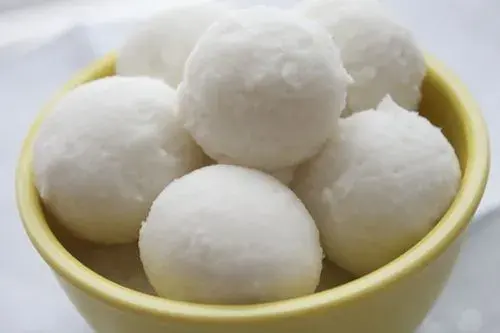
Tuwo shinkafa is the rice swallow of northern Nigeria and Niger, made by cooking soft short grain rice past the point most cooks would stop, then mashing it against the side of the pot until the grains give up their structure and come together as a smooth dough. Tuwo is a Hausa word meaning stiff porridge, and it names a whole family rather than one dish. Tuwo masara is made from maize, tuwo dawa from guinea corn or sorghum, and tuwo alkama from wheat. Shinkafa is rice, and it is the version most associated with Hausa cooking and the one most often served to guests. What it is eaten with matters as much as what it is. Northern Nigerian soups are its natural partners: miyan taushe made with pumpkin, miyan kuka from powdered baobab leaf, miyan wake from beans, and okra and egusi alongside them. In Ghana the same preparation is called omo tuo and goes with groundnut soup or palm nut soup, which is a different set of flavours around an identical technique. The rice variety is the one thing that cannot be compromised: it has to be soft and sticky, and long grain will not do it.
Note de Patrimoine AFN
Tuwo shinkafa belongs to the Hausa cooking of northern Nigeria and Niger and is one of a family of tuwo preparations distinguished by grain, alongside tuwo masara from maize, tuwo dawa from sorghum and tuwo alkama from wheat. The same preparation is known as omo tuo in Ghana.
Ingrédients
Les mentions alimentaires sont fournies par les contributeurs à titre indicatif. Elles ne sont pas vérifiées par AFN et dépendent des produits que vous achetez. En cas d’allergie grave, vérifiez vous-même chaque ingrédient. Cuisine, allergies et votre propre jugement
Préparation
- 1
Rinse the rice well to remove excess starch.
- 2
Put the rice in a large pot and cover it with water, leaving plenty of space so it does not boil over.
- 3
Set the pot over medium heat and bring the water to a boil.
- 4
As the liquid is absorbed, reduce the heat to low and test the rice by pressing a grain between your fingers. It should be extremely soft, almost melting.
- 5
If it is not soft enough, add a little more water and keep cooking, testing as you go.
- 6
Once the rice is soft, reduce the heat to its lowest setting and start mashing and folding the rice against the side of the pot with a wooden spoon.
- 7
Keep mashing and folding until the grains come together into a smooth, cohesive dough.
- 8
Take the pot off the heat.
- 9
Wet your hands or a spoon and shape the dough into smooth balls.
- 10
Serve warm with a northern Nigerian soup.
Notes de l’Africook
 Notes personnelles de Deborah Olayiwola
- Use soft short or medium grain sticky rice. Long grain rice stays separate however long you cook it and will not form a dough.
- Overcook the rice deliberately. The point at which normal rice would be ruined is where tuwo begins.
- Mash against the side of the pot rather than stirring in the middle. The pressure against a hard surface is what breaks the grains down.
- Wet your hands or your spoon before shaping. The dough is sticky and will otherwise cling to everything.
- Serve it warm. Tuwo firms up considerably as it cools and is much harder to eat cold.
Questions fréquentes
What kind of rice do I need?
Soft, short or medium grain sticky rice. It has to be a variety that breaks down and releases its starch, which is what allows the grains to bind into a dough. Long grain rice, basmati and jasmine will not work: they stay separate no matter how long you cook them. Local soft rice is what is used in northern Nigeria.
What is the difference between the types of tuwo?
The grain. Tuwo shinkafa is rice, tuwo masara is maize, tuwo dawa is guinea corn or sorghum, and tuwo alkama is wheat. The technique is the same in each: cook the grain very soft, then mash it into a dough. They differ in colour, flavour and texture, and which one a household makes usually reflects what is grown locally.
What soups go with tuwo shinkafa?
The northern Nigerian soups above all: miyan taushe made with pumpkin, miyan kuka from powdered baobab leaf, miyan wake from beans, and okra soup. Egusi and gbegiri are also eaten with it. In Ghana, where it is called omo tuo, it is served with groundnut soup or palm nut soup.
Can I make it ahead?
It is best fresh and warm, since it firms considerably as it cools. If you must make it ahead, wrap the shaped balls tightly and reheat them by steaming rather than microwaving, which dries the surface. Most households make it to order because the whole process takes under 45 minutes.
Avis
4 avis
Vous Aimerez Aussi
Voir toutes les recettes Nigeria →
Edo Black Soup
Nigerian Fisherman Soup
Igbo Yam Porridge
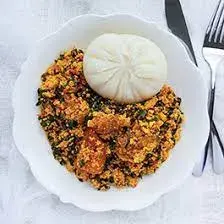
The key really is waiting until that rice is completely melting between your fingers before you start mashing. I had to add extra water twice to get the rice soft enough, but it turned out so smooth. Ate it with miyan kuka, e sweet sha!
my mum always says if you can still feel individual grains when you press it then it is not ready o! Mine took almost 50 mins on low heat before it was soft enough to stir into a smooth swallow, 35 minutes wasnt enough for my pot.
Couldnt find proper tuwo rice near me in Thamesmead so I just bought medium grain sushi rice from the Asian store in Woolwich. Worked surprisingly well, just needed more water than stated so the grains would break down properly.
Had to pop down to the Oriental food store on Clare Road in Cardiff to find sticky rice. Testing a grain between my fingers to make sure it was completely soft worked like a charm. Served it with a spicy beef soup.