

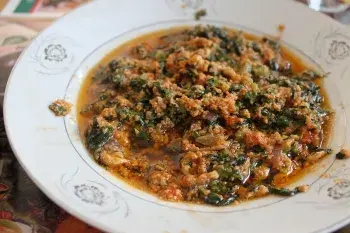
Superkanja (Gambian Okra Stew)
Aperçu
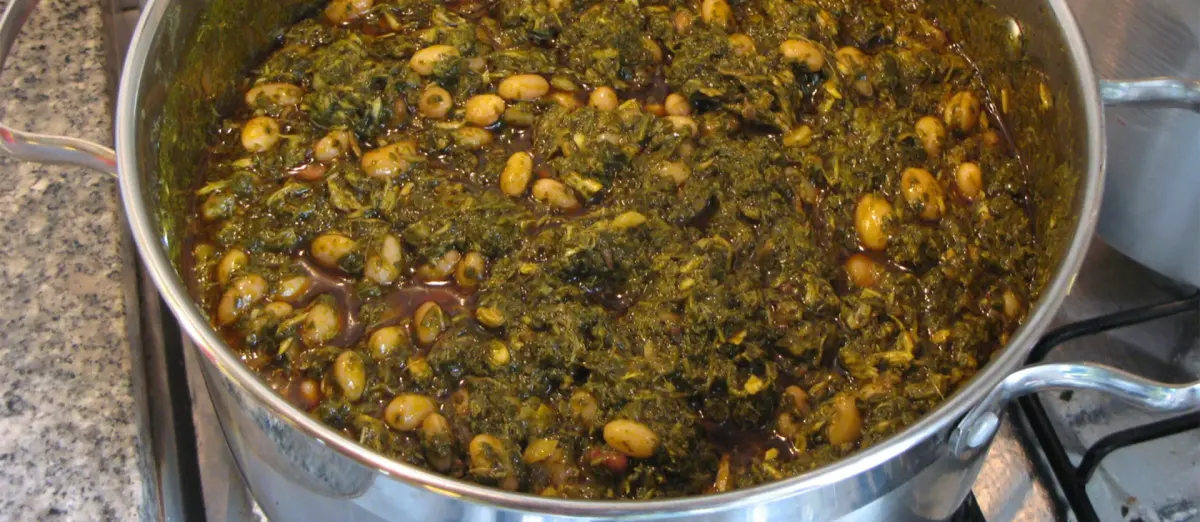
Superkanja is the Gambian okra stew, and its name is a small piece of linguistic history in itself. Supa comes from the Portuguese sopa, meaning soup, and kanja is the West African word for okra, so the name is a compound of the two languages that met on that coast. It is also written supa kanja, supakanja and kanjadaa. Okra gives it the texture it is known for, thick and drawing, and the stew carries leafy greens alongside it: spinach, collards, sweet potato leaves, whatever is available. Palm oil, onion, chilli and either fish or meat complete it, and smoked catfish is the traditional choice for the depth it brings. Related dishes exist across the region, and Ghanaian kontomire works on a similar principle. It is Saturday lunch food in the Gambia, eaten in both rural and urban households, and it is served either as a soup in its own right or ladled over rice as a stew. Fufu is the other standard partner. The baking powder in the ingredient list is not a mistake and not a leavening agent: a small quantity is used to help the okra break down and soften, which is the texture Gambians are aiming for.
Note de Patrimoine AFN
Superkanja is a Gambian okra stew whose name combines the Portuguese sopa with the West African kanja, meaning okra. It is also recorded as supa kanja, supakanja and kanjadaa, and is conventionally eaten at Saturday lunch.
Ingrédients
Les mentions alimentaires sont fournies par les contributeurs à titre indicatif. Elles ne sont pas vérifiées par AFN et dépendent des produits que vous achetez. En cas d’allergie grave, vérifiez vous-même chaque ingrédient. Cuisine, allergies et votre propre jugement
Préparation
- 1
Cut the meat into chunks and wash it thoroughly.
- 2
Boil the meat and fish together in a pot with enough water for 15 minutes, then remove the fish from the pot.
- 3
Add the salt, onions, pepper and diced okra to the pot and mix well.
- 4
Cook over medium heat for 15 minutes, then add the palm oil.
- 5
Reduce the heat to low and simmer for 20 minutes, stirring occasionally.
- 6
Return the fish to the pot and simmer for a further 6 to 10 minutes on low heat.
- 7
Add crab or shrimp at this stage if you want them.
- 8
Serve with white rice or fufu.
Notes de l’Africook
- Cook the okra until it has broken down into small pieces. That is the texture the dish is aiming for, and stopping early leaves it firm and wrong.
- The small quantity of baking powder is there to help the okra soften. It is not a leavening agent and should not be increased.
- Take the fish out before the long simmer and return it at the end, or it disintegrates completely into the stew.
- Two cups of palm oil looks like a great deal and is characteristic of the dish. Reduce it if you prefer, accepting that the texture and colour change.
- Dice the okra small and evenly. Large pieces stay firm while the small ones have already collapsed.
Questions fréquentes
What does the name superkanja mean?
It is a compound of two languages. Supa comes from the Portuguese sopa, meaning soup, a trace of Portuguese contact along the West African coast, and kanja is the West African word for okra. So the name means, more or less, okra soup. It is also written supa kanja, supakanja and kanjadaa.
Why is there baking powder in it?
To help the okra break down. A small quantity softens the okra and encourages it to collapse into the thick, drawing texture the stew is known for. It is not acting as a leavening agent here and the amount should stay small; a quarter teaspoon for two pounds of okra is the proportion given.
What greens can I use?
Spinach, collard greens and sweet potato leaves are all traditional and are used according to what is available. Kale works outside West Africa. The greens are there for body and nutrition rather than for a particular flavour, so the substitution is more forgiving than in most West African soups.
What is superkanja served with?
White rice most commonly, with the stew ladled over it, or fufu. In the Gambia it is associated with Saturday lunch specifically. Whether it counts as a soup or a stew depends on how thick you make it and how it is served, and Gambians use both words for it.
Avis
3 avis
managed to get proper smoked catfish down Rye Lane to make this. Was worried the 2 cups of palm oil would be too heavy so I used a bit less, but taking the fish out after 15 mins so it doesn't break into tiny pieces in the pot worked a treat. Reminds me of home.
Had to visit an Afro-Caribbean grocer to find red palm oil and dried smoked fish, as my local supermarket didn't stock them. Boiling the beef with the fish at the start creates such a rich stock. Turned out lovely, though chopping 2lbs of okra took me ages!
used beef and good smoked catfish for this. That small 1/4 teaspoon of baking powder really helped the diced okra draw nicely. The palm oil ratio is heavy but e sweet well well with tuwo. Very filling meal o.