
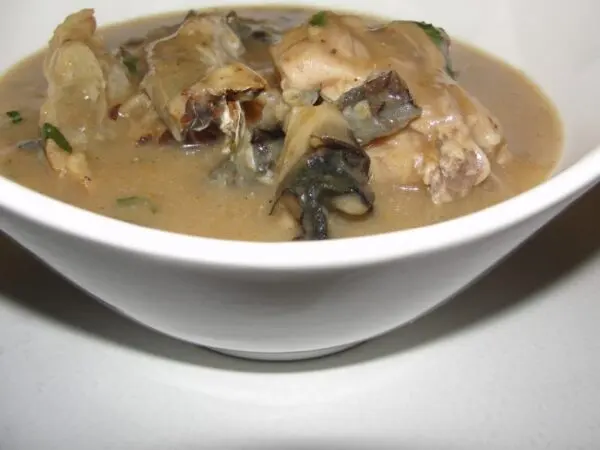
Ofe Nsala
Aperçu
Ofe Nsala, known widely as White Soup, is a light, fragrant Nigerian soup that earns its name from its pale, broth-like appearance. Unlike most Nigerian soups that use palm oil as a base, Nsala gets its body from raw yam or yam powder, which thickens the broth naturally and gives it a distinctive silky texture. The soup is intensely peppery and aromatic, built around catfish and the bitter, slightly tangy utazi leaves that cut through the richness of the protein. It is a popular comfort food in southeastern Nigeria, particularly enjoyed on cold evenings and served at celebrations in Igbo communities.
Note de Patrimoine AFN
Ofe Nsala originates from the riverine communities of Anambra and Imo states in southeastern Nigeria, where freshwater catfish has always been abundantly available. The soup is deeply rooted in Igbo culinary tradition and is particularly associated with communities along the Niger River, where it is often prepared for naming ceremonies and traditional festivals.
Ingrédients
Les mentions alimentaires sont fournies par les contributeurs à titre indicatif. Elles ne sont pas vérifiées par AFN et dépendent des produits que vous achetez. En cas d’allergie grave, vérifiez vous-même chaque ingrédient. Cuisine, allergies et votre propre jugement
Préparation
- 1
Cut the catfish into 1 inch thick cylindrical discs and remove the intestines.
- 2
Place in bowl and pour very hot water on the fish. This process of pouring hot water on the fish toughens the skin of the fish so that the pieces do not disintegrate while cooking the soup. Leave for about 2 minutes and wash the fish with cold water. You should also wash off any slimy substance on the outer skin of the fish at this time.
- 3
Boil a few cubes of raw white yam. When soft, pound with a mortar and pestle till a smooth paste is formed, then set aside.
- 4
You can substitute white yam with yam powder or potato puree for the thickening.
- 5
Wash and pound/blend the utazi leaves, the chilli pepper and the crayfish and set aside. Utazi is bitter in taste and only used for flavouring so one or two leaves should be enough especially when using the fresh leaves.
Avis
Soyez le premier à noter cette recette
Vous l’avez cuisinée ? Votre note aide la personne suivante à se décider.
Aucun avis sur cette recette pour le moment. Si vous l’avez cuisinée, le vôtre serait le premier.
Vous Aimerez Aussi
Voir toutes les recettes Nigeria →
Edo Black Soup
Nigerian Fisherman Soup
Igbo Yam Porridge