
Chicken Curry Sauce
Aperçu
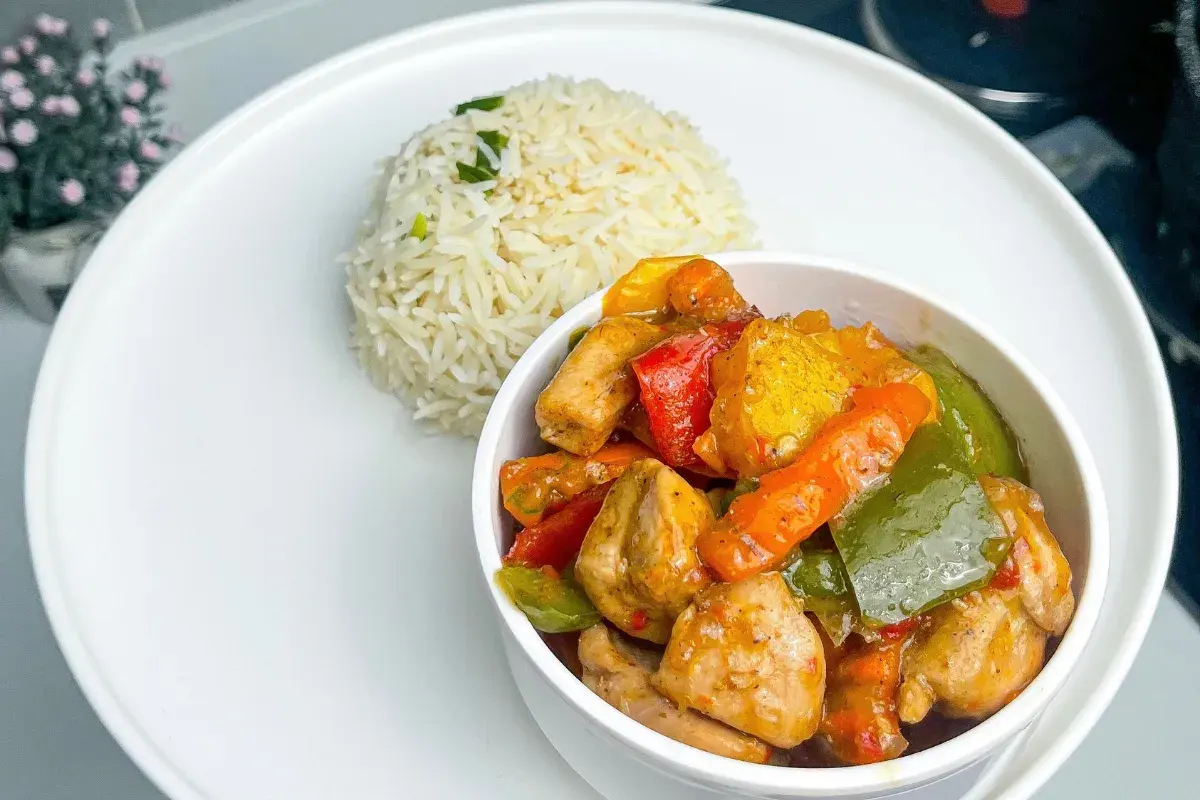
This is a Nigerian take on a curry sauce: chicken breast marinated in ginger, garlic and all purpose seasoning, cooked with carrots and bell peppers, and thickened with a cornstarch slurry rather than reduced or enriched with cream. Two things mark it as Nigerian rather than South Asian. The first is yaji, the suya spice built on ground peanuts, paprika, cayenne, ginger and garlic, which goes in alongside the curry powder and gives an aromatic depth no Indian curry would have. The second is the cornstarch slurry, which is how a great many Nigerian sauces are thickened, giving a glossy sauce that clings rather than a reduced one. The vegetables are meant to keep their bite. Carrots and bell peppers go in after the onion and are cooked only until slightly tender, which is characteristic of Nigerian party cooking, where texture and colour matter as much as flavour. The heat is moderate and adjustable through the scotch bonnet. Because yaji contains ground peanuts, this dish carries a peanut allergen despite nothing in its name suggesting one.
Ingrédients
Les mentions alimentaires sont fournies par les contributeurs à titre indicatif. Elles ne sont pas vérifiées par AFN et dépendent des produits que vous achetez. En cas d’allergie grave, vérifiez vous-même chaque ingrédient. Cuisine, allergies et votre propre jugement
Préparation
- 1
Combine the chicken breast pieces with the ginger and garlic powder, all purpose seasoning, salt and seasoning cubes in a mixing bowl. Mix thoroughly so everything is evenly coated.
- 2
Cover and let the chicken marinate for 10 minutes.
- 3
Add the marinated chicken to hot oil and cook for a few minutes.
- 4
Sauté the chopped onions until translucent, then add the scotch bonnet, carrots and bell peppers, cooking until slightly tender but still crunchy.
- 5
Add the light soy sauce and yaji or suya spice to taste, and stir until well combined.
- 6
To thicken the sauce, slowly pour in the cornstarch slurry while stirring continuously.
- 7
Serve hot over steamed rice or with your choice of accompaniment.
Notes de l’Africook
 Notes personnelles de Sobecooks
- Pour the cornstarch slurry in slowly while stirring. Added at once it seizes into lumps that will not disperse.
- Stop cooking the vegetables while they still have crunch. Soft carrots and peppers are the main way this dish goes wrong.
- Yaji contains ground peanuts, so this carries a peanut allergen even though nothing in the name suggests it.
- Chicken breast dries out quickly. Cook it briefly and let it finish in the sauce rather than cooking it through at the start.
- The slurry is a Nigerian way of thickening rather than an Indian one. A cup is a lot: add it gradually and stop when the sauce coats a spoon.
- Ten minutes of marinating is a minimum. Half an hour or more makes a noticeable difference with breast meat.
Questions fréquentes
How is this different from an Indian curry?
The seasoning and the thickening. This uses yaji, the Nigerian suya spice built on ground peanuts, alongside curry powder, and it is thickened with a cornstarch slurry rather than reduced or enriched with cream, yoghurt or ground nuts. The vegetables also stay crunchy, which is characteristic of Nigerian cooking.
Does it contain peanuts?
Yes, through the yaji or suya spice, which is built on ground peanuts. There is no version of yaji without them. Anyone with a peanut allergy should avoid the dish or leave the yaji out entirely, in which case add a little extra paprika, cayenne and ginger in its place.
Can I use a different cut of chicken?
Yes, and thighs are better. Breast dries out quickly and this recipe cooks it twice, first in oil and then in the sauce. Boneless thigh stays moist and has more flavour. If you use breast, cook it briefly and let it finish in the sauce rather than cooking it through first.
What is it served with?
Steamed rice most commonly, which soaks up the glossy sauce. It also works with boiled yam, plantain or potatoes, and with any flatbread. In West African usage a sauce is something spooned over a starch rather than eaten as a soup on its own, so the choice of base matters less than having one. Coleslaw alongside is a common addition when it is served to guests.
Avis
Soyez le premier à noter cette recette
Vous l’avez cuisinée ? Votre note aide la personne suivante à se décider.
Aucun avis sur cette recette pour le moment. Si vous l’avez cuisinée, le vôtre serait le premier.
Vous Aimerez Aussi
Voir toutes les recettes Nigeria →
Edo Black Soup
Nigerian Fisherman Soup
Igbo Yam Porridge