

Beans Porridge
Aperçu
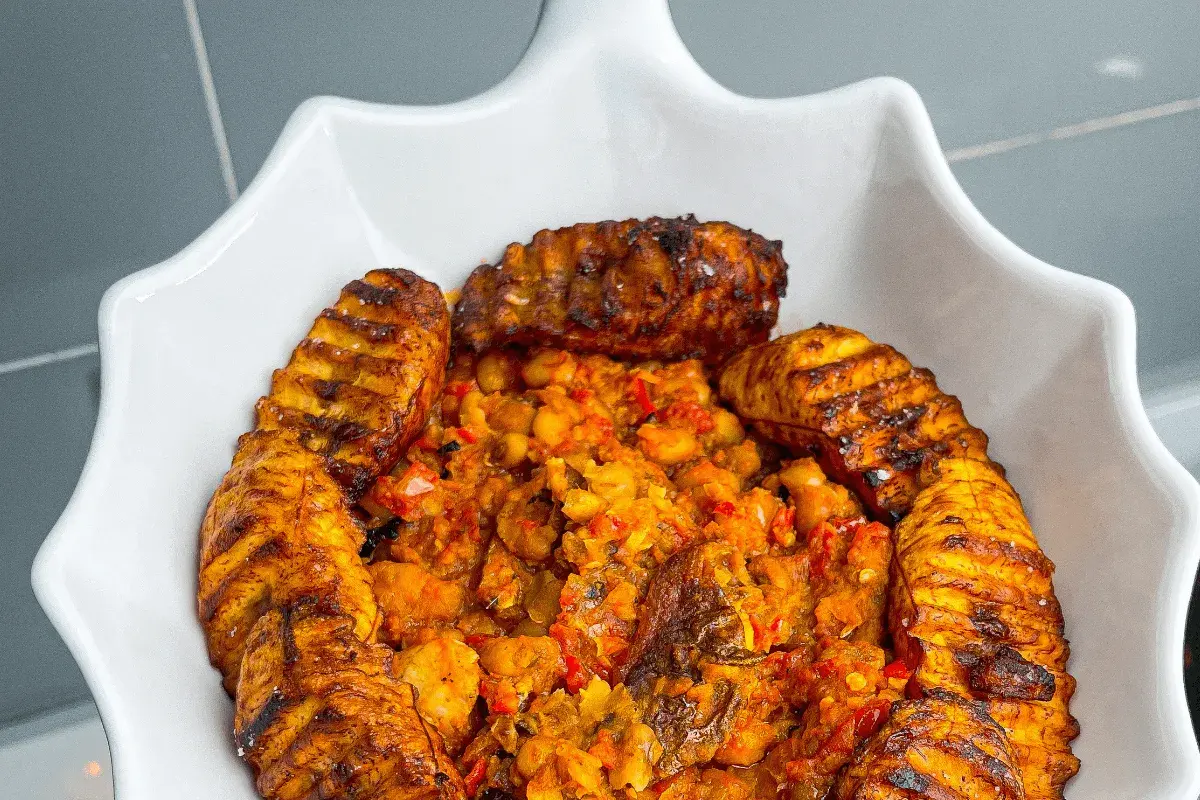
Beans porridge is one of the most-eaten dishes in Nigerian homes: beans cooked soft, then finished in a palm oil base with blended pepper, smoked fish, crayfish and ugwu. It is weekday food, made in quantity, and it is as likely to appear at breakfast as at dinner. The palm oil base is what separates it from plain cooked beans. Onion is softened in the oil, blended tomato and pepper go in and are cooked until the oil separates out, and only then do the beans join. That separation is the marker Nigerian cooks watch for: it means the raw tomato has cooked off and the base is ready. Ugwu, the fluted pumpkin leaf, goes in at the end and needs only a few minutes to wilt. It is one of the most widely used greens in southern Nigeria and gives the dish its colour and a mild, slightly nutty flavour. Fried ripe plantain is the standard partner, and the sweetness against the savoury beans is why that pairing has stuck. Yam and rice also work. Despite the beans and vegetables, this is not a vegetarian dish as written: the crayfish and smoked fish are doing much of the seasoning.
Note de Patrimoine AFN
Beans porridge is a Nigerian home dish of beans finished in a palm oil, pepper and smoked fish base, conventionally served with fried ripe plantain.
Ingrédients
Les mentions alimentaires sont fournies par les contributeurs à titre indicatif. Elles ne sont pas vérifiées par AFN et dépendent des produits que vous achetez. En cas d’allergie grave, vérifiez vous-même chaque ingrédient. Cuisine, allergies et votre propre jugement
Préparation
- 1
Heat the palm oil in a large pot over medium heat.
- 2
Add the chopped onions and sauté until translucent.
- 3
Stir in the roughly blended tomatoes and pepper mix, and cook until the oil starts to separate from the tomato.
- 4
Add the smoked fish, crayfish and seasoning cubes, and stir well to combine.
- 5
Pour in the cooked beans and stir gently. If the mixture is too thick, add some water to reach the consistency you want.
- 6
Let the beans simmer for about 10 to 15 minutes so the flavours meld and the palm oil works through.
- 7
Add the chopped ugwu, stir, and cook for a few minutes until the leaves wilt and soften.
- 8
Serve hot with fried ripe plantain.
Notes de l’Africook
 Notes personnelles de Sobecooks
- Wait for the oil to separate from the tomato before the beans go in. That separation is the sign the base is properly cooked, and adding the beans early leaves a raw, sharp taste.
- Cook the beans until genuinely soft beforehand. They will not soften further once they are in the oily base.
- Add the ugwu at the very end. A few minutes is enough, and overcooked pumpkin leaf goes grey and slimy.
- Adjust the consistency with water rather than more oil. Beans absorb liquid as they stand and it thickens on the plate.
- Fried ripe plantain is the pairing most Nigerians would name first, and the sweetness against the savoury beans is the point of it.
- It is better the next day and reheats well with a splash of water.
Questions fréquentes
What beans should I use?
Brown beans or black eyed peas are the standard Nigerian choices and are sold at African grocers. Any bean that cooks to softness without disintegrating will work. What matters more is cooking them properly beforehand, since they will not soften once they are in the palm oil base.
Is beans porridge vegetarian?
Not as written. The crayfish and smoked fish are doing a large part of the seasoning, not just adding protein. A vegetarian version works if you lean harder on the pepper base, onion, seasoning and a good stock, but it is a noticeably different dish rather than the same one minus two ingredients.
What is ugwu and can I substitute it?
Ugwu is the fluted pumpkin leaf, one of the most widely used greens in southern Nigeria, with a mild, faintly nutty flavour. Spinach is the usual substitute outside Nigeria and works well. Kale needs a little longer. Frozen ugwu is sold at Nigerian grocers and is closer than any fresh substitute.
What is it served with?
Fried ripe plantain above all. Yam and rice are also common, and it is substantial enough to eat on its own. It is served at breakfast, lunch and dinner without distinction, which is part of why it is made so often in Nigerian homes.
Avis
5 avis
Vous Aimerez Aussi
Voir toutes les recettes Nigeria →
Edo Black Soup
Nigerian Fisherman Soup
Igbo Yam Porridge
I had to search everywhere in North Seattle for red palm oil and ground crayfish. Coming from Ethiopian cooking where we use niter kibbeh and berbere, the combination of smoked fish with the scotch bonnet and palm oil sauce was such a unique depth of flavor. We ate it with bread, but next time I might try a bit on injera.
Getting fresh shombo in Berlin is impossible abeg, so i had to use normal red peppers from Turkish market and extra habanero. It took way longer than 60 mins because my brown beans were stubborn to soften before stirring into the sauce, ended up a bit too thick but the crayfish saved the taste o.
Bought some fresh ugwu from Rye Lane yesterday just to make this. The trick really is letting the palm oil and tomato pepper mix fry properly until the oil separates before putting the smoked fish. My house smells amazing right now, e sweet die sha.
my grandmother in cape coast always said you must fry the chopped onions in the palm oil until they are almost dark before adding the tomato, it gives the beans porridge a deeper taste. herh the smoked fish and ugwu combination is top tier oo.
chale this came out very nice oo. couldn't get ugwu at the afro market on morse rd so i just used chopped spinach at the end. still tasted like home paa, especially with the smoked fish and crayfish flavor.