

Berkoukes
Aperçu
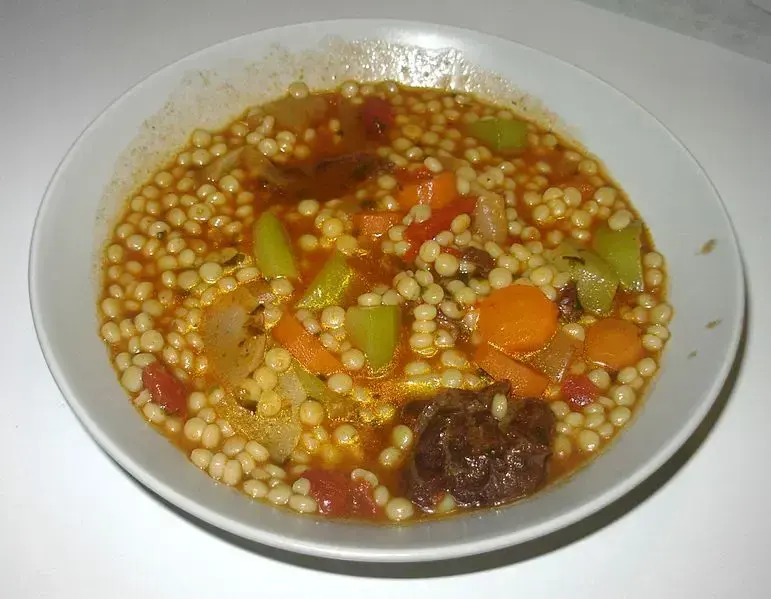
Berkoukes is both a pasta and the dish made from it. The pasta is hand-rolled semolina in small balls, larger than couscous and smaller than a pea, and the dish is the Algerian Berber stew built around it with meat, seasonal vegetables and pulses. It has several names depending on region: aïche, m'hamessa, abazine. The distinction between berkoukes and m'hamsa is size, with berkoukes the larger balls and m'hamsa the smaller. The grains are rolled by hand in a wide dish, traditionally wood or earthenware and now usually metal, which is slow work and why most households buy it ready made. It is winter food and it carries a season. Berkoukes is eaten in Algeria and northeastern Morocco through the cold months and particularly in January, when it marks the harvest of beans, dried fruit and meats, and it reads as a dish of abundance and generosity. The Kabylia version includes quedid, the dried meat also called achadhelouh, along with khlili, the dried mutton fat, and cultured smen. It is served with kesra or another rustic country bread. The source struggles for a word for its consistency and settles on scoup, which is fair: it is too thick for soup and too brothy for stew.
Note de Patrimoine AFN
Berkoukes is a Berber dish of Algeria and northeastern Morocco, built on hand-rolled semolina pasta balls also known as aïche, m'hamessa or abazine. It is eaten in winter, particularly in January, to mark the harvest.
Ingrédients
Préparation
- 1
Chop the vegetables and the meat.
- 2
Brown the beef in oil. Once browned, add the aromatics: onions, garlic and carrots, and sauté.
- 3
Push the ingredients to one side of the pot and add the tomato paste. Caramelise it for a minute or two.
- 4
Add about 2.5 litres of water.
- 5
Add the spices, bay leaf, lentils, and the quedid if using.
- 6
Bring to the boil, then lower to a gentle simmer.
- 7
Once the meat is tender, add half the herbs, the chickpeas, courgettes and potatoes, and cook for a further 10 minutes.
- 8
Add the peas and the berkoukes to the broth.
- 9
The berkoukes cooks in about 15 minutes, but watch it closely, as it soaks up the broth quickly and will catch. Stir frequently.
- 10
Once the berkoukes is quite tender, not al dente, stir in the remaining herbs. There should still be a little thickened broth.
- 11
Serve hot with kesra or another rustic country bread.
Notes de l’Africook
- Watch the pot once the berkoukes goes in. It absorbs broth fast and will catch and burn on the bottom if left alone.
- Cook the berkoukes until genuinely tender rather than al dente. This is not Italian pasta and firm grains are not the aim.
- Caramelise the tomato paste against the side of the pot before the liquid goes in. It is a small step that adds a lot.
- Add half the herbs early and half at the end, so you get both the cooked depth and the fresh aroma.
- If you cannot find quedid, a smoky halal salami is the source's suggested substitute, or leave it out entirely.
- Diced turnip, called luft in Algeria, is a common addition. Chickpeas, lentils or both is a matter of preference.
Questions fréquentes
What is berkoukes?
Both a pasta and a dish. The pasta is hand-rolled semolina in small balls, larger than couscous, also called aïche, m'hamessa or abazine. The dish is the Algerian Berber stew built around it. Berkoukes are the larger balls and m'hamsa the smaller; both are sold ready made at North African grocers.
Is it a soup or a stew?
Neither, quite. It is too thick and chunky for a soup and too brothy for a stew, and the source coins the word scoup for it. There should be a little thickened broth remaining when it is done, not enough to be soup and not so little that it is dry.
What can I use instead of berkoukes pasta?
Small ball-shaped pasta such as fregola, or the Italian shapes sold as acini di pepe or plomb. Israeli or pearl couscous is close in size and works. Ordinary fine couscous does not: it is far too small and cooks in a fraction of the time, dissolving into the broth.
What is quedid?
Quedid, called achadhelouh in Kabyle, is dried preserved meat used in Algerian cooking, particularly in the Kabylia region. It gives a concentrated, slightly funky depth. If you cannot find it, the source suggests a smoky halal salami as a substitute, or simply leaving it out.
Avis
3 avis
I used acini de pepe pasta since I couldn't source authentic berkoukes in my neighborhood, and it worked out great. Caramelizing the tomato paste right in the pot before adding the 2.5 liters of water gave the broth such a deep color. Quick question though: should the lentils go in at the very start, or later so they don't get mushy? Ours were super soft, but my partner still cleared his bowl.
Could not get actual berkoukes pasta here in Manchester so I bought giant couscous from the Arab shop in Cheetham Hill, worked really well. Skipped the quedid sha since salted meat is tricky to find here. The cumin and harissa smell filled the whole flat, but it took me about 80 mins total for the beef to get properly tender.
Made this yesterday when rain was falling in Abuja. That step where you push the beef to the side to caramelise the tomato paste makes a huge difference, the depth of flavour e sweet well well. Added extra harissa because my husband loves pepper o. Next time I will add more quedid if I can find good dried beef.