
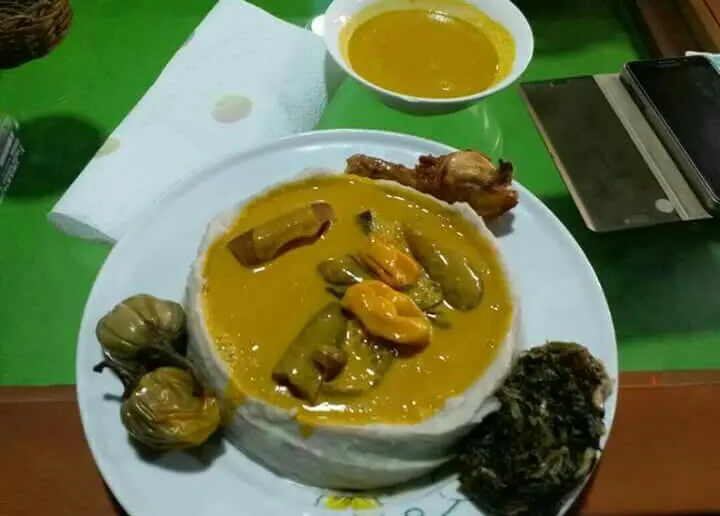
Achu Soup (Yellow Soup)
Abuja, Nigeria · Voir toutes les recettes
Aperçu
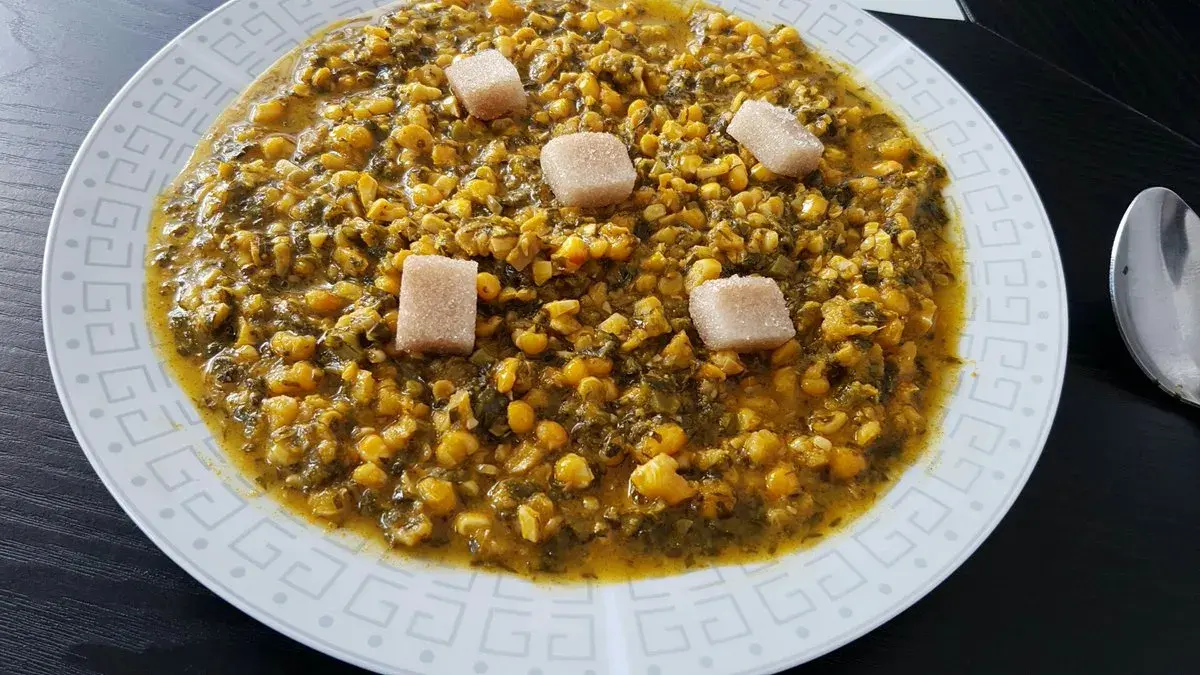
Achu soup, called yellow soup for its colour, is a Cameroonian speciality from the North West region, served with pounded cocoyam. The colour is the result of a chemical reaction rather than a spice. Red palm oil is worked together with limestone water, kanwa, ground limestone dissolved and strained, and the alkali reacts with the oil to turn it from deep red to a bright yellow, at the same time thickening it into a smooth, slightly slippery sauce. Nothing else produces that colour, which is why the soup cannot be made without it. Achu itself is the accompaniment: cocoyam boiled and pounded to a smooth, elastic paste, served in a mound with a well pressed into the centre for the soup. Eating it has its own form. The soup is poured into the well and the achu is taken from the edges with the fingers, dipped, and eaten. It is a dish that takes a long time to prepare and is associated with occasions. Achu spice, a regional blend, and assorted meat including tripe and cow skin complete it. **Uses limestone.** Traditional in culinary quantity; measure rather than estimate.
Note de Patrimoine AFN
Achu soup takes its yellow colour from a reaction between red palm oil and limestone water (kanwa), which also thickens the sauce. It is served with achu, pounded cocoyam, in Cameroon's North West region.
Ingrédients
Les mentions alimentaires sont fournies par les contributeurs à titre indicatif. Elles ne sont pas vérifiées par AFN et dépendent des produits que vous achetez. En cas d’allergie grave, vérifiez vous-même chaque ingrédient. Cuisine, allergies et votre propre jugement
Préparation
- 1
In medium, sized saucepan boil meat, season with salt, hot pepper, and Maggie until tender (approximately 30-60 minutes depending on the choice of meat). You can shorten this process in half by using a pressure cooker. Reserve the stock (preferably 6 cups or more).
- 2
Boil the cow skin and tripe together or you may do so separately until tender. Remove cow skin, tripe. Set aside.
- 3
Let the stock come to room temperature before using.
- 4
While meat is boiling grind limestone and warm
- 5
In a blender, pulse stock, limestone, oil and achu spice, until all the ingredients have been fully incorporated and it has turned into yellowish color.
- 6
Adjust salt and Maggie according to taste.
- 7
Voila achu soup- you may add the meat at the point or serve with meat on the side.
Notes de l’Africook
- Dissolve the limestone and strain it thoroughly before use. Undissolved grit is unpleasant and hard to remove later.
- Add the limestone water gradually to warm palm oil while stirring, the colour change tells you it is working.
- Pound the cocoyam while hot. Cooled cocoyam will not come smooth and stays lumpy.
- Warm the palm oil rather than heating it hard. Too hot and the emulsion breaks.
Questions fréquentes
Why is the soup yellow?
Because of a reaction between red palm oil and limestone water. The alkali in the limestone changes the oil's pigment from deep red to bright yellow and thickens it at the same time. It is a chemical change, not a spice, and there is no other way to get the colour or the texture.
Is limestone safe to eat?
Ground limestone, kanwa, is used in small culinary quantities across West and Central African cooking as an alkali, for this soup, for emulsifying palm oil in nkwobi, and for softening beans. It has a long history of such use. It should be measured rather than estimated, dissolved and strained, and not used heavily.
What is achu?
Achu is pounded cocoyam, boiled taro corms worked into a smooth elastic paste, and it is the accompaniment the soup is named for. It is served as a mound with a well pressed into the middle, into which the soup is poured. It is eaten with the fingers from the edges inward.
Avis
Soyez le premier à noter cette recette
Vous l’avez cuisinée ? Votre note aide la personne suivante à se décider.
Aucun avis sur cette recette pour le moment. Si vous l’avez cuisinée, le vôtre serait le premier.