
Nigerian Buns
Birmingham, United Kingdom · Voir toutes les recettes
Aperçu
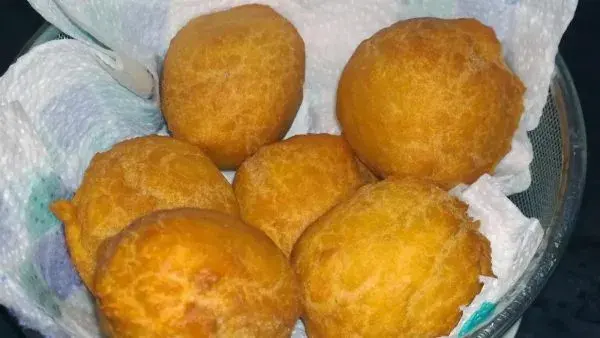
Nigerian buns are fried dough balls with a crunchy outer crust and a soft, cake like interior. They sit alongside puff puff and chin chin in the small group of fried snacks that account for most of what Nigerians eat between meals, and the differences between the three are understood precisely by anyone who grew up with them. Buns are the rich one. Where puff puff is yeast raised and made from almost nothing, buns use baking powder for lift and include egg, butter and milk, which produces a denser, sweeter, more substantial thing with a genuinely crunchy shell. They also absorb less oil in the frying, which is a real practical advantage and a point people make in their favour. They are everywhere: sold from roadside trays and by hawkers, made at home for children after school, brought to parties and picnics, and eaten with tea at breakfast. The flavouring is open, with nutmeg the most common and cinnamon and vanilla both standard, and every household has a version that is slightly sweeter or slightly denser than the next. They are best hot and are still good at room temperature, which is most of what a snack needs to be.
Ingrédients
Les mentions alimentaires sont fournies par les contributeurs à titre indicatif. Elles ne sont pas vérifiées par AFN et dépendent des produits que vous achetez. En cas d’allergie grave, vérifiez vous-même chaque ingrédient. Cuisine, allergies et votre propre jugement
Préparation
- 1
Add the flour, baking powder, salt and nutmeg to a bowl and mix.
- 2
Whisk the egg, if using, pour it into the melted butter and mix until it looks lumpy.
- 3
Put the sugar and milk in a cup of water and mix until the sugar granules dissolve completely. Pour this into the flour and mix continuously until you have a stretchy, sticky dough.
- 4
Put a frying pan on the heat and warm the oil over medium heat.
- 5
When the oil is hot, scoop the dough into it and fry until golden brown on both sides, about 5 minutes.
- 6
Lift the fried buns onto a paper towel to drain the excess oil.
- 7
Serve with a chilled drink.
Notes de l’Africook
 Notes personnelles de Beatrice Ige
- Keep the oil at a steady medium. Too hot and the outside colours before the middle cooks, giving a raw centre; too cool and the buns drink oil.
- Make the balls small. Large buns will not cook through before the outside is too dark, which is the most common complaint about home made ones.
- Give them at least 8 minutes total. Buns take longer to fry than puff puff, and pulling them early is what produces the uncooked middle people run into.
- Turn the heat down between batches and back up before the next one. Oil accumulates heat over successive batches and will start burning the outsides.
- They cannot be baked. Baking gives a small cake, not a bun, and the crunchy shell only comes from frying.
Questions fréquentes
What is the difference between Nigerian buns and puff puff?
The leavening and the richness. Puff puff is raised with yeast, needs a long rise, and uses very few ingredients, giving a light chewy interior. Buns use baking powder and include egg, butter and milk, which makes them denser, richer and crunchy on the outside. Buns also absorb less oil during frying, which many people prefer.
Why are my buns hard?
Either the oil was too cool and they fried too long, or the dough was not mixed well enough. The dough should be mixed continuously until it is stretchy and sticky rather than just combined. Frying at a steady medium heat for around 8 minutes gives a crunchy outside and a soft middle; low and slow gives hard all the way through.
Can I bake Nigerian buns instead of frying them?
No. Baking produces a small cake with a soft exterior, and the crunchy shell that defines a bun only develops in hot oil. This is one of the few places where the frying is genuinely not substitutable. If you want to avoid deep frying, make a different snack rather than a baked bun.
How long do Nigerian buns keep?
They are best the day they are made. They hold for one to two days at room temperature in a container, losing crispness, and up to five or six days refrigerated with a further drop in quality. Reheat in a microwave on the lowest setting for about a minute, or briefly in a hot oven to bring back some crunch.
Avis
Soyez le premier à noter cette recette
Vous l’avez cuisinée ? Votre note aide la personne suivante à se décider.
Aucun avis sur cette recette pour le moment. Si vous l’avez cuisinée, le vôtre serait le premier.
Vous Aimerez Aussi
Voir toutes les recettes Nigeria →
Edo Black Soup
Nigerian Fisherman Soup
Igbo Yam Porridge