
Moroccan Pastilla (Bastila)
Abuja, Nigeria · Voir toutes les recettes
Aperçu
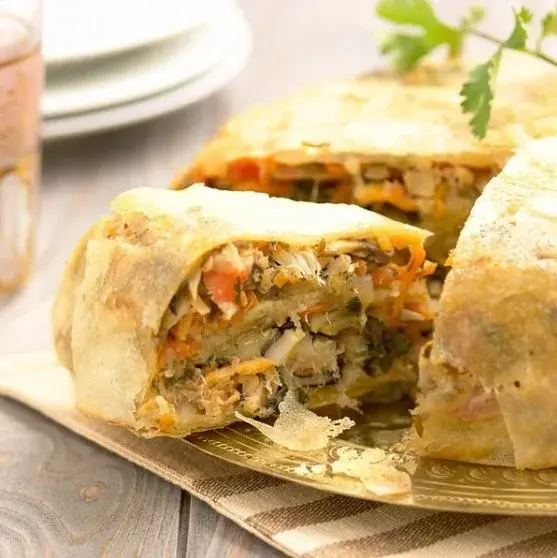
Pastilla is the Moroccan dish that most confounds people who meet it for the first time: shredded spiced poultry and toasted sweetened almonds, layered inside buttered pastry and dusted with icing sugar and cinnamon. Savoury and sweet are not separated but deliberately built into the same mouthful. It is celebration food. Pastilla appears at weddings, at Eid, and when a household wants to demonstrate hospitality to a guest, and the effort involved is part of the message. Historically it was made with pigeon; chicken is now standard, and the shift is one of availability rather than taste. The dish is known by both names. Bastila and pastilla are the same word under different regional pronunciations and are used interchangeably in Morocco. Its regional forms diverge considerably: Fes makes a lamb version, coastal Essaouira a seafood one with prawns and fish, and Atlas households work dried fruit in for extra sweetness. Two notes on this particular version. Its ingredient list names both phyllo dough and filo sheets, which are the same thing under two spellings. And it gives no oven temperature, deferring to whatever is printed on the pastry packet. A hot oven is what the method needs, and the figure is given below. There are a lot of almonds here, which matters for anyone with a tree nut allergy.
Note de Patrimoine AFN
Pastilla, also called bastila, is a Moroccan layered pastry of spiced poultry and sweetened almonds, dusted with icing sugar and cinnamon. It is associated with weddings, religious festivals and formal hospitality, and was historically made with pigeon before chicken became standard.
Ingrédients
Préparation
- 1
For the filling, warm 2 tablespoons of the olive oil in a large skillet over medium heat and cook the sliced onions until translucent.
- 2
Work in the garlic, cinnamon, turmeric, saffron, ras el hanout and black pepper and cook for a couple of minutes until fragrant.
- 3
Put in the chicken and cook until tender and cooked through, then shred it with two forks. Mix through the chopped parsley and season with salt. Set aside.
- 4
For the almond layer, pulse the blanched almonds in a food processor until coarsely ground. Melt a tablespoon of the butter in a pan and toast the ground almonds until lightly golden and nutty. Mix in a tablespoon of the icing sugar and the orange blossom water, then set aside.
- 5
Heat the oven to around 375°F / 190°C. Keep a damp cloth over the pastry you are not using, or it will dry out and crack.
- 6
Cut the filo into sheets large enough to line your dish with an overhang. Brush each with softened butter on both sides.
- 7
Line the dish with buttered filo, letting the edges hang over the sides. Spread half the shredded chicken over the base.
- 8
Lay another layer of buttered filo over the chicken, spread the almond mixture over it, then add a further layer of buttered filo.
- 9
Beat the eggs with the remaining icing sugar and pour the mixture over the top layer so it seeps down through.
- 10
Fold the overhanging pastry over the top to seal, and brush with more butter.
- 11
Bake for 25 to 30 minutes, until the top is golden and crisp and the filling is set. Dust with icing sugar and cinnamon before serving.
Notes de l’Africook
 Notes personnelles de Deborah Olayiwola
- Keep unused filo under a damp cloth throughout. It dries out and shatters within minutes of being exposed.
- Butter both sides of every sheet. This is what separates the layers as they bake and gives pastilla its texture.
- Balance the number of sheets top and bottom so the pastry cooks evenly.
- The oven temperature is not stated in the source. A hot oven of around 190°C is what this method needs.
- The recipe contains a large quantity of almonds, which matters for anyone with a tree nut allergy.
- Dates in place of some of the sugar is a traditional variation and gives a rounder sweetness.
Questions fréquentes
Is it bastila or pastilla?
Both, and they refer to the same dish. Bastila is the pronunciation common in parts of Morocco and pastilla the more widely used form internationally; the two names are used interchangeably. You may also see it written as b'stilla. The difference is one of transliteration and regional accent rather than of the dish itself, so a recipe under either name will be making the same thing.
Why is it sweet and savoury at the same time?
Because it is meant to be. The combination of spiced meat with sugar, cinnamon and almonds runs through Moroccan festive cooking and reflects a long Andalusian and Arab influence on the cuisine. The icing sugar and cinnamon dusted over the top is not a garnish to be scraped off, it is intended to be eaten with the poultry underneath. If it seems strange on first encounter, it is worth trying the dish as intended before adjusting it.
Can I make it with something other than chicken?
Yes, and the regional variations do exactly that. Pigeon was the historical filling and is still used for the most traditional versions. Fes is known for a lamb pastilla, and the coastal city of Essaouira for a seafood version with prawns and fish, which is usually made without the sugar. Duck, beef and vegetable fillings are all made now too. Chicken is simply what is most available.
Is filo the traditional pastry?
Not quite. The traditional wrapper is warqa, a very thin Moroccan pastry made by dabbing a loose dough onto a hot pan, which is thinner and more pliable than filo. Warqa is difficult to make and hard to buy outside Morocco, so filo is the standard substitute and is what most recipes, including this one, call for. The result is slightly crisper and less delicate but works well.
Avis
Soyez le premier à noter cette recette
Vous l’avez cuisinée ? Votre note aide la personne suivante à se décider.
Aucun avis sur cette recette pour le moment. Si vous l’avez cuisinée, le vôtre serait le premier.
Vous Aimerez Aussi
Voir toutes les recettes Morocco →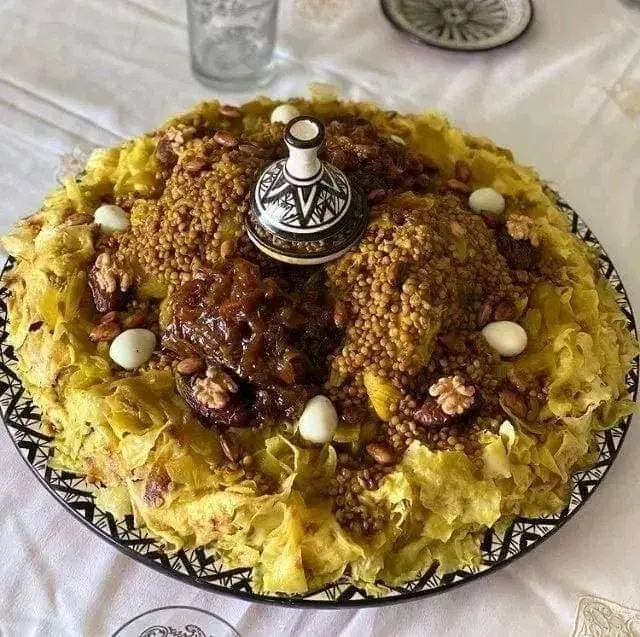
Moroccan Chicken Rfissa
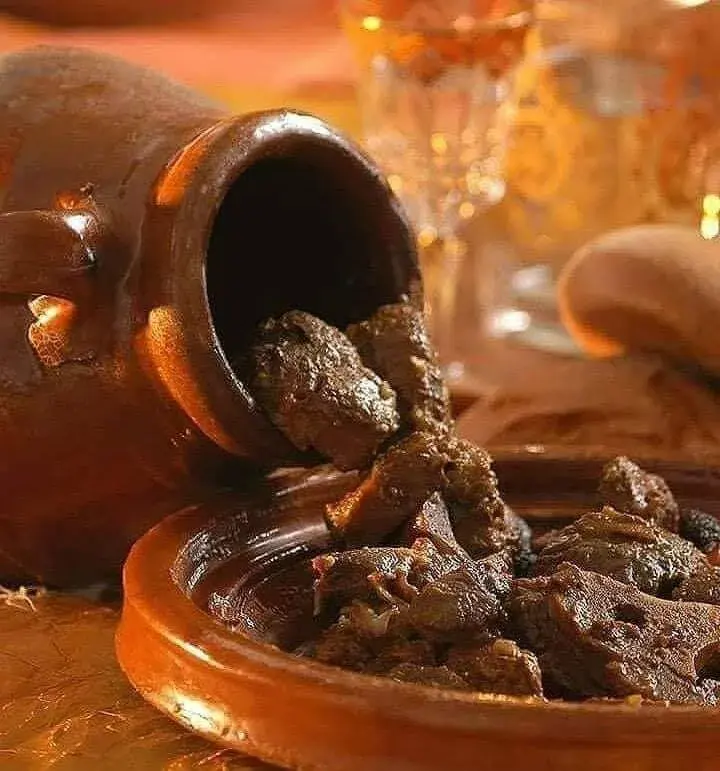
Tanjia Marrakchia
Chebakia (Moroccan Sesame Cookies)