
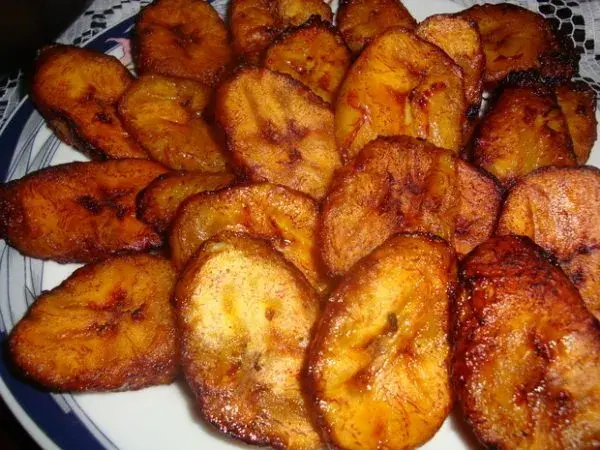
Fried Plantain
Birmingham, United Kingdom · Voir toutes les recettes
Aperçu
Fried plantain is thick slices of ripe plantain, lightly salted and fried until the edges caramelise, and it is eaten wherever plantain grows. Across West Africa, East Africa, the Caribbean, Central and South America and Southeast Asia, the same three ingredients produce essentially the same thing. Its names change with the border. In Nigeria it is dodo. In Côte d'Ivoire it is alloco. In Ghana the spiced version is kelewele, marinated in ginger and chilli before frying, which makes it a different dish rather than a different name. Those distinctions matter and are often blurred. Plantains are not bananas, though they look alike. They are starchier, they are cooked rather than eaten raw, and they can be used at any stage of ripeness for completely different results: green for chips and savoury dishes, ripe for this. What ripe plantain gives is the caramel-brown crust and the soft, sweet interior that the source describes as savoury-sweet, and it comes from the sugars that develop as the fruit blackens. No country is claimed here because the dish belongs to all of them.
Note de Patrimoine AFN
Fried ripe plantain is eaten across West and East Africa, the Caribbean, Latin America and Southeast Asia. It is known as dodo in Nigeria and alloco in Côte d'Ivoire, while the spiced Ghanaian version is kelewele.
Ingrédients
Les mentions alimentaires sont fournies par les contributeurs à titre indicatif. Elles ne sont pas vérifiées par AFN et dépendent des produits que vous achetez. En cas d’allergie grave, vérifiez vous-même chaque ingrédient. Cuisine, allergies et votre propre jugement
Préparation
- 1
Wash, peel and slice the plantain.
- 2
Add a little salt and toss the slices so the salt is evenly distributed.
- 3
Set the vegetable oil on the heat.
- 4
When hot, add a quantity of the plantain slices, leaving enough room for them to fry evenly.
- 5
When the underside starts to turn golden, flip the slices over.
- 6
Fry until browned to your liking.
- 7
Remove and drain in a sieve.
- 8
Serve with fried eggs or a chilled drink.
Notes de l’Africook
 Notes personnelles de Beatrice Ige
- Use plantain that is yellow with black patches. Green will not caramelise and fully black collapses in the oil.
- Do not crowd the pan. Crowded plantain steams, absorbs oil and goes soggy rather than caramelising.
- Salt before frying rather than after. It draws a little moisture to the surface and helps the edges colour.
- Cut on the diagonal for larger surfaces that brown more, or into cubes for a mix of crisp edges and soft centres.
- Drain in a sieve or on a rack rather than on paper, which traps steam underneath and softens the base.
- For kelewele, toss the cut plantain in a paste of ginger, chilli, garlic and nutmeg and rest it before frying. That marinade is what makes it a different dish.
Questions fréquentes
What is the difference between dodo, alloco and kelewele?
Dodo is the Nigerian name and alloco the Ivorian one for the same thing: plain fried ripe plantain with salt. Kelewele is Ghanaian and is different, not just differently named: the plantain is marinated in ginger, chilli, garlic and spices before frying, which is what gives it its own identity.
What is the difference between a plantain and a banana?
Plantains are starchier, larger and firmer, and they are cooked rather than eaten raw. They can be used at every stage of ripeness for different results: green for chips and savoury dishes, ripe for frying like this. Bananas are sweeter, softer and eaten raw.
How ripe should the plantain be?
Yellow with substantial black patches. At that stage the starch has converted to sugar, which is what gives the caramel crust and the sweet interior. Green plantain is starchy and will not caramelise; fully black plantain is too soft and falls apart in the oil.
What is it served with?
Almost anything. Fried eggs for breakfast, alongside jollof rice, beans, stews and grilled meat, or on its own as a snack. It is one of the most flexible things in West African cooking, which is much of why it is eaten so constantly.
Avis
Soyez le premier à noter cette recette
Vous l’avez cuisinée ? Votre note aide la personne suivante à se décider.
Aucun avis sur cette recette pour le moment. Si vous l’avez cuisinée, le vôtre serait le premier.
Vous Aimerez Aussi
Voir toutes les recettes Nigeria →
Edo Black Soup
Nigerian Fisherman Soup
Igbo Yam Porridge