
Chapati
Aperçu
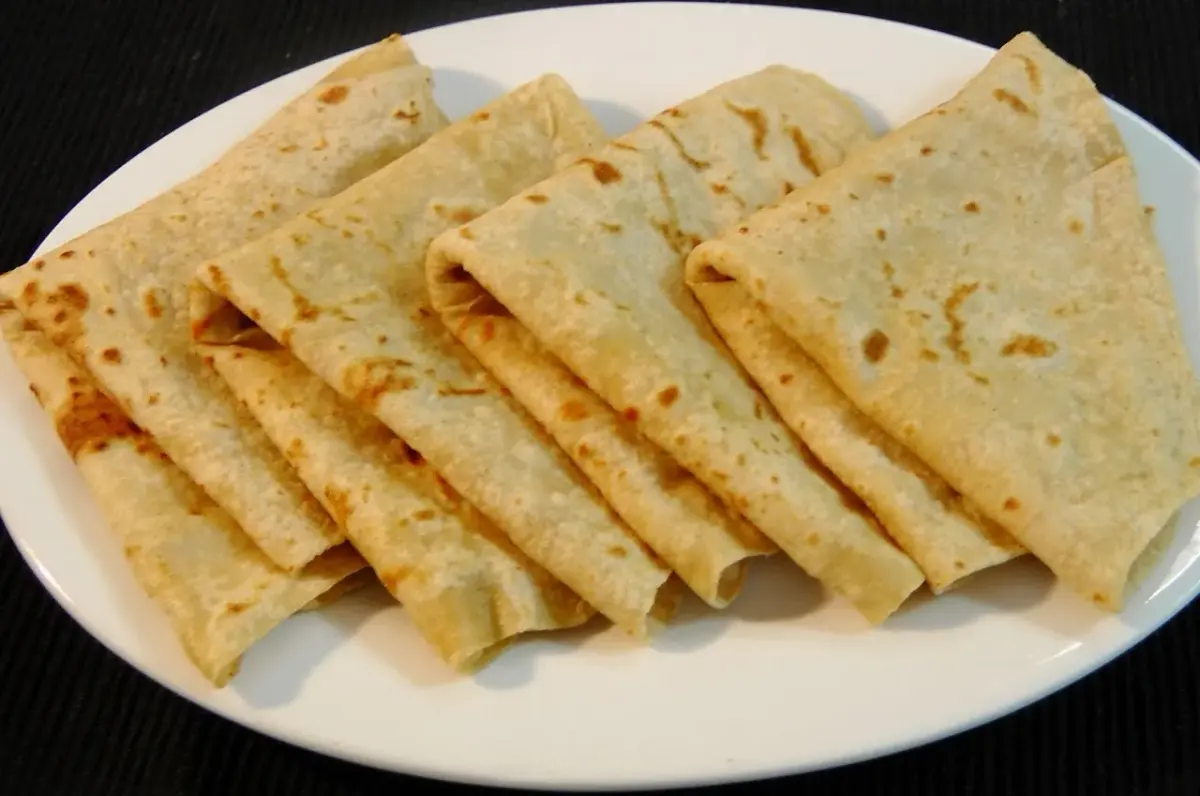
Chapati is Indian in origin and thoroughly East African in practice. It arrived with Indian merchants and indentured labourers in the nineteenth and twentieth centuries, and it is now a fixture in Kenya and Tanzania, eaten with stews, beans and greens in households that have made it entirely their own. The name describes the method. Chapat means slap or flat, and it refers to the traditional way of forming thin rounds by slapping the dough between wetted palms. It is unleavened, made from wheat flour, water, salt and oil, traditionally mixed in a vessel called a parat and cooked on a tava griddle. The East African version has diverged from the Indian one. Kenyan chapati is softer, richer and often layered, made with more oil and sometimes rolled and coiled before the final rolling out to create flaky layers. This recipe is a plainer version and uses white flour, though the source's own prose describes whole wheat, which is what Indian chapati uses. The hour of resting is what matters most: without it the dough fights back and will not roll thin.
Note de Patrimoine AFN
Chapati originated in the Indian subcontinent and was carried to East Africa, Central Asia, Southeast Asia and the Caribbean by Indian merchants and migrants. Its name derives from chapat, meaning slap or flat.
Ingrédients
Les mentions alimentaires sont fournies par les contributeurs à titre indicatif. Elles ne sont pas vérifiées par AFN et dépendent des produits que vous achetez. En cas d’allergie grave, vérifiez vous-même chaque ingrédient. Cuisine, allergies et votre propre jugement
Préparation
- 1
Combine the flour, salt and 2 tablespoons of oil in a large bowl, adding the sugar if you want it slightly sweet.
- 2
Add the water slowly and mix with your hands until well combined. Add a little more water or flour if the dough is too dry or too wet.
- 3
Knead for 10 minutes. The dough should not stick to the bowl; add a little more flour if it does.
- 4
Leave the dough to rest for 1 hour, covered with a damp cloth.
- 5
Preheat a large frying pan or skillet and brush the surface with a tablespoon of oil.
- 6
Divide the dough into 10 equal balls.
- 7
Dust the work surface with flour, flatten a ball slightly between your palms, then roll it out into a large, thin, even round.
- 8
Lay the rolled sheet on the pan and cook for 30 to 60 seconds, until the surface bubbles.
- 9
Turn with tongs and cook the other side for 30 seconds, until brown spots appear.
- 10
Repeat with the remaining balls, flouring the board as needed.
- 11
Stack the cooked chapatis on a warm plate and cover to keep them warm.
Notes de l’Africook
- Rest the dough the full hour under a damp cloth. Without it the gluten fights back and the dough will not roll thin.
- Roll them genuinely thin. A thick chapati is doughy in the middle and will not puff.
- Keep the cooked ones stacked and covered. The trapped steam is what keeps them soft rather than drying into crackers.
- For the layered Kenyan version, brush the rolled round with oil, roll it into a rope, coil it, then flatten and roll it out again.
- The source's prose describes whole wheat flour while the recipe uses white. Whole wheat gives the more traditional Indian chapati and a nuttier, denser result.
- Do not overwork them on the pan. Thirty to sixty seconds a side is the whole cooking time.
Questions fréquentes
Is chapati African or Indian?
Both, in a sense. It originated in the Indian subcontinent and was carried to East Africa by Indian merchants and migrants, along with Central Asia, Southeast Asia and the Caribbean. It has been made in Kenya and Tanzania for well over a century and is now entirely at home there, eaten with local stews and greens.
What is the difference between Kenyan and Indian chapati?
Kenyan chapati is generally softer, richer and often layered, made with more oil and sometimes rolled into a coil before the final rolling to create flaky layers. Indian chapati is plainer, made with whole wheat and very little fat, and is thinner and drier. Both are unleavened.
Why does the dough need to rest?
To relax the gluten developed during kneading. Unrested dough springs back as you roll it and will not go thin, which gives thick, doughy chapatis. An hour under a damp cloth is what the recipe specifies and it makes rolling far easier.
What is chapati eaten with?
Kenyan and Tanzanian stews above all, along with beans, sukuma wiki and lentils. It is used to scoop rather than eaten as a side. In Uganda it is wrapped around an omelette to make a rolex, and across East Africa it is standard everyday bread.
Avis
Soyez le premier à noter cette recette
Vous l’avez cuisinée ? Votre note aide la personne suivante à se décider.
Aucun avis sur cette recette pour le moment. Si vous l’avez cuisinée, le vôtre serait le premier.