
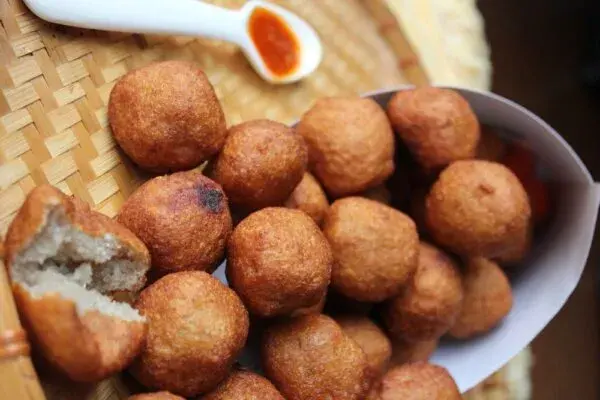
Accra Banana (Cameroonian Banana and Cassava Fritters)
Abuja, Nigeria · Voir toutes les recettes
Aperçu
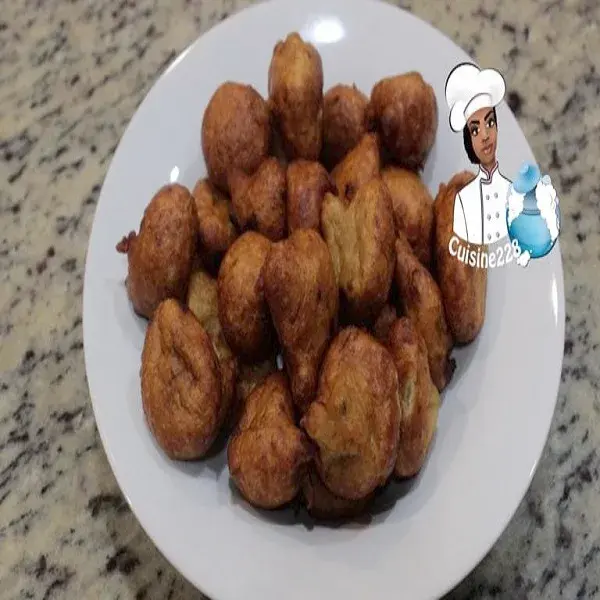
Overripe bananas mashed with grated cassava, seasoned with salt and deep-fried into small golden balls. In Cameroon it is street food sold nationwide, and it is also celebration food, a fixture at Christmas parties and weddings. What sets it apart from the many other West African banana fritters is the starch. Most versions bind mashed banana with wheat flour, rice flour or cornmeal; this one uses grated cassava, which is why it is also called accra cassava. Cassava is worked into an enormous number of forms in Cameroonian cooking, fufu, garri, bobolo sticks, and this is one more. The result is chewier and denser than a flour-based fritter, with the cassava's faint sourness cutting the sweetness of the fruit. Overripe bananas are not a compromise here, they are the requirement. A firm banana has neither the sweetness nor the softness the mixture needs, and the dish exists partly as a way of using fruit that has gone too far to eat out of hand. The usual accompaniment is African pepper sauce, which is worth taking seriously: the contrast between a sweet fried fritter and a fierce chilli sauce is the whole point of eating them together.
Note de Patrimoine AFN
Accra banana, also called accra cassava, is a Cameroonian fritter of mashed overripe banana bound with grated cassava and deep-fried. It is sold as street food across the country and served at Christmas parties, weddings and other celebrations.
Ingrédients
Les mentions alimentaires sont fournies par les contributeurs à titre indicatif. Elles ne sont pas vérifiées par AFN et dépendent des produits que vous achetez. En cas d’allergie grave, vérifiez vous-même chaque ingrédient. Cuisine, allergies et votre propre jugement
Préparation
- 1
Peel the bananas into a bowl and mash them with a wooden spoon or potato masher into a paste.
- 2
Work the grated cassava, garri or cornmeal and salt into the mashed banana until evenly combined.
- 3
Pour oil into a deep pan to a depth of 3 to 4 inches and bring it to 350°F / 180°C, which takes around 8 minutes over high heat.
- 4
Take about a tablespoon of the mixture and shape it into a ball roughly an inch across. Lower it gently into the oil.
- 5
Carry on forming and lowering in balls until the pan is comfortably full but not crowded.
- 6
Fry for about 10 minutes, turning them from time to time, until deep golden brown all over.
- 7
Lift them out onto kitchen paper to drain, and repeat with the remaining mixture.
- 8
Serve hot with African pepper sauce, or with tea or coffee.
Notes de l’Africook
- Use bananas that are genuinely overripe, heavily spotted or black. Firm fruit gives a bland, stiff fritter.
- Grate the cassava finely, or blend it with a splash of water if your blender is powerful enough. Coarse cassava gives an uneven texture.
- Keep the balls small. Large ones brown outside before the cassava inside is properly cooked.
- Do not crowd the pan. The oil temperature drops and the fritters absorb fat instead of sealing.
- Cassava must be cooked thoroughly. Raw and undercooked cassava contains compounds that release cyanide, and adequate frying is what makes it safe.
- They are best hot from the pan. Pepper sauce alongside is standard and the contrast is the point.
Questions fréquentes
Why cassava instead of flour?
Because that is what makes this the Cameroonian version. Banana fritters across West Africa are bound with whatever starch is to hand, wheat flour, rice flour, cornmeal, and the choice defines the local variant. Cassava gives a denser, chewier fritter with a faint sourness that balances the sweetness of the fruit, and it reflects how central cassava is to Cameroonian cooking generally, alongside fufu, garri and bobolo.
How is this different from West African banana fritters?
Mainly the starch and the texture. The klako or krakro style made across Ghana and neighbouring countries uses wheat flour and often chilli, ginger and garlic in the batter, producing a lighter, puffier fritter. Accra banana uses grated cassava and garri, which makes it denser and chewier, and it is seasoned only with salt so the banana comes through more clearly. Both have their own recipe on this site.
Is cassava safe to eat?
When properly prepared, yes, it feeds hundreds of millions of people. Raw and undercooked cassava contains cyanogenic compounds that release cyanide, so it must never be eaten raw and must be cooked thoroughly. In this recipe the deep frying does that work, which is another reason to keep the balls small enough to cook through. Garri is already processed and fermented, so it presents no issue.
What are they eaten with?
African pepper sauce is the traditional accompaniment, and the contrast between the sweet fritter and a fierce chilli sauce is deliberate rather than incidental. They are also eaten with tea or coffee as a breakfast accompaniment or an afternoon snack. At Cameroonian celebrations they are usually served as part of a spread of small fried things rather than as a course on their own.
Avis
Soyez le premier à noter cette recette
Vous l’avez cuisinée ? Votre note aide la personne suivante à se décider.
Aucun avis sur cette recette pour le moment. Si vous l’avez cuisinée, le vôtre serait le premier.