
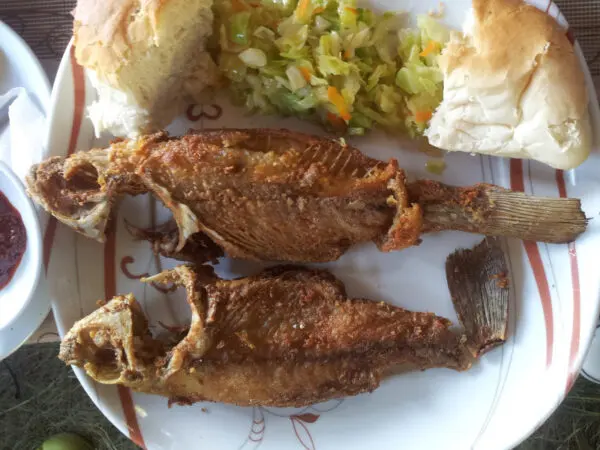
Samaki wa Kukaanga (East African Fried Fish)
Aperçu
Fish marinated briefly in lime, garlic and cayenne, then fried. The name is Swahili and means exactly what the dish is, samaki is fish, kukaanga is frying, and it is eaten across East Africa. No single country is claimed. **This page had no recipe card in the source.** The ingredients and method below are reconstructed from its article, and that is flagged. It is roadside food. Fried fish is sold at food stands along the coast and inland across Tanzania, Kenya and Uganda, and it is deliberately simple: four seasonings and a hot pan. That plainness is the point, the fish is doing the work, which is why it suits whole fresh fish rather than fillets. The one technique that matters is drying the fish after marinating. Lime juice draws water to the surface, and a wet fish put into hot oil steams, spits and refuses to brown. Patting it dry with kitchen paper immediately before frying is what gives you a crisp exterior. The marinating time is short by design. Twenty to thirty minutes seasons the fish; leaving it in citrus for hours would begin to cure it. Sukuma wiki and rice or ugali are the standard accompaniments.
Note de Patrimoine AFN
Samaki wa kukaanga means fried fish in Swahili and is eaten across East Africa, particularly at roadside food stands. It is served with rice or ugali and sukuma wiki, the braised collard greens common across Kenya and Tanzania.
Ingrédients
Les mentions alimentaires sont fournies par les contributeurs à titre indicatif. Elles ne sont pas vérifiées par AFN et dépendent des produits que vous achetez. En cas d’allergie grave, vérifiez vous-même chaque ingrédient. Cuisine, allergies et votre propre jugement
Préparation
- 1
Put the fish in a large non-reactive bowl with the lime or lemon juice, garlic, salt and cayenne pepper.
- 2
Set it aside to marinate for 20 to 30 minutes. No longer, citrus left on fish for hours begins to cure it rather than season it.
- 3
Warm the oil in a sauté pan or skillet over medium-high heat.
- 4
Lift the fish out of the marinade and pat it thoroughly dry with kitchen paper. This is the step that decides whether it browns or steams.
- 5
Fry the fish in the hot oil until browned on each side and cooked through.
- 6
Serve with rice or ugali and sukuma wiki.
Notes de l’Africook
- Dry the fish before it goes in the pan. Lime juice draws water to the surface, and wet fish steams and spits instead of browning.
- Keep the marinade short. Twenty to thirty minutes seasons it; hours in citrus starts to cure it.
- Use whole fresh fish if you can. The seasoning is deliberately plain, which means the fish itself has to be good.
- Get the oil properly hot before the fish goes in, or the skin sticks to the pan.
- Adjust the cayenne freely, the source says as much, and a minced jalapeño or serrano works equally well.
- Sukuma wiki and ugali are the standard pairing and both have their own recipes on this site.
Questions fréquentes
What does samaki wa kukaanga mean?
Fried fish, in Swahili, samaki is fish and kukaanga is frying. The name is entirely literal, which suits a dish that is one of the most straightforward ways of cooking fish anywhere in East Africa. It is standard roadside food along the coast and inland across Tanzania, Kenya and Uganda, cooked to order at food stands and eaten with rice or ugali.
Why doesn't this page have a proper recipe?
Because the original page did not have one, the ingredients and directions were written out in the article as running prose rather than in a recipe card. They have been reformatted into an ingredient list and a numbered method here, and that reconstruction is flagged. The quantities and timings are the source's own; only the presentation has changed.
What fish should I use?
Whole fresh fish is what this suits best, and it is what you would be served at a roadside stand, tilapia and red snapper are both common in East Africa. The seasoning is deliberately minimal, four ingredients and a hot pan, which means the quality of the fish is doing most of the work. Firm fillets work too, though whole fish gives more flavour and stays moister.
What is it served with?
Rice or ugali, and sukuma wiki, the braised collard greens that are a staple across Kenya and Tanzania and whose name translates roughly as stretch the week. Kachumbari, the raw tomato and onion salad, often appears alongside. All of these have their own recipes on this site. The fish is plain enough that the accompaniments carry a good deal of the meal.
Avis
Soyez le premier à noter cette recette
Vous l’avez cuisinée ? Votre note aide la personne suivante à se décider.
Aucun avis sur cette recette pour le moment. Si vous l’avez cuisinée, le vôtre serait le premier.
Vous Aimerez Aussi
Voir toutes les recettes Tanzania →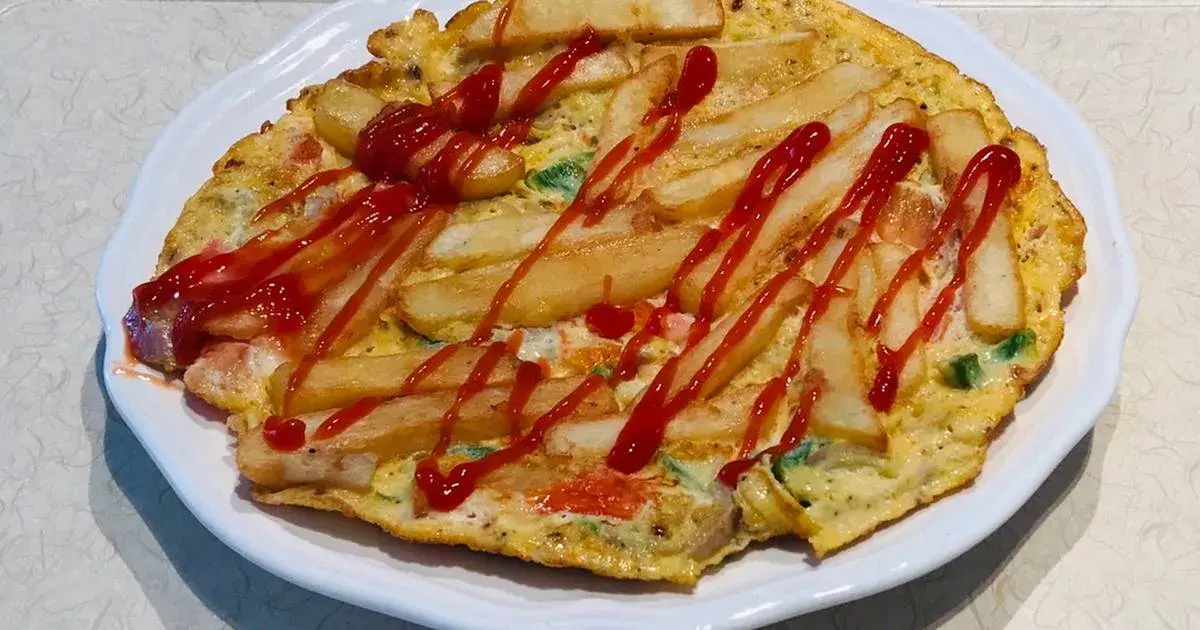
Chips Mayai (Tanzanian Chip Omelette)
Mtuzi Wa Samaki
Papaya Smoothie for Weight Loss