

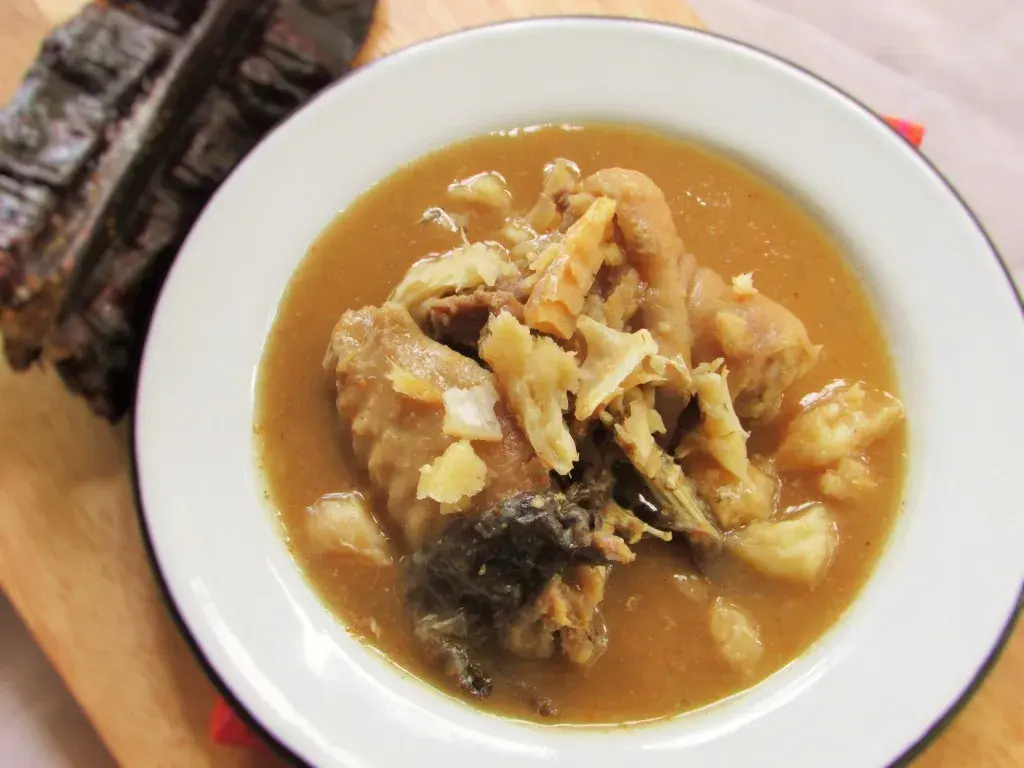
Afia Efere (White Soup)
Aperçu
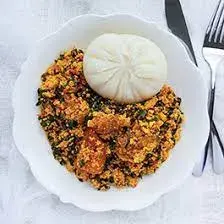
Afia efere is the white soup of the Efik people of Cross River State in southeastern Nigeria, and the name is misleading in the way that most people notice first. It is not white. The uyayak pod that flavours it turns the broth a rich brown, and the name refers to the absence of palm oil rather than to the colour of the finished soup. That absence is the defining feature. Almost every soup in southern Nigeria is built on palm oil, and afia efere is not, which leaves the uyayak, crayfish and uda to carry it without competition. Uyayak, also called Aidan fruit, is a long dark pod with a sharp aromatic flavour found in few other dishes, and it is the ingredient the soup stands or falls on. Uda, the negro pepper, works alongside it. It is close to ofe nsala, the Igbo white soup, and the two are often confused. Both are palm oil free and both are thickened with pounded yam stirred into the broth. Ofe nsala is the more complex of the two, carrying utazi leaves and ogiri seeds that afia efere does without, and it contains no uyayak at all. They are neighbours rather than the same dish, and Efik and Igbo cooks are clear about the difference.
Note de Patrimoine AFN
Afia efere is the white soup of the Efik people of Cross River State in southeastern Nigeria, distinguished from most southern Nigerian soups by containing no palm oil and flavoured principally with the uyayak pod.
Ingrédients
Les mentions alimentaires sont fournies par les contributeurs à titre indicatif. Elles ne sont pas vérifiées par AFN et dépendent des produits que vous achetez. En cas d’allergie grave, vérifiez vous-même chaque ingrédient. Cuisine, allergies et votre propre jugement
Préparation
- 1
Break the uyayak pod in two. Grind half into a fine powder and pour in some water, then pass the mixture through a fine mesh sieve and set the liquid aside.
- 2
Place the chicken in a soup pot with two tablespoons of crayfish, two tablespoons of dry pepper, salt and the seasoning cube, and let the meat cook in its own juices.
- 3
Once the stock starts to dry up, add water to the level of the meat and check the seasoning.
- 4
When the meat is tender, pour in the sieved uyayak liquid and drop the remaining half pod into the pot.
- 5
Add the dry fish and the mashed yam and stir to combine. Cover and cook for a further 5 minutes.
- 6
Once the soup has thickened to your liking, add the remaining dry pepper and ground crayfish and stir.
- 7
Serve with pounded yam or fufu.
Notes de l’Africook
 Notes personnelles de Taiwo Oladapo
- Sieve the ground uyayak rather than tipping it in whole. The powder is fibrous and the liquid is what you want in the soup.
- Add the mashed yam gradually and let it dissolve. Too much at once gives lumps that will not break down, and it thickens further as it stands.
- Let the chicken cook in its own juices first before any water goes in. That initial stock is what the soup is built on.
- Hold back some of the crayfish and pepper for the end. Adding it late keeps the aroma sharp rather than cooking it away.
- There is no palm oil in this soup and none should be added. That absence is what makes it a white soup.
- Uyayak is sold at Nigerian grocers as Aidan fruit or uyayak. There is no real substitute for it in this dish.
Questions fréquentes
Why is it called white soup if it is brown?
The name refers to the absence of palm oil rather than to the colour. Nearly every soup in southern Nigeria is built on palm oil and takes a deep red from it; afia efere is not, so it is called white by contrast. The uyayak pod that flavours it turns the broth a rich brown, which surprises most people making it for the first time.
What is the difference between afia efere and ofe nsala?
Afia efere is Efik and ofe nsala is Igbo, and though both are palm oil free white soups thickened with pounded yam, they are seasoned differently. Ofe nsala carries utazi leaves and ogiri seeds and is the more complex of the two. Afia efere is built on uyayak, which does not appear in ofe nsala at all.
What is uyayak and can I substitute it?
Uyayak, also sold as Aidan fruit, is a long dark pod with a sharp aromatic flavour, used in Efik cooking and in Nigerian pepper soups. It is the ingredient afia efere is built around and there is no convincing substitute. It is stocked by Nigerian grocers and keeps well dried, so it is worth buying when you see it.
What thickens the soup?
Boiled yam, pounded smooth in a mortar and stirred into the broth. It dissolves as it cooks and gives the soup body without any flour or starch. Add it gradually rather than all at once, and remember it continues to thicken off the heat, so stop while the soup is slightly looser than you want it.
Avis
5 avis
Vous Aimerez Aussi
Voir toutes les recettes Nigeria →
Edo Black Soup
Nigerian Fisherman Soup
Igbo Yam Porridge
Chale, this is very similar to our Ghanaian chicken light soup but that uyayak pod gives it a whole different fragrance paa! Couldnt find fresh yam near my place in the Bronx yesterday so I used a bit of yam flour paste instead to thicken it. Still came out good oo, but next time I will buy real yellow yam.
3 tablespoons of dry pepper was way too much heat for my kids sha. The soup tasted good because of the crayfish and dry fish, but we were gasping for water. Next time I will reduce pepper to just 1 spoon. Also leaving that half pod of uyayak inside the pot made the leftover soup a bit bitter the next day.
pounded the yam well well in my mortar so no lumps at all before dropping it inside the broth. That aroma of uyayak when the pot starts boiling abeg no be small thing o. My wife even asked why I didn't add palm oil but after tasting the dry fish and chicken stock she finished her bowl.
Sourced the uyayak pod from the African market near Erdington, was so happy when I found it! Used halal stewing fowl from my butcher. Sieving the ground uyayak water makes all the difference so you dont get gritty bits in the soup. mashed real yam for the thickener, e sweet sha.
my stewing chicken was proper hardbody so 40 min was not enough, took almost 80 minutes before the meat softened up properly. added extra dry pepper because we like heat. that uyayak pod aroma when it hits the hot broth is lekker man, gave the stock incredible flavor.