

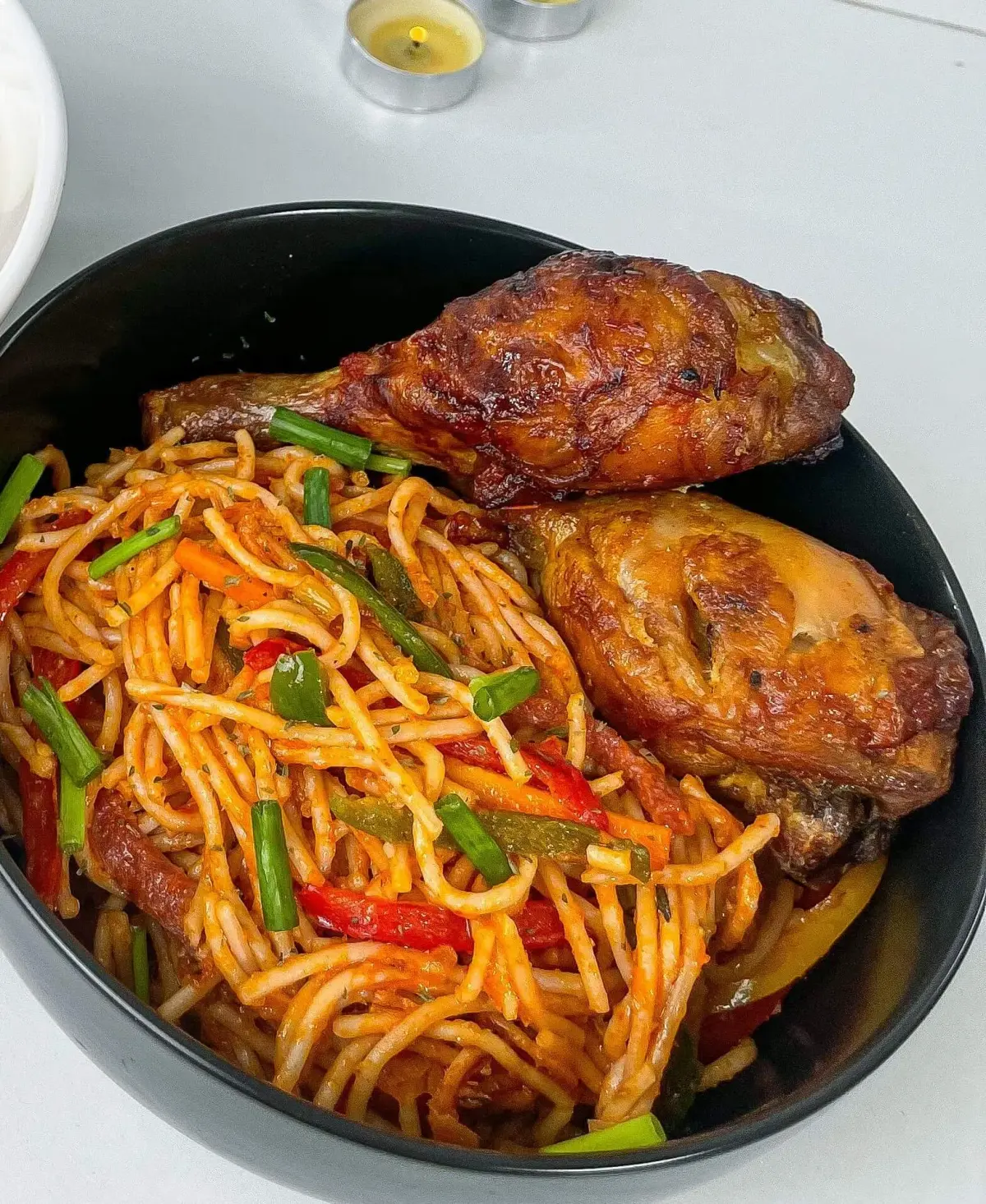
Nigerian Jollof Spaghetti
Aperçu
Jollof spaghetti applies the jollof method to pasta, and it is one of the most widely made contemporary dishes in Nigerian home kitchens. The pepper base is built exactly as it would be for rice, with blended tomato, tatashe and scotch bonnet reduced in oil with onion, ginger and garlic, and the spaghetti is finished in it so the strands take on the colour and the flavour rather than merely wearing it. Spaghetti arrived in Nigeria through mid twentieth century trade and has become one of the country's most eaten starches, particularly in urban households where it is quick and cheap. What Nigerians did with it is characteristic: rather than adopting Italian technique, they applied their own most important cooking method to it. The same has happened with jollof couscous, jollof penne and jollof noodles. It is weekday food rather than occasion food. Where jollof rice is the centrepiece of a party, jollof spaghetti is what gets made on a Tuesday, often with sausage or leftover chicken and whatever vegetables are in the house. It is served with eggs, fried plantain or chicken, and its status as a real Nigerian dish rather than a novelty is no longer in question among the people who eat it.
Ingrédients
Les mentions alimentaires sont fournies par les contributeurs à titre indicatif. Elles ne sont pas vérifiées par AFN et dépendent des produits que vous achetez. En cas d’allergie grave, vérifiez vous-même chaque ingrédient. Cuisine, allergies et votre propre jugement
Préparation
- 1
Boil the spaghetti, drain and set aside.
- 2
Blend the tomatoes, tatashe and scotch bonnet peppers into a smooth paste.
- 3
Fry the onions, garlic, ginger and sliced sausages in the olive oil.
- 4
Add the bay leaves, tomato paste, curry powder, thyme, paprika, all purpose seasoning, salt and seasoning cubes, and cook for 2 to 3 minutes.
- 5
Pour in the blended pepper mix and cook until the sauce thickens.
- 6
Add the chicken stock and simmer for 5 to 7 minutes.
- 7
Stir in the sliced bell peppers and julienned carrots and simmer for 5 minutes.
- 8
Add the cooked spaghetti and toss through the sauce.
- 9
Adjust the seasoning with salt and seasoning cubes.
- 10
Remove the bay leaves and serve hot with boiled eggs or chicken.
Notes de l’Africook
 Notes personnelles de Sobecooks
- Reduce the pepper base properly before the spaghetti goes in. An underdone tomato base tastes sharp and raw, and no amount of seasoning fixes it.
- Undercook the spaghetti at the boil. It keeps softening in the sauce and overcooked pasta breaks up when tossed.
- Rinse the boiled spaghetti briefly in cold water and drain well if you are not using it immediately, so it does not clump.
- Add the vegetables near the end so they keep some bite against the soft pasta.
- Use a wide pan rather than a deep pot for the final toss, so the strands coat evenly rather than piling up.
Questions fréquentes
Is jollof spaghetti a real Nigerian dish?
Yes, though a modern one rather than an inherited one. Spaghetti became widely eaten in Nigeria from the mid twentieth century, and applying the jollof method to it is a genuine and now very common piece of Nigerian home cooking. It sits alongside jollof couscous, jollof penne and jollof noodles as part of the same confident adaptation.
How is it different from Italian pasta with tomato sauce?
The base and the technique. Jollof spaghetti uses a blended pepper mix of tomato, tatashe and scotch bonnet reduced hard in oil, seasoned with curry powder, thyme and seasoning cubes, and the pasta finishes in that sauce so it absorbs it. An Italian sauce is milder, built on different aromatics, and generally spooned over pasta rather than absorbed by it.
Why is my jollof spaghetti soggy?
The pasta was overcooked at the boiling stage, or the sauce was too loose when it went in. Boil the spaghetti to just short of al dente, and reduce the pepper base until it is thick before adding the pasta. Adding stock after the pasta is in makes it worse rather than better.
What is it served with?
Boiled eggs, fried plantain and chicken are the usual additions, and coleslaw appears when it is being served to guests. It is substantial enough to be a complete meal on its own, which is much of why it is made on weeknights.
Avis
2 avis
Vous Aimerez Aussi
Voir toutes les recettes Nigeria →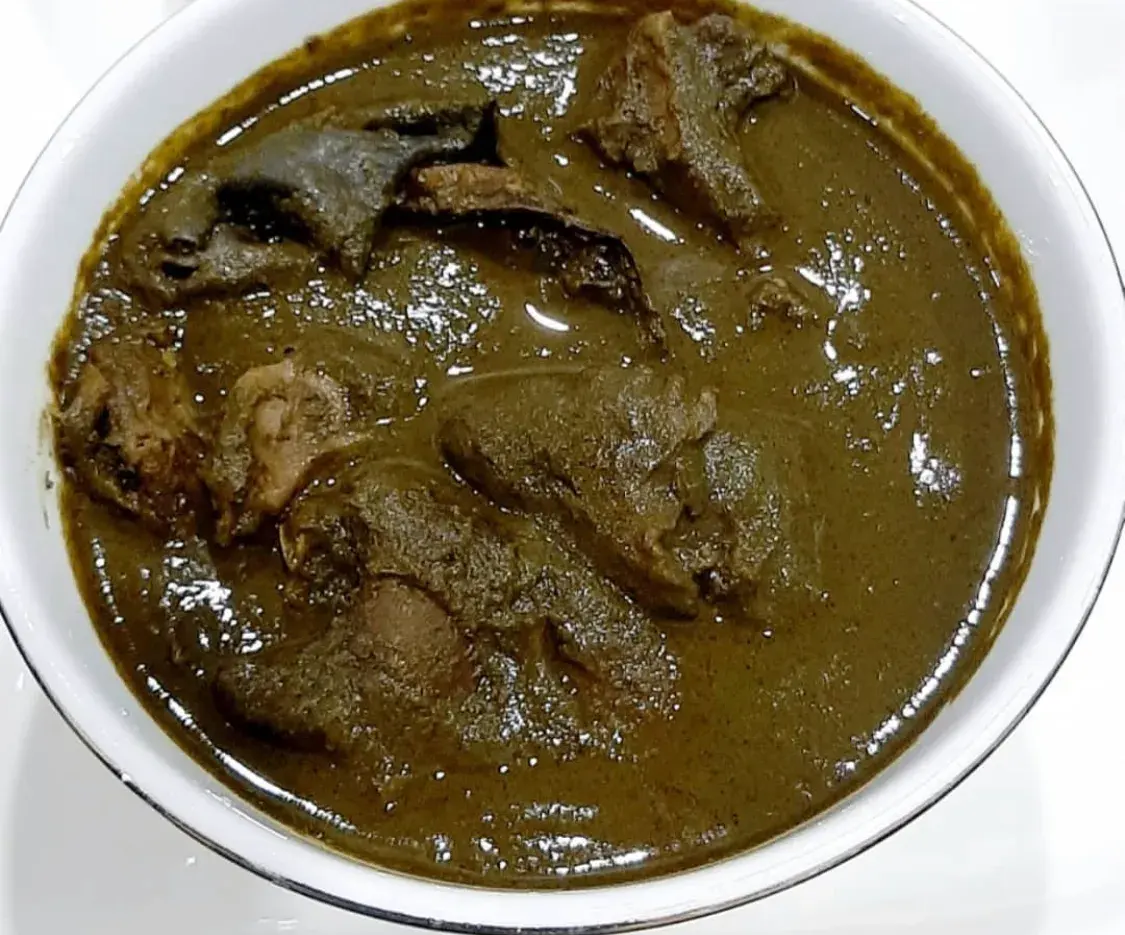
Edo Black Soup
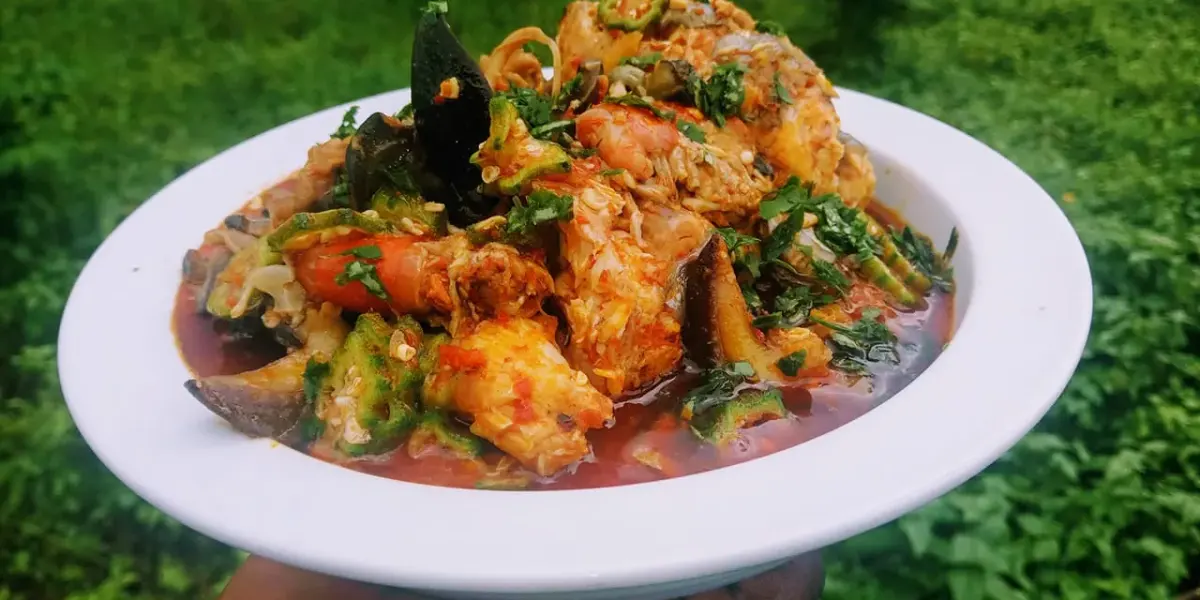
Nigerian Fisherman Soup
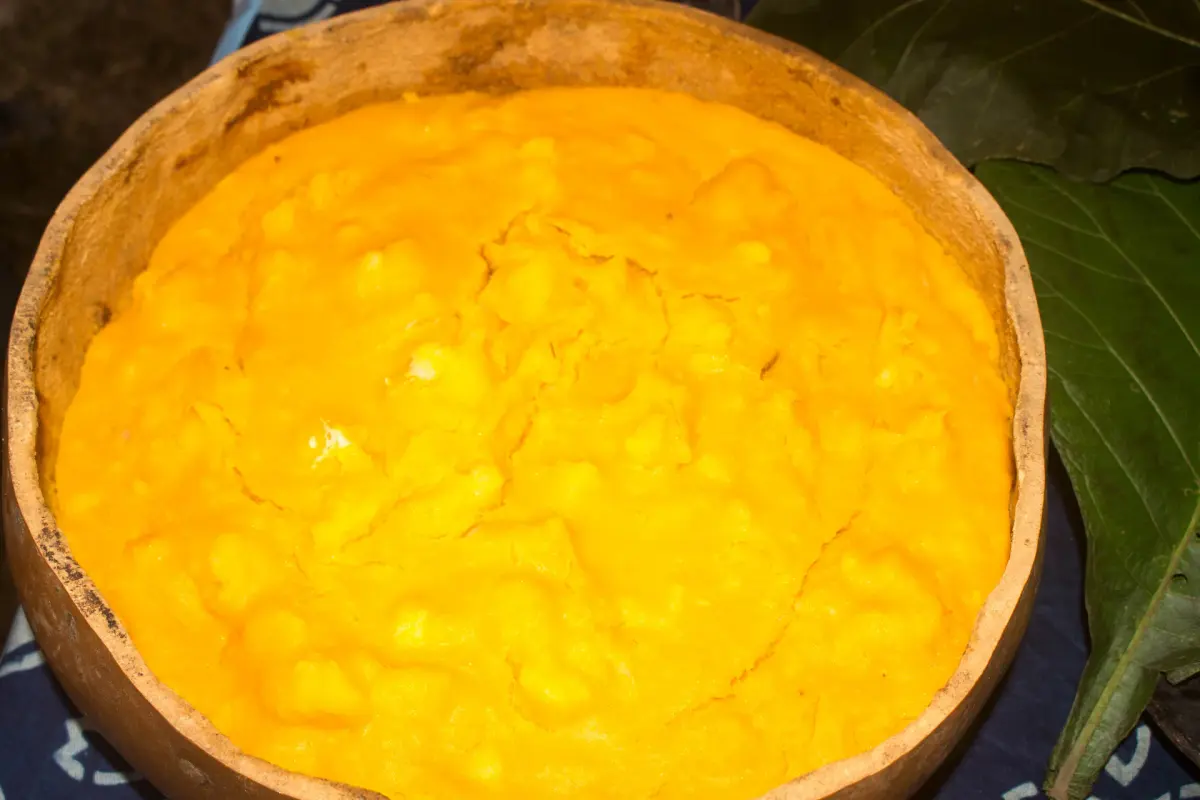
Igbo Yam Porridge
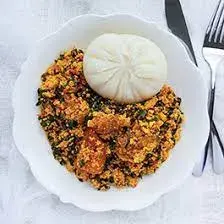
Made this for lunch yesterday. I used 3 chopped Enterprise smoked viennas and 1/2 cup of blended red chillies since scotch bonnets are tricky to find in Soweto. The 1 cup of chicken stock wasn't quite enough when the sauce thickened, it started sticking to the pot so I added another 100ml of hot water. Otherwise really lekker recipe.
Tatashe is so hard to find here abeg, so I used regular red bell peppers with two scotch bonnets from the local shop. Fried smoked kielbasa with the curry powder and thyme before adding the tomato paste and pepper mix. It brought back memories of hostel days in Uni o, e sweet nonsense!