
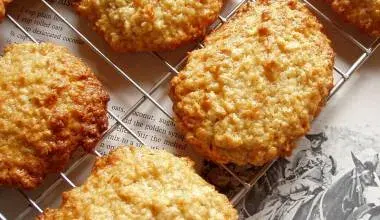
Makroud el Louse (Algerian Almond Cookies)
London, United Kingdom · Voir toutes les recettes
Aperçu
Makroud el louse is the almond version of makroud, and it is a genuinely different cookie from the one that name usually brings to mind. Ordinary makroud is a semolina pastry stuffed with date paste and deep-fried, then soaked in syrup. Makroud el louse has no semolina, no dates and no frying: it is ground almonds, sugar and egg, shaped, baked, dipped in an orange-flower syrup and rolled in icing sugar. "Louse" is the Algerian word for almond, so the name simply distinguishes the almond one. Both are cut on the diagonal into the same lozenge shape, which is where the shared name comes from, makroud derives from the Arabic for something cut at an angle. The shape is the family resemblance; the ingredients are not. Because there is no flour in the dough, this version is naturally gluten-free, which is unusual among North African pastries and is worth knowing if you need it. One caution: the source's own instructions send you to a floured work surface, which would undo that. Use icing sugar or a little extra ground almond instead. These are keeping cookies. Sealed in a tin they hold for over a month, which is why they are made in quantity for Eid, Ramadan and weddings rather than a few at a time.
Note de Patrimoine AFN
Makroud el louse is an Algerian almond cookie, dipped in sugar syrup scented with orange flower water and coated in icing sugar. It shares its name and lozenge shape with the semolina-and-date makroud but is made without semolina or dates.
Ingrédients
Les mentions alimentaires sont fournies par les contributeurs à titre indicatif. Elles ne sont pas vérifiées par AFN et dépendent des produits que vous achetez. En cas d’allergie grave, vérifiez vous-même chaque ingrédient. Cuisine, allergies et votre propre jugement
Préparation
- 1
Heat the oven to 350°F / 180°C.
- 2
Blitz the almonds and the cup of sugar in a food processor until the almonds are finely ground. Tip into a bowl.
- 3
Make a well in the centre, pour in the beaten eggs and work them in with a wooden spoon until the dough starts to come together, then knead by hand until smooth.
- 4
Divide the dough into four. Roll each piece into a rope about 3/4 inch thick on a clean surface dusted with icing sugar or ground almonds, not flour, which would defeat the point of a flourless cookie.
- 5
Flatten each rope with your palm to about 1/2 inch thick, then cut it on the diagonal into 1 inch lozenges. Set them on an ungreased baking sheet.
- 6
Bake for 12 to 15 minutes, until lightly browned on top. Cool completely on racks.
- 7
While they bake, bring the water and the half cup of sugar to a rapid boil, stirring to dissolve. Let it boil hard for 10 to 15 minutes, then cool to room temperature and mix in the orange flower water.
- 8
Dip each cooled cookie in the syrup to wet it, then toss it in the icing sugar to coat thoroughly. Set on a rack to dry.
Notes de l’Africook
 Notes personnelles de Nympha Nzeribe
- Dust your work surface with icing sugar or ground almonds rather than flour. The source says flour, but these cookies are flourless and that is most of their appeal.
- Let the cookies cool completely before they meet the syrup. Warm cookies absorb too much and go soggy.
- Let the syrup cool too, and add the orange flower water only once it has, since the aroma boils off.
- Orange flower water varies hugely in strength. Taste the syrup before you commit the whole batch.
- Lemon zest in the dough is a common variation. Lemon essence in the syrup works if orange flower water is unavailable, though the result is noticeably different.
- Sealed in a tin they keep for well over a month, which is why they are made in large batches for Eid and for weddings.
Questions fréquentes
How is this different from ordinary makroud?
Almost entirely, apart from the shape. Standard makroud is a semolina pastry wrapped around date paste, deep-fried and then soaked in syrup. Makroud el louse contains no semolina, no dates and no frying, it is ground almonds bound with egg, baked, then dipped in syrup and rolled in icing sugar. What they share is the lozenge shape cut on the diagonal, which is where the name comes from. Both have their own recipe on this site.
Are these really gluten-free?
The dough is: there is no flour in it at all, only ground almonds, sugar and egg. The one thing to watch is the source's instruction to roll the dough on a floured surface, which would introduce gluten at the last step. Use icing sugar or extra ground almonds instead. If you are cooking for someone with coeliac disease, also check that your icing sugar and orange flower water are certified free from cross-contamination.
What is orange flower water?
A distillate of bitter orange blossom, used across North African and Middle Eastern baking. It is intensely aromatic and floral rather than citrus-tasting, and a tablespoon flavours a whole batch of syrup. Brands vary a great deal in strength, so taste as you go. It is sold at Middle Eastern and North African grocers and keeps well. Lemon essence is the usual substitute, though it gives quite a different result.
When are they eaten?
They are festive cookies, made in quantity for Eid, during Ramadan, and at weddings and other celebrations, and served with tea or coffee. Because they keep for over a month in a sealed tin, they are typically baked well in advance rather than on the day. They are also a common gift between households during the holidays, which is another reason batches tend to be large.
Avis
Soyez le premier à noter cette recette
Vous l’avez cuisinée ? Votre note aide la personne suivante à se décider.
Aucun avis sur cette recette pour le moment. Si vous l’avez cuisinée, le vôtre serait le premier.