
Hertzoggies
London, United Kingdom · Voir toutes les recettes
Aperçu
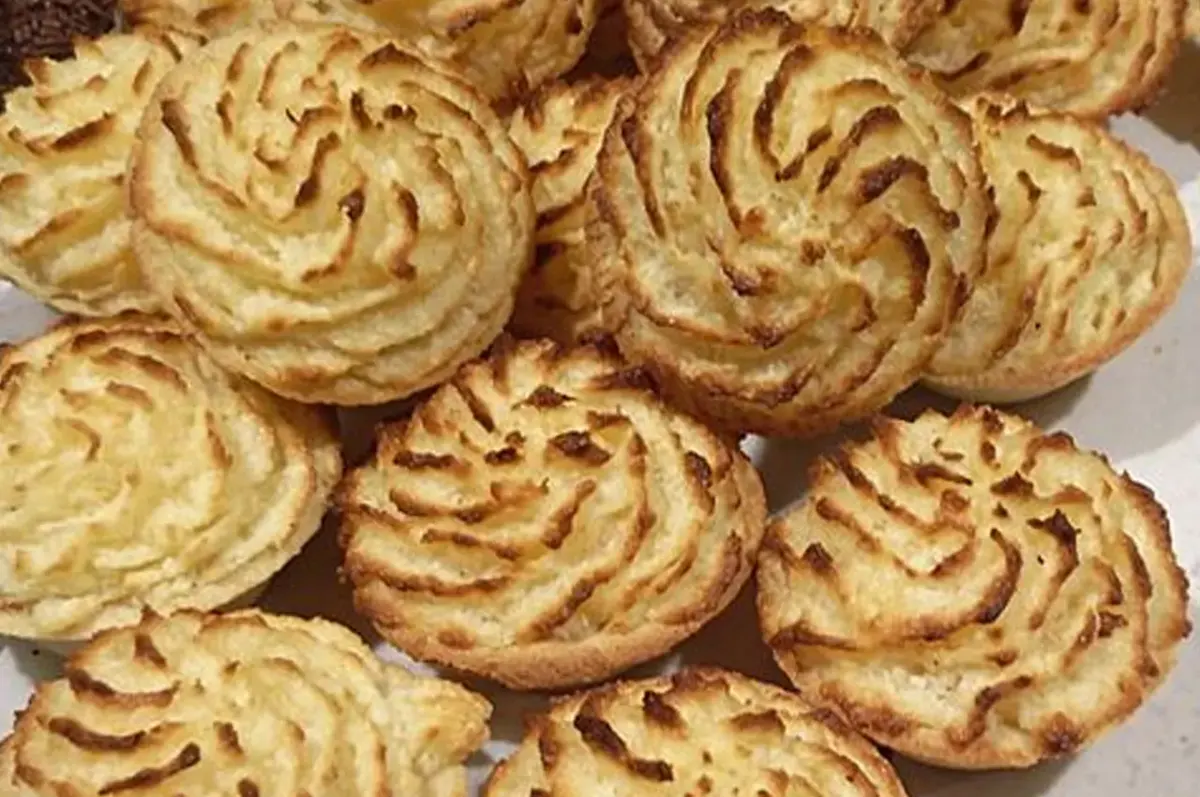
A hertzoggie is a small tartlet: a short pastry base, a spoonful of apricot jam, and a coconut meringue topping baked until crisp and golden. It is called a hertzogkoekie in Afrikaans and a Hertzog cookie in English, and it has been made in South Africa since the 1920s. The name is political. The tartlet was created by supporters of J. B. M. Hertzog, the Boer War general who became South African Prime Minister, and it carries his name a century later. That is an unusually specific and unusually documented origin for a baked good, and it is worth recording plainly as history rather than endorsement. It is still widely eaten. Hertzoggies are a standard tea-time biscuit across South Africa and are made at home as part of the country's cottage baking tradition, alongside koeksisters and other well-known South African sweets. They are also strongly associated with Eid in the Cape Malay community, where they appear on the table among the other sweets prepared for the occasion. The combination of light pastry, sharp apricot jam and chewy coconut meringue is the whole appeal, and each of the three needs to stay distinct.
Note de Patrimoine AFN
Hertzoggies date from the 1920s in South Africa, where they were created by supporters of the Boer War general and later Prime Minister J. B. M. Hertzog, from whom they take their name. They are known in Afrikaans as hertzogkoekies.
Ingrédients
Les mentions alimentaires sont fournies par les contributeurs à titre indicatif. Elles ne sont pas vérifiées par AFN et dépendent des produits que vous achetez. En cas d’allergie grave, vérifiez vous-même chaque ingrédient. Cuisine, allergies et votre propre jugement
Préparation
- 1
Preheat the oven to 180°C and grease a mini muffin baking tray.
- 2
Sift the flour, baking powder, nutmeg and salt into a large mixing bowl.
- 3
Add the castor sugar and cubed butter, rubbing the butter into the flour until it forms fine crumbs.
- 4
Add the egg yolks and mix, adding a touch of water if needed, to bring the dough together.
- 5
Knead the dough on a clean floured surface until smooth, then roll into a ball, cover and rest for about 20 minutes.
- 6
In a separate bowl, whisk the egg whites to soft peaks, then add the vanilla essence and sugar in stages until you have glossy firm peaks.
- 7
Carefully fold in the coconut and set aside.
- 8
Press the pastry directly into each hollow of the muffin tray, forming a base about 5mm thick.
- 9
Add two teaspoons of jam to each pastry case, then top with the meringue mixture.
- 10
Bake for 25 minutes, until the tops are crisp and golden.
- 11
Cool slightly, then carefully lift them out onto a cooling rack.
Notes de l’Africook
 Notes personnelles de Nympha Nzeribe
- Do not overfill with jam. Two teaspoons is the measure, and more boils over and welds the tartlet to the tin.
- Get the meringue to glossy firm peaks before the coconut goes in, and fold rather than stir so it keeps its air.
- Press the pastry thin and even, about 5mm. Thick bases stay pale and doughy under the topping.
- Rest the pastry the full twenty minutes, which relaxes it and stops it shrinking away from the tin.
- Lift them out while still slightly warm. Fully cooled, the jam sets and they stick.
- Apricot jam is traditional and its sharpness is what balances the very sweet coconut meringue. A milder jam leaves them cloying.
Questions fréquentes
Who were hertzoggies named after?
J. B. M. Hertzog, the Boer War general who became Prime Minister of South Africa. The tartlets were created by his supporters in the 1920s and have carried his name ever since. It is an unusually specific and well documented origin for a baked good.
What is the difference between a hertzoggie and a coconut tart?
The meringue. A hertzoggie's topping is a coconut meringue, egg whites whisked to firm peaks with sugar and then folded through desiccated coconut, which bakes crisp on top and chewy underneath. A plain coconut tart usually has a denser, cakier coconut filling without the whisked whites.
Why apricot jam specifically?
Because it is sharp enough to cut the sweetness of the coconut meringue. Apricot is traditional in this tartlet and in South African baking generally, and a milder or sweeter jam leaves the whole thing cloying. Use a good quality jam with real fruit acidity rather than a very sweet one.
When are they eaten?
As an everyday tea-time biscuit across South Africa, and particularly at Eid in the Cape Malay community, where they appear among the sweets prepared for the occasion. They are a fixture of the country's home and cottage baking, made alongside koeksisters and other traditional sweets.
Avis
Soyez le premier à noter cette recette
Vous l’avez cuisinée ? Votre note aide la personne suivante à se décider.
Aucun avis sur cette recette pour le moment. Si vous l’avez cuisinée, le vôtre serait le premier.
Vous Aimerez Aussi
Voir toutes les recettes South Africa →
Dombolo (Dumplings or Steamed Bread)
Boeber (Cape Malay Sweet Milk Drink)