

Sukuma Wiki
Aperçu
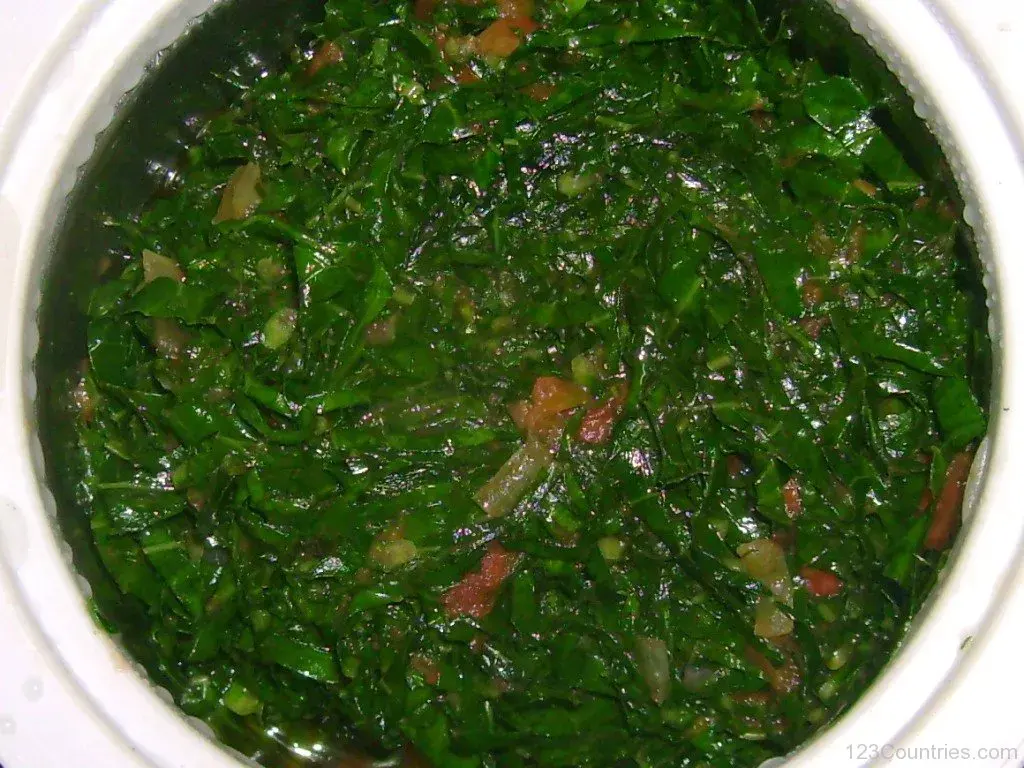
Sukuma wiki is braised collard greens, and the name tells you what it is for. In Swahili it means to push or stretch the week, and it describes a cheap, filling vegetable dish that makes the household's resources last. Served with ugali and perhaps a little roasted meat or fish, it is a typical Kenyan or Tanzanian meal. Sukuma is the Swahili name for collard greens, called colewort in older English and often confused with kale. It is grown across Kenya, Tanzania and Uganda, it is inexpensive, and it is available all year round, which is exactly why it occupies the place it does. The greens are the most in demand vegetable in Kenya on both nutritional and economic grounds. The method is simple and the order matters. Onion is softened first, the greens go in by the handful so each addition wilts before the next, and tomatoes and liquid follow. Twenty to thirty minutes of gentle cooking takes it from tough to tender. It is naturally vegan as written, which is unusual for a staple side dish, and it is often eaten that way rather than by choice. A chopped chilli is the most common addition.
Note de Patrimoine AFN
Sukuma wiki takes its name from the Swahili for pushing or stretching the week. Sukuma is the Swahili name for collard greens, grown across Kenya, Tanzania and Uganda, and the dish is conventionally served with ugali.
Ingrédients
Les mentions alimentaires sont fournies par les contributeurs à titre indicatif. Elles ne sont pas vérifiées par AFN et dépendent des produits que vous achetez. En cas d’allergie grave, vérifiez vous-même chaque ingrédient. Cuisine, allergies et votre propre jugement
Préparation
- 1
Heat the oil or fat over a medium-high flame in a large, heavy-bottomed pot.
- 2
Add the onion and sauté until translucent.
- 3
Add the greens in batches, sautéing each addition until wilted before adding the next.
- 4
Add the tomatoes, water or stock, salt and pepper.
- 5
Bring to the boil, then reduce the heat to low and simmer gently until tender, 20 to 30 minutes.
- 6
Adjust the seasoning and serve with a little of the broth.
Notes de l’Africook
- Add the greens in batches. A pot full of raw collards will not fit and will steam rather than wilt if crammed in at once.
- Strip the thick central stems out. They stay tough long after the leaves have softened.
- Use a heavy-bottomed pot. Greens catch easily and the burnt flavour goes right through.
- Serve with some of the cooking liquid rather than draining it. That broth is part of the dish and is what makes it go with ugali.
- A chopped chilli is the most common addition and is worth including.
- Kale substitutes directly for collards and the recipe allows either, though collards are what sukuma means.
Questions fréquentes
What does sukuma wiki mean?
To push or stretch the week, in Swahili. It refers to the dish's function: cheap, filling greens that make the household's food last, particularly when served with ugali. It is one of the more direct pieces of food naming, and it describes an economic role rather than a flavour or a technique.
Is sukuma the same as kale?
Not quite, though they are close relatives and the two are constantly confused. Sukuma is the Swahili name for collard greens, sometimes called colewort. Kale is a different cultivar of the same species with curlier, more assertive leaves. The recipe allows either, and both work in the same time.
What is it served with?
Ugali above all, the East African maize staple, sometimes called sima. Roasted or grilled meat or fish alongside makes it a full meal. It is a side dish rather than a main, though with enough ugali it functions as the whole meal, which is the point of the name.
Is it vegan?
As written, yes, provided you use oil rather than animal fat and water or vegetable stock rather than meat stock. That is how it is most often eaten in Kenya, though as a matter of economy rather than choice. Some households cook it with a little meat or meat stock for depth.
Avis
4 avis


Made this for dinner tonight! I was a little skeptical about using 2 lbs of tomatoes with just one bunch of collard greens, but simmering them down for 30 min gave it such a great rich flavor. Quick question though, my greens released a lot of juice so it turned out almost like a stew, is it supposed to be that watery or should I cut back on the water next time?
Reminds me so much of home. Back in Zim we always use covo, but here in Luton I can only get kale from Sainsbury's or spring greens from the market. I added beef stock instead of water and let it simmer for a full 25 minutes till the leaves were properly soft. Ate it with hot sadza, absolute comfort food on a chilly UK evening.
yoh this was potent my broer! couldn't get stock so I sommer threw in a vegetable stock cube with the 2 cups water. sautéed the onions till nicely brown before putting the chopped greens in batches like you said. whole family destroyed it with fresh white bread, pot is squeaky clean.
East Africa's finest