

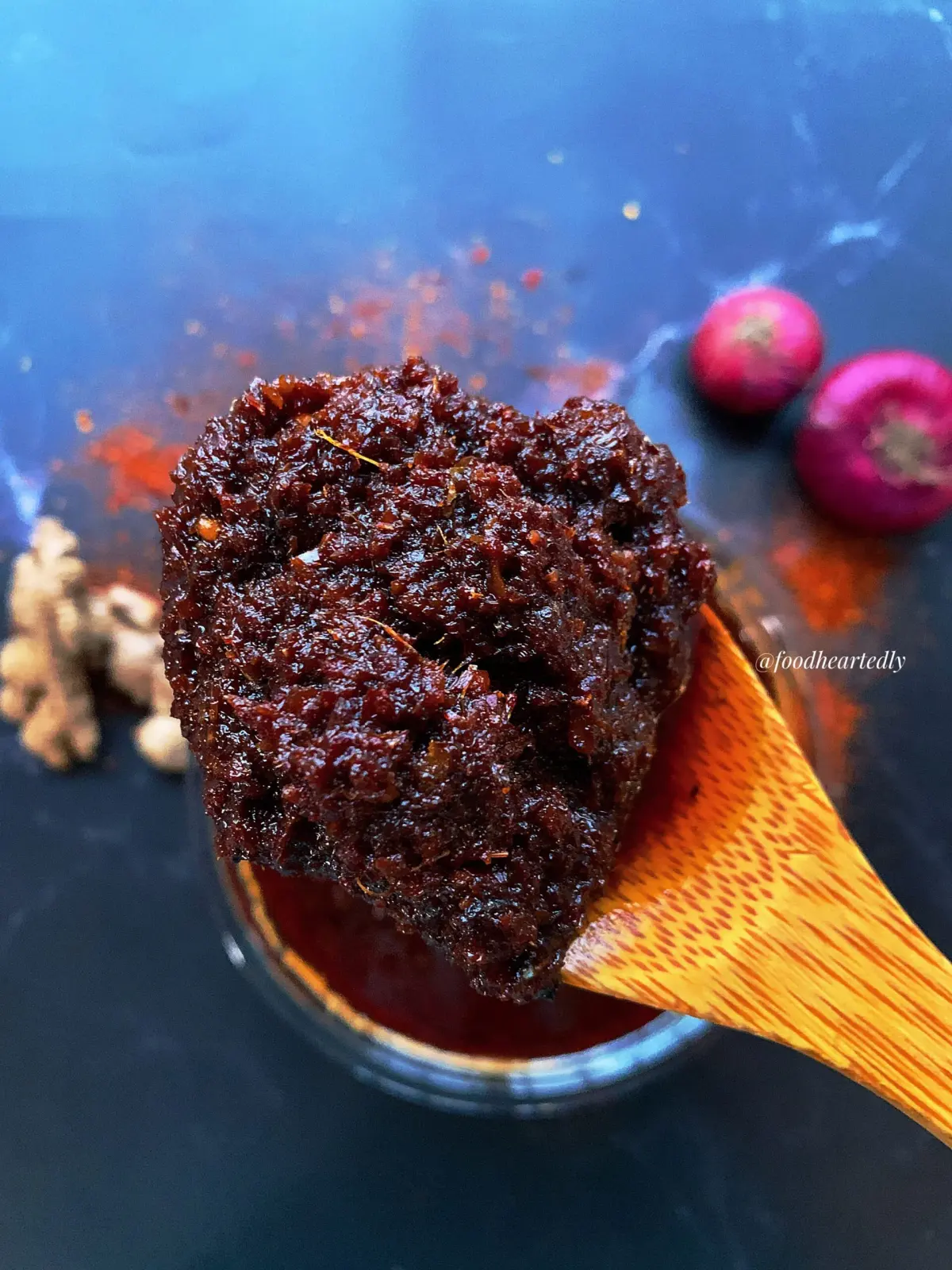
Shito (Black Pepper Sauce)
Aperçu
Shito is Ghana's black pepper sauce, and it is the condiment the country's food is built around. Dried fish, dried shrimp, onion, ginger and a very large quantity of ground pepper are cooked down in oil until the whole thing turns near black and the oil separates and rises. It is intensely savoury, genuinely hot, and used a spoonful at a time. What makes it structurally interesting is that it keeps. Fried properly, shito lasts weeks or months on a shelf without refrigeration, because the oil seals it and there is almost no water left in it. That is why Ghanaians abroad carry jars of it in luggage and why it is made in large batches rather than small ones. Its reach across the Ghanaian table is close to total. Waakye, kenkey and banku are barely considered complete without it. Beyond those it goes with jollof, fried rice, braised rice, gari, fried yam, fried plantain, grilled meat and, as the source for this recipe points out, bread. It is the thing that carries Ghanaian food, and the one rule about keeping it matters: only ever take shito out with a clean dry spoon, because a wet spoon introduces water and the jar will spoil.
Note de Patrimoine AFN
Shito is documented as a Ghanaian condiment built on dried fish, dried shrimp and ground pepper cooked in oil, and takes its name from the Ga word for pepper. Its preservation relies on frying until the water content is driven off and the oil seals the sauce, allowing months of unrefrigerated storage.
Ingrédients
Les mentions alimentaires sont fournies par les contributeurs à titre indicatif. Elles ne sont pas vérifiées par AFN et dépendent des produits que vous achetez. En cas d’allergie grave, vérifiez vous-même chaque ingrédient. Cuisine, allergies et votre propre jugement
Préparation
- 1
Blend or grind the herrings and shrimps to a smooth or rough consistency depending on your preference.
- 2
Blend the onions and ginger together with some of the oil, which prevents splashing during cooking. Garlic can be added here if you want it.
- 3
Put the powdered pepper and the blended herrings and shrimps into a large bowl and mix. Add a little water and stir to a very thick paste. It should not be watery.
- 4
Heat about 800ml of the oil in a pot for 3 to 5 minutes over medium heat. Add the blended onions and ginger and cook for about 20 minutes.
- 5
Add the pepper, herring and shrimp paste to the pot and keep stirring so it does not stick.
- 6
Add the stock tablet and taste. Adjust with salt.
- 7
Continue cooking until the sauce darkens and the oil separates and rises to the surface.
- 8
Turn off the heat and leave the shito to cool completely.
- 9
Transfer to a glass jar or container and cover tightly.
Notes de l’Africook
 Notes personnelles de Amanda Dadson
- Cook it until the oil visibly separates and rises. That is the point at which the water has gone and the shito will keep. Stopping earlier gives a sauce that spoils within days.
- Use a clean dry spoon every single time you take shito out of the jar. Water introduced on a wet spoon is the one thing that reliably ruins a properly made batch.
- Keep the paste thick before it goes into the oil. A watery paste means a much longer cook and a greater risk of catching.
- Stir almost continuously once the paste is in. The mixture is dense and catches on the base readily, and burnt shito is bitter throughout.
- A glass jar is better than plastic. Store somewhere cool and dry with the oil covering the surface of the sauce.
Questions fréquentes
How long does shito keep?
Weeks or months at room temperature if it has been fried properly, which means cooking until the oil separates and rises. The oil layer seals the sauce and the low water content does the rest. Refrigerated it keeps longer still. The limiting factor is contamination rather than time, so always use a clean dry spoon.
What is shito eaten with?
Almost everything Ghanaian. Waakye, kenkey and banku are the dishes most associated with it. Beyond those: jollof rice, fried rice, braised rice, gari, fried yam, fried plantain, grilled meat and fish. It is also eaten on bread. It is used a spoonful at a time rather than as a sauce poured over.
Can I make shito without dried fish or shrimp?
There are vegetarian versions made with mushroom and extra aromatics, and they produce a hot, savoury pepper oil. What they do not produce is shito, because the depth comes specifically from the dried seafood. If you eat fish but not shellfish, use only the smoked herring and increase the quantity.
Why did my shito go bad?
Almost always one of two things: it was not cooked long enough for the oil to separate, leaving water in the sauce, or a wet spoon was used to serve it. Both introduce moisture, which is what allows spoilage. Make sure the oil covers the surface in the jar and always serve with a dry spoon.
Avis
4 avis
Vous Aimerez Aussi
Voir toutes les recettes Ghana →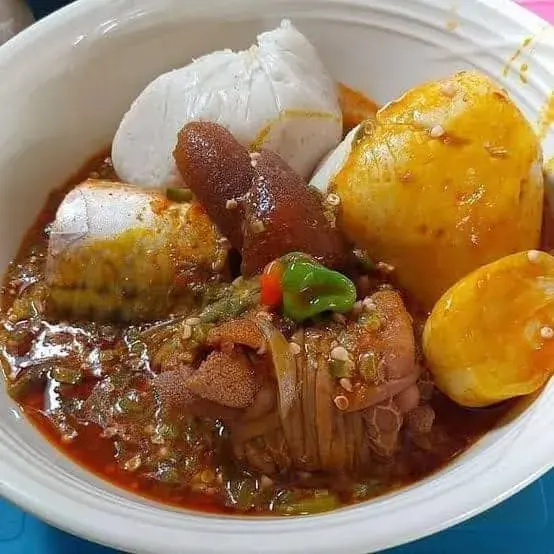
Easy and Simple Way to Make Banku
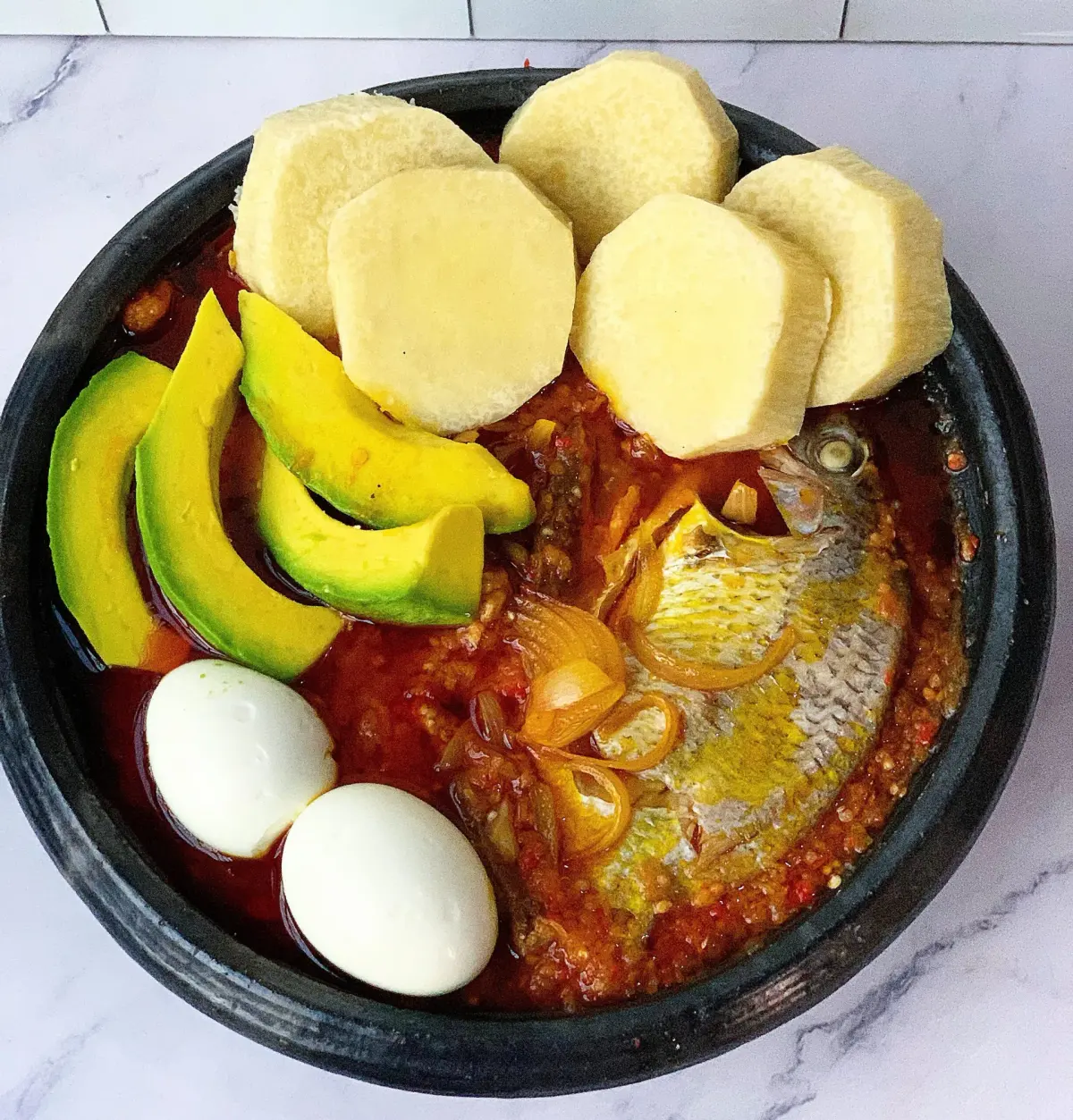
Garden Egg Stew (Earthenware Bowl Method)
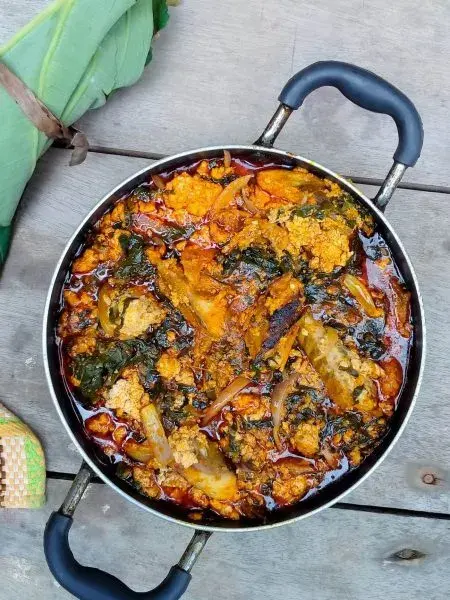
Kontomire Stew
Made this over the weekend because my husband wanted something hot for his food. The smell when that ginger and onion mixture hits the hot oil is insane! I sommer ground the smoked shrimps extra fine. You really have to stand there and keep stirring once the fish paste goes in or it catches at the bottom of the pot.
Getting proper smoked herrings in Berlin is a serious struggle sha, had to buy ground smoked fish from the afro shop near Osloer Straße. Blending the onions and ginger with oil first stopped all that heavy splashing though. Taste came out so dark and rich, just like the shito my Ghanaian roomie used to bring back.
Got the smoked shrimps and herring from woolwich market yesterday. my arm almost pain me from the constant stirring o! Cooking the onions for 20 mins was fine but it took me way longer than 60 mins total to get that deep dark colour without burning the paste. still e sweet sha, eating it now with rice.
Asante sana for this clear recipe. In Dar we love spicy relishes as well. I have a gentle question please regarding the third step: when adding water to the powdered pepper and smoked herring to form a thick paste, about how much water should be used? I want to make sure it does not become too thin before adding to the hot oil.