
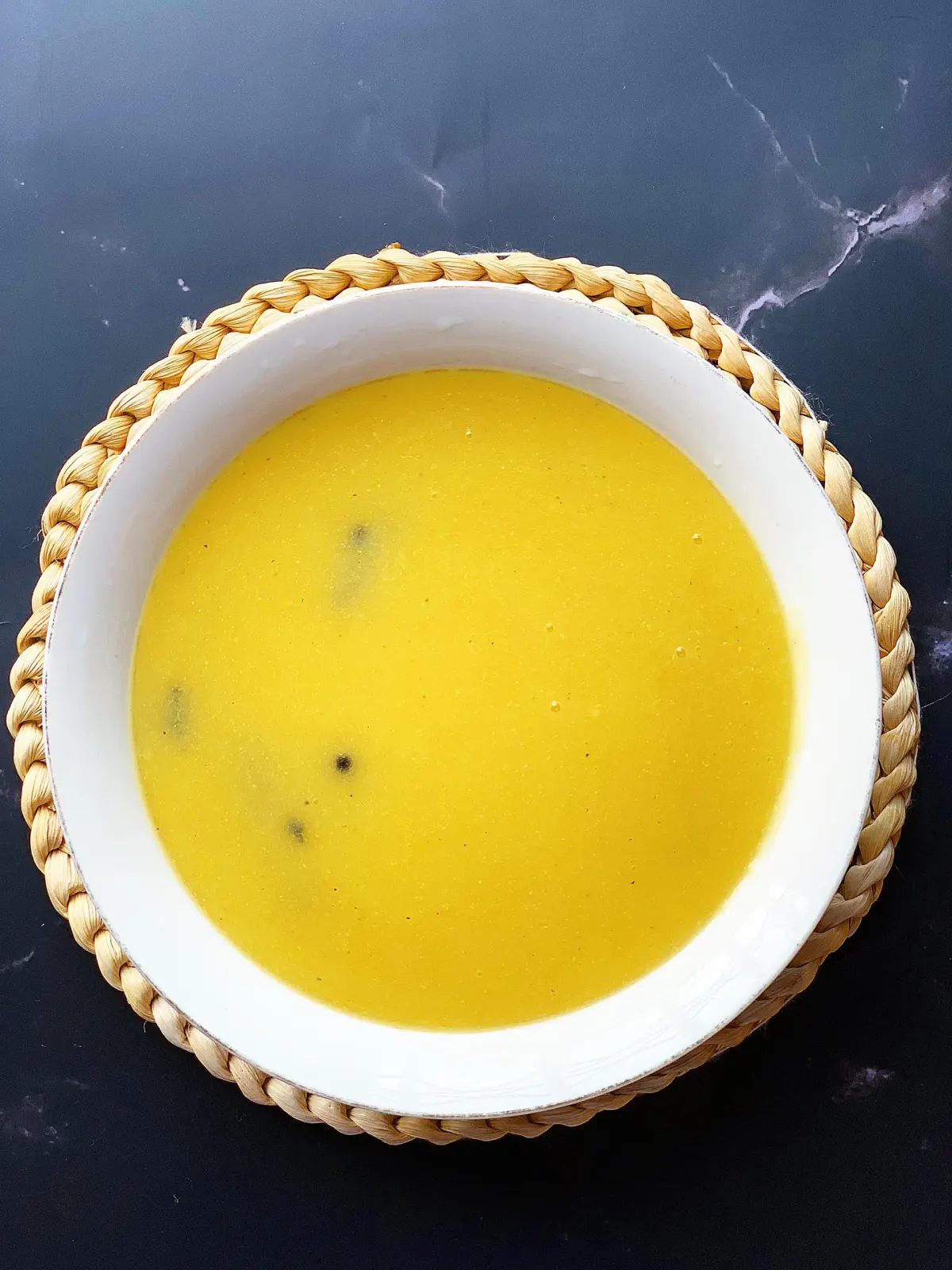
Corn Dough Porridge
Aperçu
Corn dough porridge is a Ghanaian breakfast, particularly in the south, made from fermented corn dough thinned with water and cooked with grains of selim until thick. It is closely related to koko and to ogi across the border in Nigeria, all built on the same fermented maize. Fermentation is what gives it its character. Corn is soaked, ground and left to sour for several days, which produces a distinctly tangy flavour and makes the grain easier to digest. Fermented corn dough is sold ready made at Ghanaian and Nigerian markets and grocers, in blocks or bags, and making it from scratch takes days rather than minutes. Grains of selim, also called negro pepper or hwentia, is the spice that makes this Ghanaian rather than generic. It is a long dark pod with a smoky, slightly bitter, aromatic flavour, crushed into the water before the corn goes in. The other technique that matters is straining: the dough is slaked with water and passed through a strainer before it meets the heat, which is the only reliable way to avoid lumps. It is served hot with sugar, and often with milk, roasted nuts or coconut flakes.
Note de Patrimoine AFN
Corn dough porridge is made from fermented maize and is a breakfast staple in southern Ghana, closely related to koko and to Nigerian ogi. It is flavoured with grains of selim, also known as hwentia or negro pepper.
Ingrédients
Les mentions alimentaires sont fournies par les contributeurs à titre indicatif. Elles ne sont pas vérifiées par AFN et dépendent des produits que vous achetez. En cas d’allergie grave, vérifiez vous-même chaque ingrédient. Cuisine, allergies et votre propre jugement
Préparation
- 1
Pour the corn dough into a bowl and add 1 cup of water. Mix until there are no lumps in sight.
- 2
Strain the corn dough mixture through a strainer and set it aside.
- 3
Put a saucepan on the heat, pour in 2 cups of water, add salt, crush the grains of selim into the water and bring to the boil.
- 4
After a few minutes, gently pour the strained corn dough mixture into the boiling water while stirring steadily, to prevent lumps forming.
- 5
After a few minutes the mixture becomes very thick. Add more water to loosen it, or leave it as it is, depending on your preference.
- 6
Serve hot in a bowl with sugar or another sweetener, and add milk, roasted nuts or coconut flakes if you like.
Notes de l’Africook
 Notes personnelles de Amanda Dadson
- Strain the slaked dough before it goes near the heat. It is the only reliable way to avoid lumps and it cannot be fixed afterwards.
- Pour the mixture into boiling water steadily while stirring, not the other way round.
- Crush the grains of selim rather than adding them whole, so the aroma comes out.
- It thickens dramatically in a couple of minutes, so have extra hot water to hand to loosen it to the consistency you want.
- Fermented corn dough is sold ready made at Ghanaian and Nigerian grocers. Making it from scratch takes several days of souring.
- It is best served hot or warm. Cold, it sets into a solid mass.
Questions fréquentes
What is fermented corn dough?
Maize that has been soaked, ground and left to sour for several days, producing a distinctly tangy dough. The fermentation is what gives the porridge its flavour and makes the grain easier to digest. It is sold ready made in blocks or bags at Ghanaian and Nigerian grocers.
What are grains of selim?
Grains of selim, also called hwentia or negro pepper, is a long dark pod with a smoky, slightly bitter, aromatic flavour, used across West African cooking. It is crushed into the cooking water here. There is no close substitute; it is sold whole and dried at West African grocers.
How is this different from koko or ogi?
They are close relatives built on the same fermented maize. Koko is the Ghanaian name for the porridge generally, often spiced with ginger and pepper; ogi or akamu is the Nigerian version, usually strained finer and sometimes made with millet or sorghum. The differences are in the spicing and the fineness of the strain.
Why is it strained?
To catch the bran and any coarse particles, which is what stops it going lumpy. The dough is slaked with a cup of water first, then passed through a strainer before it goes into the boiling water. Once lumps form in the pot there is no getting them out.
Avis
Soyez le premier à noter cette recette
Vous l’avez cuisinée ? Votre note aide la personne suivante à se décider.
Aucun avis sur cette recette pour le moment. Si vous l’avez cuisinée, le vôtre serait le premier.
Vous Aimerez Aussi
Voir toutes les recettes Ghana →
Easy and Simple Way to Make Banku
Garden Egg Stew (Earthenware Bowl Method)
Kontomire Stew