

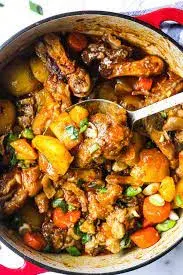
Pig Feet Stew
Aperçu
Pig feet, also called trotters and pettitoes, are cooked slowly in a tomato and pepper sauce until the connective tissue breaks down. It is eaten across West Africa and well beyond, and the technique is the same everywhere: low heat, long time. Trotters have thick skin and a great deal of robust connective tissue, which is exactly why they need it. Cooked quickly they are unpleasant; cooked slowly they turn soft and the collagen dissolves into the sauce, giving it a body that no thickener reproduces. That gelatinous quality is the point of the cut rather than a side effect. Cuts like this are eaten across the continent and are treated as good rather than as second best, which is worth stating plainly given how they are often regarded elsewhere. Cow foot, ponmo, shaki and chicken feet occupy the same place in West African cooking. The one ingredient worth flagging is the pinch of potash or baking soda in the marinade, which is used to help tenderise, and should be kept to the small quantity given. The source's health claims about collagen and skin have not been carried across.
Ingrédients
Les mentions alimentaires sont fournies par les contributeurs à titre indicatif. Elles ne sont pas vérifiées par AFN et dépendent des produits que vous achetez. En cas d’allergie grave, vérifiez vous-même chaque ingrédient. Cuisine, allergies et votre propre jugement
Préparation
- 1
Clean the meat and marinate it with one onion, the ginger, garlic, pepper, bouillon cubes and paprika.
- 2
Cook over medium heat for 45 minutes.
- 3
In a pot, heat the oil and the remaining onion until the onion is tender.
- 4
Add the concentrated tomato purée and the puréed fresh tomatoes, and cook until you have a thick red paste.
- 5
Add the meat broth, then the meat, and simmer for 15 minutes until well cooked.
- 6
Serve over rice or boiled potatoes.
Notes de l’Africook
- Give it the time. Trotters have thick skin and heavy connective tissue, and low slow heat is the only way to make them tender.
- Clean the feet thoroughly first, and singe off any remaining bristles over a flame if your butcher has not.
- The collagen thickens the sauce as it dissolves, so no other thickener is needed. If it is thin, it has not cooked long enough.
- Keep the potash or baking soda to a pinch. It helps tenderise and more than that affects both texture and flavour.
- Reduce the sauce properly to a thick red paste before the broth goes back in. That step decides the depth of the finished dish.
- It is better the next day, once the gelatine has set and been reheated through.
Questions fréquentes
Why do pig feet need such long cooking?
Because they are almost entirely skin, bone and connective tissue with very little muscle. That tissue is collagen, which only breaks down into gelatine with prolonged low heat. Cooked quickly the result is tough and rubbery; cooked slowly it becomes soft and the sauce thickens on its own.
What are pig feet called elsewhere?
Trotters and pettitoes are the common English names. They are eaten across West Africa, the American South, the Caribbean, China, Korea and much of Europe, prepared in quite different ways. In West African cooking they sit alongside cow foot, ponmo, shaki and chicken feet as cuts that are valued rather than tolerated.
What is the potash for?
It helps tenderise the meat, which is why a pinch appears in the marinade. Potash, kanwa, is an alkaline salt used across West African cooking for exactly this purpose, and baking soda does a similar job. Keep to the small quantity given: more affects the texture and the flavour.
What is it served with?
Rice, potatoes, or any plain starch that will take the sauce. Fufu and other swallows work well given how rich and gelatinous the sauce becomes as the collagen dissolves into it. It is substantial enough to be a main course and is usually eaten as one, with the starch there to carry the sauce rather than to add much of its own.
Avis
Soyez le premier à noter cette recette
Vous l’avez cuisinée ? Votre note aide la personne suivante à se décider.
Aucun avis sur cette recette pour le moment. Si vous l’avez cuisinée, le vôtre serait le premier.
Vous Aimerez Aussi
Voir toutes les recettes Togo →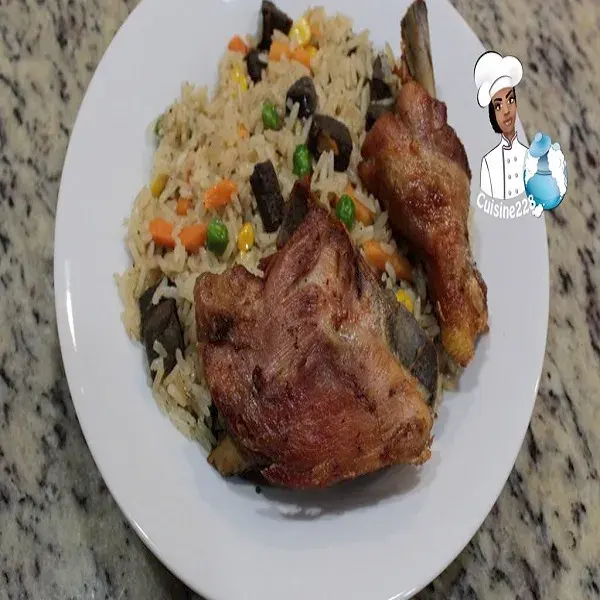
Liver Fried Rice

Merveilles
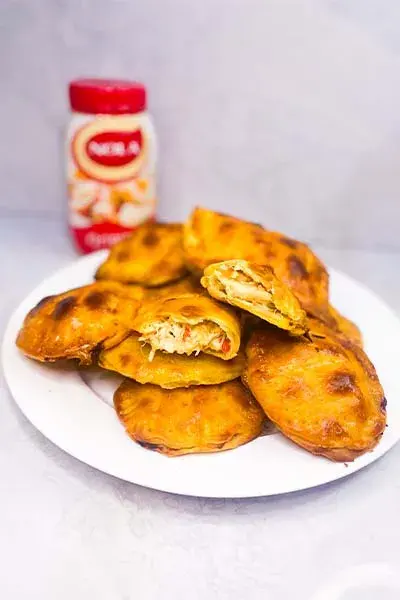
Homemade Chicken Mayo Pies