
Mbongo Tchobi (Cameroonian Black Spice Stew)
Abuja, Nigeria · Voir toutes les recettes
Aperçu
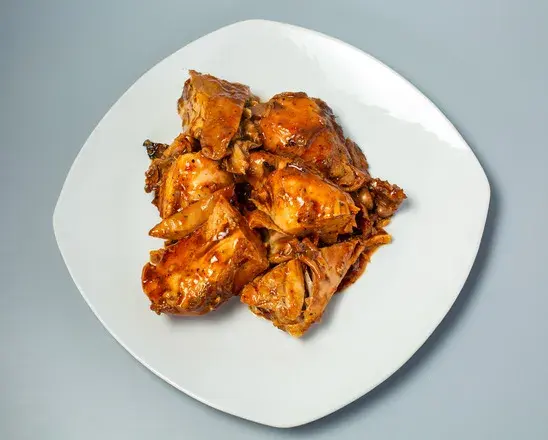
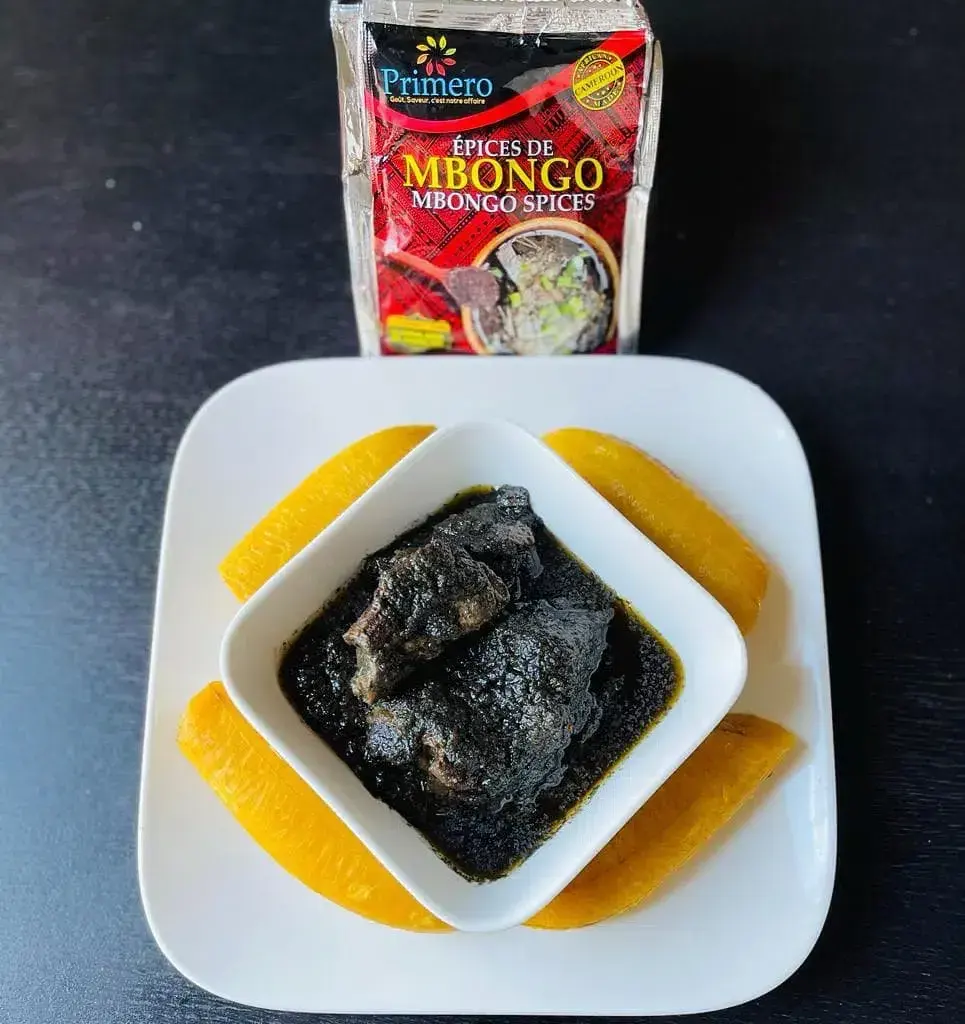
Mbongo tchobi is a jet-black Cameroonian stew, usually made with fish, built on a spice that has been burnt black before grinding. It comes from the Bassa of the Littoral region and is now eaten across the country. The colour is the whole identity of the dish and the source is right that it puts people off before they taste it. It comes from mbongo spice, sometimes sold as black spice or mbongo tchobi, a mixture whose components are charred over fire until black, then ground. Burning spice deliberately, rather than toasting it, is unusual anywhere; here it produces a smoky, faintly bitter depth that nothing else reproduces, and a sauce that looks like ink and tastes rich. The other markers are njansang or akpi, lightly fried before blending, and the herbs, basil and parsley, blended raw into the base rather than added at the end. Pangasius or another white fish is what the recipe uses; catfish is traditional and the source gives the correct treatment for it, pouring hot water over it first to remove the sliminess. The source's prose is badly garbled in places, with words run together and sentences broken mid-clause. The sense has been reconstructed. Its stated serving of one person for a kilo of fish is not credible.
Note de Patrimoine AFN
Mbongo tchobi is a Cameroonian stew from the Littoral region, associated particularly with the Bassa people. Its distinctive black colour comes from mbongo spice, a blend whose components are charred until black before being ground.
Ingrédients
Les mentions alimentaires sont fournies par les contributeurs à titre indicatif. Elles ne sont pas vérifiées par AFN et dépendent des produits que vous achetez. En cas d’allergie grave, vérifiez vous-même chaque ingrédient. Cuisine, allergies et votre propre jugement
Préparation
- 1
If using catfish, pour hot water over it in the sink, leave it a minute, then rinse and clean it, this removes the sliminess. Skip this for other white fish. Set aside.
- 2
Lightly fry the njansang or akpi for about 5 minutes and set aside.
- 3
Chop the tomatoes, onions and green onions and put them in a food processor or blender with the njansang, garlic, basil and parsley, and a little water if you are using a blender.
- 4
Blend to a smooth purée.
- 5
Warm the oil in a saucepan, then put in the blended mixture with very little water. Bring it to the boil and cook gently for about 10 minutes, turning it occasionally.
- 6
Mix in the mbongo spice, the fish, the bouillon and salt, and cook gently for another 10 minutes or more until the fish is cooked through. Add water as needed so nothing catches.
- 7
Taste and adjust the seasoning.
- 8
Serve hot with boiled plantains or bobolo.
Notes de l’Africook
- Buy mbongo spice ready-made unless you know what you are doing. Charring spices to black without ruining them is a technique in itself.
- Do not be alarmed by the colour. It looks like ink and that is correct, the dish is not burnt, the spice is.
- Blend the herbs into the base rather than adding them at the end. That is where their flavour is meant to sit here.
- Fry the njansang or akpi before blending. Five minutes releases the oils and deepens the whole sauce.
- Catfish is traditional and the hot-water treatment for it is worth doing, it removes the sliminess entirely.
- Bobolo, the Cameroonian fermented cassava stick, is the classic accompaniment, though boiled plantain is equally common.
Questions fréquentes
Why is it black?
Because of mbongo spice, a Cameroonian blend whose components are charred over a fire until black and then ground. Deliberately burning spice rather than toasting it is unusual anywhere in the world, and it is what gives the stew both its ink-black colour and its smoky, faintly bitter depth. The dish is not burnt, the spice was, on purpose, before it ever reached the pot.
Where do I buy mbongo spice?
It is widely sold ready-ground in Cameroon and available from select African grocers and online suppliers elsewhere, sometimes under the names black spice or mbongo tchobi. Buying it made is the sensible course: charring a mixture of seeds and bark to exactly the right point without producing something acrid is a skill, and it is what Cameroonian cooks generally do too.
What is njansang?
The roasted, ground seed of Ricinodendron heudelotii, used across Cameroon and Central Africa as both a flavouring and a thickener. It is nutty and slightly bitter. Akpi is a closely related seed used the same way. Frying it lightly before blending, as this recipe does, releases the oils and deepens the sauce noticeably. Neither has a straightforward substitute, and both are sold at African grocers.
What is it served with?
Bobolo, the Cameroonian fermented cassava stick, steamed in leaves, is the classic pairing, and boiled plantain is equally common. Rice works too. The sauce is thick, dark and strongly flavoured, so the accompaniment is there to carry it rather than to compete. Miondo, a thinner version of bobolo, is also standard in the Littoral region where the dish comes from.
Avis
Soyez le premier à noter cette recette
Vous l’avez cuisinée ? Votre note aide la personne suivante à se décider.
Aucun avis sur cette recette pour le moment. Si vous l’avez cuisinée, le vôtre serait le premier.