
Kefta Mkaouara (Moroccan Meatballs in Tomato Sauce)
Aperçu
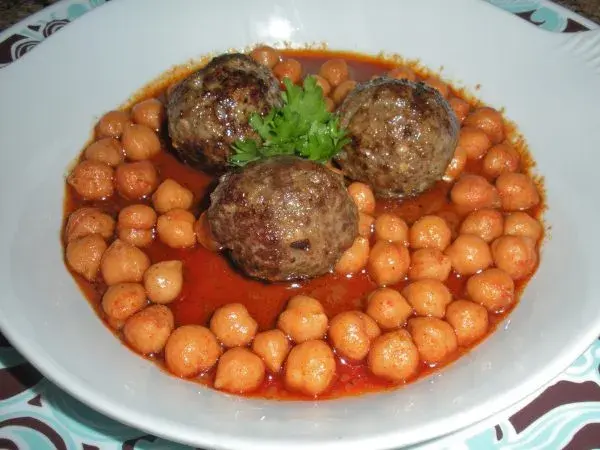
Small beef meatballs browned and then finished in a tomato and onion sauce with ras el hanout. It is Moroccan, and the fuller name for the dish is kefta mkaouara. The name belongs to an enormous family. Kefta, kofta, köfte, kufta and kafta are all the same word rendered from different languages, and versions of the dish run from Morocco through Egypt, Turkey and the Levant to South Asia. What distinguishes the Moroccan one is the seasoning, ras el hanout, the North African blend that varies by spice merchant but typically runs to a dozen or more spices, and the tagine format, where the meatballs finish in a shallow tomato sauce rather than being served dry. The size matters and is easy to get wrong. Moroccan meatballs are small, the source compares them to a large marble, because they are eaten communally from a shared dish with bread rather than plated individually. Larger ones do not work the same way. Eating it is part of it. The tagine is set in the middle of the table and everyone scoops from it with pieces of Moroccan bread, traditionally with mint tea afterwards. A separate Egyptian kofta recipe exists on this site. The two are relatives rather than duplicates: different meat, different spicing, different country.
Note de Patrimoine AFN
Kefta mkaouara is a Moroccan dish of small seasoned meatballs cooked in a tomato sauce, usually served in a tagine and eaten communally with bread. Kefta belongs to a wide family of spiced meatball dishes found from North Africa through the Levant and Turkey to South Asia.
Ingrédients
Les mentions alimentaires sont fournies par les contributeurs à titre indicatif. Elles ne sont pas vérifiées par AFN et dépendent des produits que vous achetez. En cas d’allergie grave, vérifiez vous-même chaque ingrédient. Cuisine, allergies et votre propre jugement
Préparation
- 1
Combine the ground beef with half the minced garlic and a tablespoon of the chopped onion.
- 2
Mix with your hands until fully incorporated.
- 3
Shape the meat into small oblong patties about 1 1/2 inches long, you should get 12 to 14. Keep them small; Moroccan meatballs are about the size of a large marble.
- 4
Warm a skillet over medium-high heat and brown the meatballs in batches until crisp on both sides and no longer pink in the middle, about 10 minutes. Set them aside in a rimmed serving dish.
- 5
Lower the heat to medium and put the remaining chopped onion into the pan with the meat drippings.
- 6
Season with salt and pepper and cook, turning constantly, until the onion has softened and turned translucent, about 5 minutes.
- 7
Mix in the remaining garlic and cook for 30 seconds.
- 8
Tip in the diced tomatoes, dried parsley, ras el hanout and water.
- 9
Cook until the tomatoes have softened, about 5 minutes, then pour the sauce over the meatballs and serve.
Notes de l’Africook
- Keep the meatballs small. A large marble is the right size, and it is what makes them work as communal food scooped with bread.
- Brown them in batches. Crowding the pan steams them instead of crisping them.
- Cook them in the drippings. The fat left in the pan is the base of the sauce and pouring it away costs you most of the flavour.
- Ras el hanout is what makes this Moroccan rather than generic. It is listed as optional in the source, which undersells it.
- Shop-bought mini meatballs work perfectly well if you are short of time, as the source cheerfully admits.
- Serve it in the middle of the table with Moroccan bread, which is how it is eaten. Mint tea afterwards.
Questions fréquentes
What is the difference between kefta, kofta and köfte?
They are the same word rendered from different languages, and the dishes are relatives rather than duplicates. Moroccan kefta is seasoned with ras el hanout and usually cooked in a tomato tagine; Egyptian kofta is often lamb with mint, coriander and cumin, and grilled; Turkish köfte and South Asian kofta diverge further still. The family runs across North Africa, the Levant, Turkey, the Balkans and South Asia. Separate pages exist here for the Moroccan and Egyptian versions.
What is ras el hanout?
A North African spice blend whose name means roughly head of the shop, the best a spice merchant has to offer. There is no fixed formula: blends typically contain a dozen or more spices and can run to thirty, commonly including cardamom, cumin, cinnamon, coriander, nutmeg, turmeric, ginger, pepper and dried rose petals. Every merchant has their own. It is what makes this taste Moroccan rather than generically Mediterranean.
Why are the meatballs so small?
Because of how the dish is eaten. Kefta mkaouara is served in a tagine set in the middle of the table, and everyone scoops from it with torn pieces of Moroccan bread rather than being given an individual plate. Small meatballs, the source's comparison is a large marble, fit that. Large ones need cutting, which defeats the communal, bread-scooped format entirely.
Can I use shop-bought meatballs?
Yes, and the source says so without embarrassment. The seasoning that makes this dish Moroccan is mostly in the sauce, the ras el hanout, tomato, garlic and onion, rather than in the meatballs themselves, which carry only garlic and onion. Buy the smallest you can find, brown them the same way, and proceed. It saves the twenty minutes of rolling and costs surprisingly little.
Avis
Soyez le premier à noter cette recette
Vous l’avez cuisinée ? Votre note aide la personne suivante à se décider.
Aucun avis sur cette recette pour le moment. Si vous l’avez cuisinée, le vôtre serait le premier.
Vous Aimerez Aussi
Voir toutes les recettes Morocco →
Moroccan Chicken Rfissa
Tanjia Marrakchia
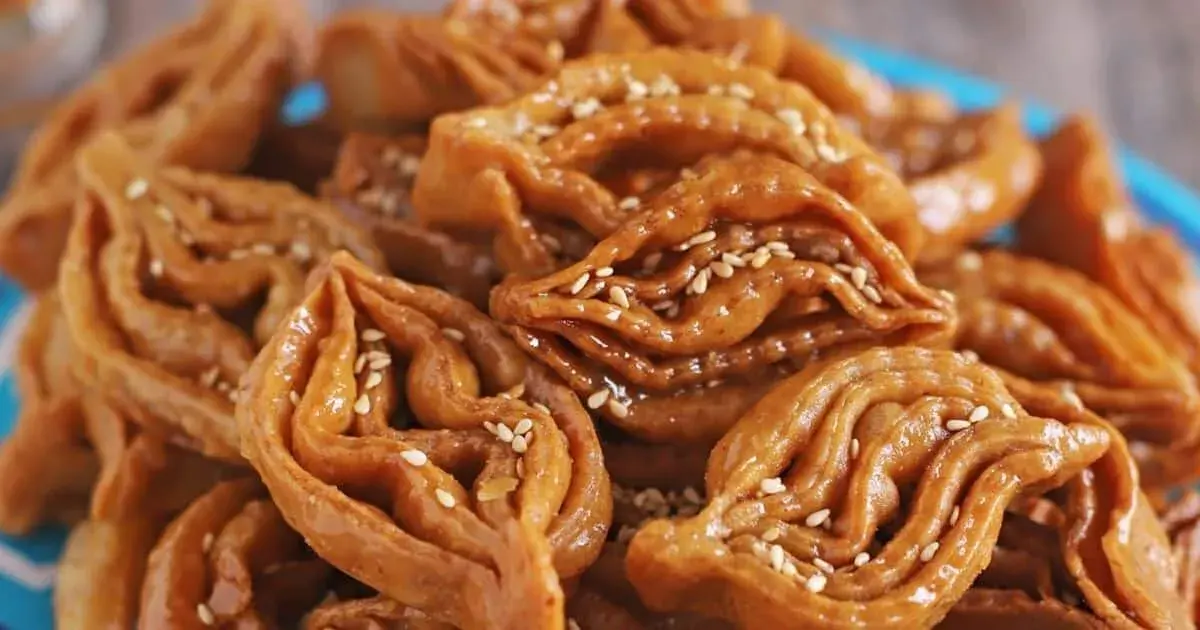
Chebakia (Moroccan Sesame Cookies)