Malva Pudding
Aperçu
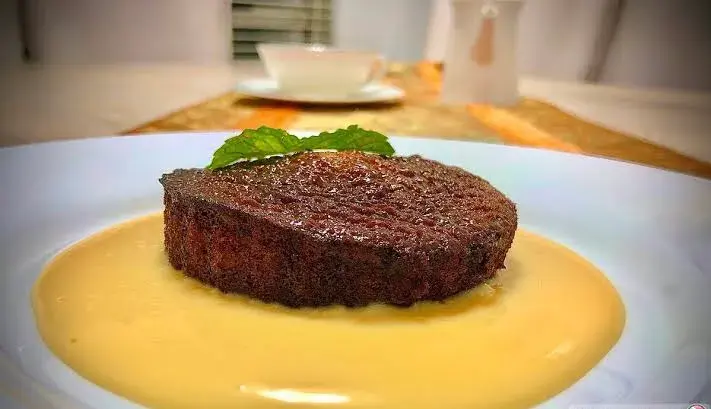
Malva pudding is a spongy baked pudding with apricot jam in the batter, drenched in a hot cream and butter sauce the moment it leaves the oven. It is South African, of Cape Dutch origin, and it is one of the country's best-known desserts. The sauce is the point. A hot pudding absorbs a hot liquid readily, and pouring the cream, butter and sugar mixture over the pudding straight from the oven is what turns a plain sponge into malva pudding. The source is right that it should be moistened rather than swimming, the sauce should soak in, not pool. Three ingredients are doing more than they appear to. Apricot jam gives both moisture and a faint fruit note that is characteristic of the dish. Vinegar provides the acid that bicarbonate of soda needs to react with, since there is no other acid in the batter. And the small quantity of butter is deliberate, malva pudding is not a rich batter, because the richness arrives afterwards in the sauce. The name is unresolved. It is often said to come from the Afrikaans for marshmallow, describing the texture, and sometimes from malvasia wine. Neither is established, and both have been recorded as claims. A chocolate version exists on this site as a separate page.
Note de Patrimoine AFN
Malva pudding is a South African baked dessert containing apricot jam, served with a hot cream and butter sauce poured over it as it leaves the oven. It is of Cape Dutch origin, brought to the Cape by Dutch settlers, and is a standard South African dessert.
Ingrédients
Les mentions alimentaires sont fournies par les contributeurs à titre indicatif. Elles ne sont pas vérifiées par AFN et dépendent des produits que vous achetez. En cas d’allergie grave, vérifiez vous-même chaque ingrédient. Cuisine, allergies et votre propre jugement
Préparation
- 1
Set the oven to 350°F / 180°C. If you have a fan oven, drop it to 160 to 170°C, this pudding catches easily.
- 2
Grease an ovenproof dish of about 18 x 18 cm.
- 3
Beat the sugar and eggs until thick and pale, then mix in the apricot jam.
- 4
Melt the butter without letting it boil, and mix it into the wet ingredients along with the vinegar.
- 5
Sift or mix the flour, bicarbonate of soda and salt together.
- 6
Work the dry mixture and the milk into the egg mixture and beat well.
- 7
Pour into the dish and bake until browned and well risen, between 30 and 45 minutes depending on your oven and dish.
- 8
While it bakes, melt the cream, butter, sugar and hot water together in a pot for the sauce and mix well.
- 9
Pour the sauce over the pudding the moment it comes out of the oven. The pudding should be moistened through rather than swimming.
- 10
Let it stand for a while, kept warm, so the sauce soaks in properly. Serve warm.
Notes de l’Africook
- Pour the sauce over while the pudding is straight-from-the-oven hot. A cooled pudding will not absorb it and it simply pools.
- Do not drown it. The sauce should soak through, not sit around the pudding in a puddle.
- Let it stand before serving. Serving immediately means the sauce has not had time to penetrate.
- The vinegar is not optional. Bicarbonate of soda is the only raising agent and there is no other acid in the batter.
- Watch it in a fan oven. The source found it caught easily and dropped the temperature twice, which is a fair warning.
- It is rich enough not to need anything, though custard or vanilla ice cream is traditional.
Questions fréquentes
Why pour the sauce on while the pudding is hot?
Because a hot pudding absorbs hot liquid readily, and a cooled one does not. Pouring the cream, butter and sugar sauce over straight from the oven is what turns a plain baked sponge into malva pudding, the sauce penetrates the whole thing rather than sitting on top. It should moisten the pudding thoroughly without leaving it swimming, and it needs a few minutes standing to soak in properly.
Where does malva pudding come from?
South Africa, with Cape Dutch origins. The source says Dutch settlers brought it to the Cape from 1652, where it was served to the Dutch establishment around the Cape of Good Hope, and that Dutch antecedents for it exist in the Netherlands. Whatever the precise route, it has been thoroughly South African for a very long time and is now one of the country's defining desserts, served everywhere from home kitchens to state banquets.
What does malva mean?
Nobody is certain. The most commonly repeated account is that it comes from the Afrikaans word for marshmallow, describing the soft, spongy texture. Another traces it to malvasia, a sweet wine sometimes served alongside. Neither is documented well enough to settle the matter, and both circulate freely in South Africa. It has been recorded here as an open question rather than given a definitive answer.
What is the apricot jam doing?
More than it looks. It adds moisture to what would otherwise be a fairly lean batter, and it contributes a faint fruit note that is genuinely characteristic of malva pudding, versions made without it taste noticeably plainer. A single tablespoon is enough. Apricot jam turns up repeatedly in South African cooking, including in Cape Malay pickled fish, where it plays a similar balancing role.
Avis
Soyez le premier à noter cette recette
Vous l’avez cuisinée ? Votre note aide la personne suivante à se décider.
Aucun avis sur cette recette pour le moment. Si vous l’avez cuisinée, le vôtre serait le premier.
Vous Aimerez Aussi
Voir toutes les recettes South Africa →
Dombolo (Dumplings or Steamed Bread)
Boeber (Cape Malay Sweet Milk Drink)