
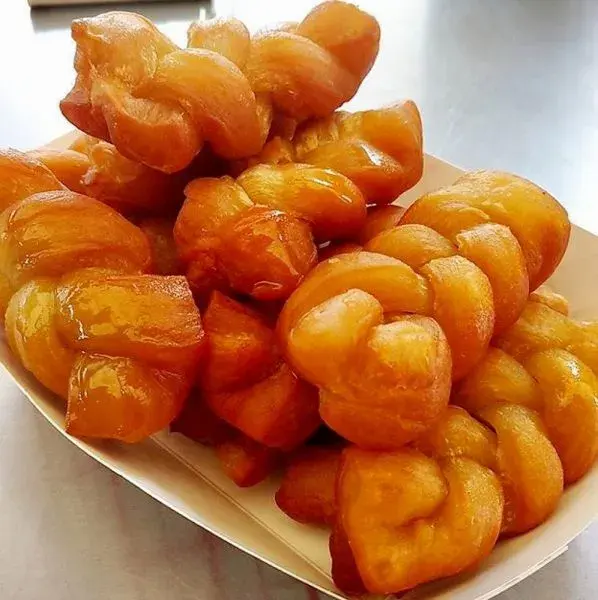
Koeksister (South African Syrup Doughnut)
Lagos, Nigeria · Voir toutes les recettes
Aperçu
Koeksisters are plaited strips of dough deep-fried and then plunged straight into ice-cold syrup, so they stay crisp outside while the syrup soaks into the middle. They are Afrikaner, and they are one of the most recognisable South African sweets. The temperature contrast is the whole technique and it is non-negotiable. Hot koeksister into ice-cold syrup: the sudden difference makes the pastry draw syrup deep inside while the outside stays crisp rather than dissolving. Warm syrup gives you a soggy, sticky mess. This is why the recipe makes you cool half the syrup over ice and keep the other half in the fridge, swapping when the first batch warms up, a detail that looks fussy and is actually essential. The name has two accounts. Koek is Dutch for cake; sister is variously explained as the plaiting of two sisters' doughnuts, or as sis, the sizzle the dough makes hitting the oil. Neither is settled. There is a second, quite different koesister, the Cape Malay version, spiced with cinnamon, ginger and aniseed, rolled in coconut, softer and more like a spiced doughnut. The two are often confused and are genuinely distinct. The source lists half an egg, which is awkward but correct at this scale.
Note de Patrimoine AFN
Koeksisters are a South African Afrikaner confection of plaited dough deep-fried and immediately immersed in ice-cold syrup. The name derives from the Dutch koek, meaning cake. A separate Cape Malay koesister, spiced and rolled in coconut, is a distinct preparation.
Ingrédients
Les mentions alimentaires sont fournies par les contributeurs à titre indicatif. Elles ne sont pas vérifiées par AFN et dépendent des produits que vous achetez. En cas d’allergie grave, vérifiez vous-même chaque ingrédient. Cuisine, allergies et votre propre jugement
Préparation
- 1
Put the water, sugar and cream of tartar in a saucepan and bring to the boil. Mix in the lemon juice, along with the dried ginger and cinnamon stick if using, and keep it at a gentle boil for 10 minutes.
- 2
Let the syrup cool to room temperature. Pour half into a bowl and set it over ice to chill rapidly; put the rest in the fridge. Both halves need to be genuinely cold.
- 3
For the dough, sift the flour and baking powder into a bowl and rub in the margarine with your fingertips.
- 4
Beat the half egg into water and whisk to combine.
- 5
Make a well in the flour, pour in the egg and water, and mix to a smooth dough. Knead thoroughly.
- 6
Cover with cling film and rest for at least 15 minutes, or up to 5 hours.
- 7
Bring the oil to 160°C.
- 8
Roll the dough out on an oiled surface with an oiled rolling pin to 5 mm thick. Cut it into rectangles of 6 x 15 cm, then cut each rectangle lengthways into three strips, leaving one end uncut. Plait the strips and press the ends together firmly.
- 9
Fry in batches of six for 6 to 7 minutes, until dark golden brown. Drain briefly on paper towels and keep the unfried dough covered so it does not dry out.
- 10
Dip each koeksister into the ice-cold syrup while it is still hot from the fryer. Lift it out with a slotted spoon onto a wire rack.
- 11
The syrup warms up as you work, so swap in the batch from the fridge when the first has lost its chill.
Notes de l’Africook
 Notes personnelles de Jennifer Ezeokoli
- Hot pastry into ice-cold syrup. This is the entire technique and warm syrup ruins it, you get soggy instead of crisp.
- Keep two batches of syrup going, one in use and one chilling. Swapping them is not fussiness; the syrup warms fast.
- Press the plaited ends together firmly. Koeksisters unravel in the oil otherwise.
- Keep the oil at 160°C, cooler than most deep frying, so the inside cooks through in the 6 to 7 minutes the outside needs.
- Oil the rolling pin and the work surface rather than flouring them. Flour on the dough burns in the oil.
- Keep unfried dough covered. It dries out quickly and dried edges will not plait or seal.
Questions fréquentes
Why does the syrup have to be ice-cold?
Because the temperature contrast is what makes a koeksister work. Plunging hot fried pastry into ice-cold syrup causes it to draw the syrup deep inside while the exterior stays crisp. Warm syrup soaks the outside and softens it, so you end up with something sticky and limp rather than the crunch-then-liquid-centre that defines the sweet. It is the single thing that separates a good koeksister from a failed one.
Why is it called a koeksister?
Koek is Dutch for cake, which is straightforward. Sister has two competing explanations: that it comes from the tradition of two sisters plaiting their dough together, or that it is from sis, the sizzling sound the dough makes as it hits the hot oil. Neither is documented well enough to settle, and both are repeated in South Africa. The pronunciation is close to cook sister.
What is the difference between a koeksister and a koesister?
They are two different sweets often confused because of the names. The Afrikaner koeksister is plaited, crisp and drenched in cold syrup. The Cape Malay koesister is a softer, rounder, spiced doughnut, cinnamon, ginger, aniseed and cardamom in the dough, dipped in syrup and rolled in desiccated coconut. Both are South African and both are excellent; they are simply not the same thing.
Can I make them ahead?
The dough can be made and rested for up to five hours before frying, and the syrup can be made a day or two ahead and kept in the fridge, which is convenient since it needs to be cold anyway. The finished koeksisters are best on the day, they stay crisp for several hours but soften as the syrup migrates outward. They are not a sweet that improves with keeping.
Avis
Soyez le premier à noter cette recette
Vous l’avez cuisinée ? Votre note aide la personne suivante à se décider.
Aucun avis sur cette recette pour le moment. Si vous l’avez cuisinée, le vôtre serait le premier.
Vous Aimerez Aussi
Voir toutes les recettes South Africa →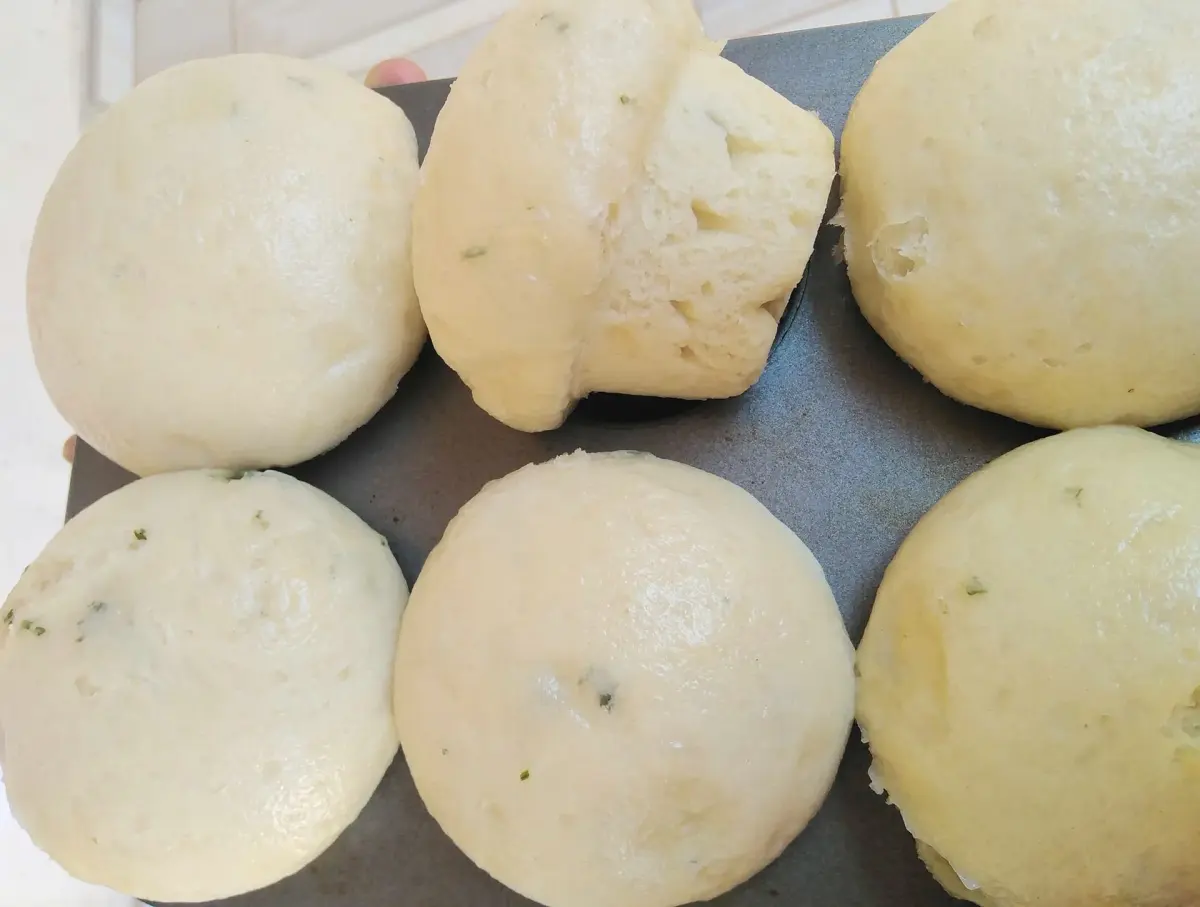
Dombolo (Dumplings or Steamed Bread)
Boeber (Cape Malay Sweet Milk Drink)