
Easy Fluffy Doughnut Without Egg
Aperçu
This is the Nigerian street doughnut, a yeasted round fried until deep gold and eaten plain or with a filling, and it is made here without egg. Doughnuts of this kind are sold from roadside stands and street trays across Nigerian cities, alongside puff puff and buns, and they belong to the same everyday snack economy. Leaving the egg out is not a compromise. Egg gives a richer, cakier crumb, and its absence produces something lighter and breadier, closer to a soft bread roll than a rich doughnut, which is what many Nigerian street versions are. Milk powder does the work of adding richness instead, and it is a common pantry item in Nigerian kitchens where fresh milk is less convenient. The technique is straightforward yeasted dough: mix, knead until smooth and elastic, shape, prove until doubled, fry. The frying is where it goes wrong most often, and the source is unusually specific about it: the oil must be low enough that it is not bubbling, because a doughnut this size needs several minutes to cook through and a hot pan will colour the outside long before the middle is done.
Ingrédients
Les mentions alimentaires sont fournies par les contributeurs à titre indicatif. Elles ne sont pas vérifiées par AFN et dépendent des produits que vous achetez. En cas d’allergie grave, vérifiez vous-même chaque ingrédient. Cuisine, allergies et votre propre jugement
Préparation
- 1
Pour the flour into a bowl.
- 2
Add all the other dry ingredients and the margarine and water.
- 3
Mix into a dough.
- 4
Knead until smooth and stretchy, about 10 minutes.
- 5
Cut into ball shapes and leave to prove for 45 minutes, or until doubled in volume.
- 6
Once proved, heat oil in a deep frying pan.
- 7
Lower the dough gently into the oil, as many as the pan will take.
- 8
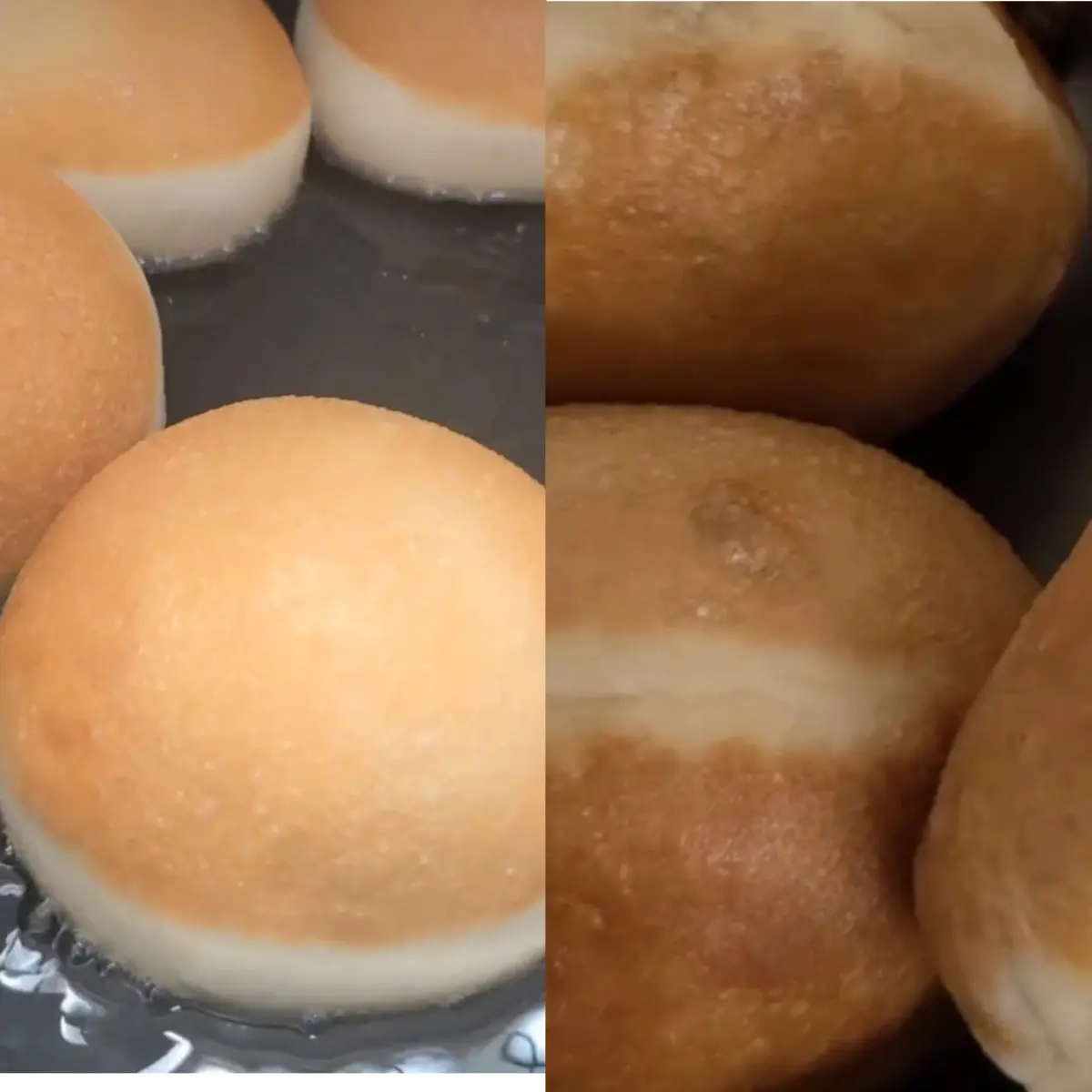
Fry for about 3 minutes, keeping the heat very low so the oil is not bubbling.
- 9
Flip and fry the other side for 2 minutes.
- 10
Remove from the oil and leave to cool.
- 11
Serve with a filling or glaze of your choice.
Notes de l’Africook
 Notes personnelles de Chopsity.
- Keep the oil low enough that it is not bubbling. This is the step people get wrong: hot oil browns the outside in a minute while the centre stays raw dough.
- Knead the full ten minutes. Without egg the structure comes entirely from gluten development, so under kneaded dough gives a dense, heavy result.
- Let them prove until genuinely doubled rather than to the clock. A cold kitchen can take far longer than 45 minutes.
- Handle the proved dough gently. Knocking the air out on the way to the pan gives flat doughnuts.
- Cool them completely before filling or glazing, or the glaze slides off and any cream filling melts.
- They are best on the day they are made. Yeasted doughnuts stale quickly, particularly without egg.
Questions fréquentes
Why leave the egg out?
It gives a different texture rather than a worse one. Egg makes a richer, cakier crumb; without it the result is lighter and breadier, closer to a soft roll, which is what many Nigerian street doughnuts are. It also makes the recipe workable when eggs are not to hand, and the milk powder supplies some of the richness instead.
Why is my doughnut raw in the middle?
The oil was too hot. A doughnut this size needs several minutes per side, and hot oil colours the outside long before the centre cooks. Keep the heat low enough that the oil is not actively bubbling, and accept that it takes about five minutes in total. Frying fewer at a time also helps hold the temperature steady.
How do I know when the dough has proved enough?
It should have roughly doubled in volume, and a finger pressed lightly into it should leave a dent that springs back slowly rather than immediately. The 45 minutes given is a guide for a warm kitchen; in a cold one it can take twice as long. Under proved dough gives dense, tight doughnuts.
Can I bake them instead?
You can, at around 180°C for 12 to 15 minutes, but the result is a sweet bread roll rather than a doughnut. The frying is doing more than cooking here: it creates the crust and the pale band around the middle that is characteristic of a proved fried dough. Baked, that does not happen.
Avis
Soyez le premier à noter cette recette
Vous l’avez cuisinée ? Votre note aide la personne suivante à se décider.
Aucun avis sur cette recette pour le moment. Si vous l’avez cuisinée, le vôtre serait le premier.
Vous Aimerez Aussi
Voir toutes les recettes Nigeria →
Edo Black Soup
Nigerian Fisherman Soup
Igbo Yam Porridge