
Cape Malay Yellow Rice
Aperçu
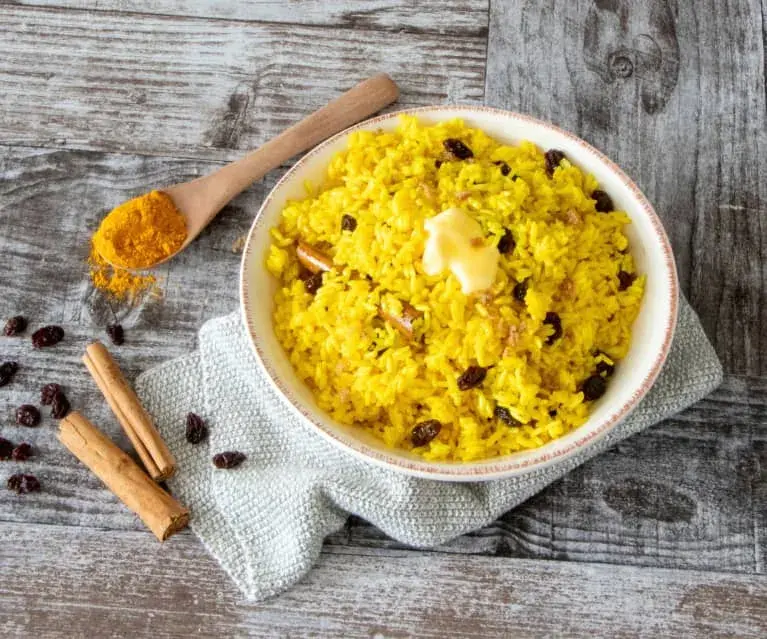
Rice cooked with turmeric, cinnamon, raisins and sugar into a sweet golden side dish. It is South African, from the Cape Malay tradition, and it is served alongside savoury curries and meat. Sweet rice as a savoury accompaniment is the thing to understand. Cape Malay yellow rice contains sugar, raisins and cinnamon, and it goes with curry, bobotie and roast meat, the sweetness is deliberately set against savoury and spiced food rather than served as a dessert. That contrast runs right through Cape Malay cooking and it is the same instinct behind bobotie's fruit chutney and the apricot jam in pickled fish. The community it comes from was formed by people brought to the Cape from Southeast Asia as slaves and political exiles by the Dutch from the seventeenth century onwards, and the dish is one of many that carries that history directly. Related yellow rices exist across the world, nasi kuning in Indonesia, kaha buth in Sri Lanka, and the family resemblance is not coincidental. Turmeric is what colours it. Saffron is used in more expensive versions and annatto elsewhere. **A significant problem with this page.** Its ingredient list merges two separate recipes, a yellow rice and a marinated roast chicken, into one list, and its method covers both. Only the rice belongs here.
Note de Patrimoine AFN
Cape Malay yellow rice is a South African side dish of rice coloured with turmeric and sweetened with sugar and raisins, served with curries and savoury dishes. It comes from the Cape Malay community, formed by people brought to the Cape from Southeast Asia by the Dutch from the seventeenth century onwards.
Ingrédients
Les mentions alimentaires sont fournies par les contributeurs à titre indicatif. Elles ne sont pas vérifiées par AFN et dépendent des produits que vous achetez. En cas d’allergie grave, vérifiez vous-même chaque ingrédient. Cuisine, allergies et votre propre jugement
Préparation
- 1
Put the butter, onion, garlic, turmeric, cumin and ginger into a medium saucepan. Cook over medium heat for 5 to 7 minutes, until the onion has softened.
- 2
Tip in the dry rice. Turn it through and cook over medium heat for about 2 minutes to toast it slightly, you may hear a faint popping as it goes.
- 3
Pour in the water and add the raisins, sugar, cinnamon stick and salt.
- 4
Put the lid on, raise the heat to high and bring the pot to a rolling boil.
- 5
As soon as it reaches a full boil, lower the heat and let it cook, covered, for 20 minutes.
- 6
Turn the heat off and let it stand, lid on, for a further 10 minutes.
- 7
Take out the cinnamon stick, fluff with a fork and serve.
Notes de l’Africook
- Do not lift the lid during the 20 minutes or the 10 minutes of resting. The trapped steam is what finishes the rice.
- Toast the rice in the spiced butter before the water goes in. It coats the grains and keeps them separate.
- Turmeric stains, pans, boards, cloths and hands. Work over the sink.
- The sugar and raisins are structural, not optional. Sweet rice against savoury curry is the whole point of the dish.
- A cinnamon stick rather than ground cinnamon. It perfumes the rice and comes out at the end.
- It goes with curry, bobotie or any spiced meat, which is how it is served in South Africa.
Questions fréquentes
Why is the rice sweet?
Because it is meant to be eaten against savoury food. Cape Malay yellow rice carries sugar, raisins and cinnamon, and it is served alongside curry, bobotie and roast meat, the sweetness is a deliberate counterpoint rather than making it a dessert. The same instinct runs right through Cape Malay cooking, in the fruit chutney served with bobotie and the apricot jam in pickled fish.
What is Cape Malay cooking?
The cuisine of the Cape Malay community of South Africa, descended from people brought to the Cape from Southeast Asia, largely the Indonesian archipelago, as slaves and political exiles by the Dutch from the seventeenth century onwards. Its hallmarks are turmeric, cinnamon, cardamom and coriander alongside sweet-sour combinations. Bobotie, bredies, pickled fish and koesisters all come from the same tradition, and all are on this site.
What gives it the colour?
Turmeric, in this recipe and in most South African versions. Saffron is used in more expensive versions and gives a subtler, more golden colour along with its own flavour; annatto is used for the same purpose in Latin American and Caribbean yellow rices. The related dishes worldwide, Indonesian nasi kuning, Sri Lankan kaha buth, Filipino kuning, use turmeric or saffron in much the same way.
Why does the source include a chicken recipe?
Because two recipes have been merged into one page. Its ingredient list runs a yellow rice and a marinated roast chicken together into a single unbroken list, and its method covers both, marinating chicken for four hours and roasting it, alongside cooking the rice. Only the rice belongs on a page called yellow rice, and that is what has been written up here. The chicken has been left out.
Avis
Soyez le premier à noter cette recette
Vous l’avez cuisinée ? Votre note aide la personne suivante à se décider.
Aucun avis sur cette recette pour le moment. Si vous l’avez cuisinée, le vôtre serait le premier.
Vous Aimerez Aussi
Voir toutes les recettes South Africa →
Dombolo (Dumplings or Steamed Bread)
Boeber (Cape Malay Sweet Milk Drink)