
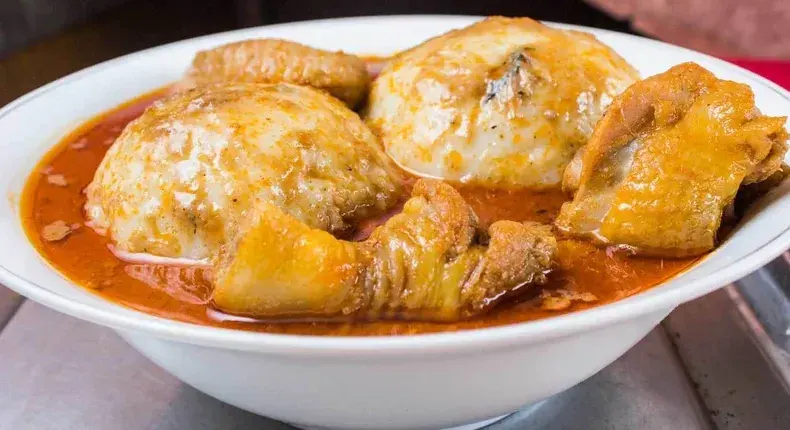
Rice Balls (Omo Tuo)
Abuja, Nigeria · Voir toutes les recettes
Aperçu
Omo tuo is the Ghanaian rice ball, made by cooking soft rice well past the point of doneness and then mashing it until the grains give up their structure and bind into a smooth dough that can be shaped by hand. It is Sunday food. Omo tuo is strongly associated with Sunday lunch in Ghanaian households and with the soups that accompany it, principally nkatenkwan, the peanut soup, and abenkwan, the palm nut soup. It is eaten by pinching off a piece of the ball and using it to scoop, and it is not eaten with cutlery. The same preparation exists in northern Nigeria and Niger as tuwo shinkafa, where it belongs to the Hausa tuwo family of grain swallows and is eaten with an entirely different set of soups: miyan kuka, miyan taushe, miyan wake. The technique is effectively identical and the two are best understood as one method with two national traditions around it. What separates them is what goes beside them on the plate, and in Ghana that means groundnut and palm nut soup rather than baobab leaf and pumpkin.
Note de Patrimoine AFN
Omo tuo is a Ghanaian rice preparation associated with Sunday meals and conventionally served with groundnut or palm nut soup. The same technique is known as tuwo shinkafa among the Hausa of northern Nigeria and Niger.
Ingrédients
Les mentions alimentaires sont fournies par les contributeurs à titre indicatif. Elles ne sont pas vérifiées par AFN et dépendent des produits que vous achetez. En cas d’allergie grave, vérifiez vous-même chaque ingrédient. Cuisine, allergies et votre propre jugement
Préparation
- 1
Rinse the rice well to remove excess starch.
- 2
Put the rice in a large pot and cover generously with water, leaving room so it does not boil over.
- 3
Cook over medium heat until the water comes to the boil.
- 4
As the liquid is absorbed, reduce the heat and test a grain between your fingers. It should be extremely soft, almost collapsing.
- 5
If it is not soft enough, add a little more water and continue, testing as you go.
- 6
Once the rice is soft, drop the heat to its lowest and begin mashing and folding the rice against the side of the pot with a wooden spoon.
- 7
Keep mashing until the grains come together into a smooth, cohesive dough.
- 8
Take the pot off the heat.
- 9
Wet your hands or a spoon and shape the dough into smooth balls.
- 10
Serve warm with groundnut or palm nut soup.
Notes de l’Africook
- Use soft short or medium grain rice. Long grain, basmati and jasmine stay separate however long they cook and will never form a dough.
- Overcook the rice on purpose. The point where ordinary rice would be ruined is where omo tuo starts.
- Mash against the side of the pot rather than stirring in the middle. The pressure against a hard surface is what breaks the grains down.
- Wet your hands or your spoon before shaping, or the dough sticks to everything.
- Serve it warm. It firms up considerably as it cools and is much harder to eat cold.
- An ice cream scoop dipped in water gives evenly sized balls quickly if you are serving several people.
Questions fréquentes
What is the difference between omo tuo and tuwo shinkafa?
The technique is effectively the same: soft rice cooked well past doneness and mashed into a dough. What differs is the tradition around it. Omo tuo is Ghanaian and eaten with groundnut or palm nut soup, usually on Sundays. Tuwo shinkafa belongs to the Hausa of northern Nigeria and Niger and is eaten with miyan kuka, miyan taushe and other northern soups.
What rice should I use?
A soft short or medium grain variety that breaks down and releases its starch. Local West African soft rice is ideal. Pudding rice or a short grain white rice works. Basmati, jasmine and long grain parboiled rice will not: they are bred to stay separate, which is the opposite of what this dish needs.
What soups go with omo tuo?
Nkatenkwan, the Ghanaian peanut soup, and abenkwan, the palm nut soup, are the two most closely associated with it. Light soup is also eaten with it. In Ghana it is very strongly a Sunday dish, and those soups are what appear alongside it at a Sunday table.
Can I make it ahead?
It is much better fresh and warm, since it stiffens as it cools. If you must make it in advance, wrap the shaped balls tightly and reheat by steaming rather than microwaving, which dries the surface. The whole process takes under 45 minutes, so most households simply make it to order.
Avis
Soyez le premier à noter cette recette
Vous l’avez cuisinée ? Votre note aide la personne suivante à se décider.
Aucun avis sur cette recette pour le moment. Si vous l’avez cuisinée, le vôtre serait le premier.
Vous Aimerez Aussi
Voir toutes les recettes Ghana →
Easy and Simple Way to Make Banku
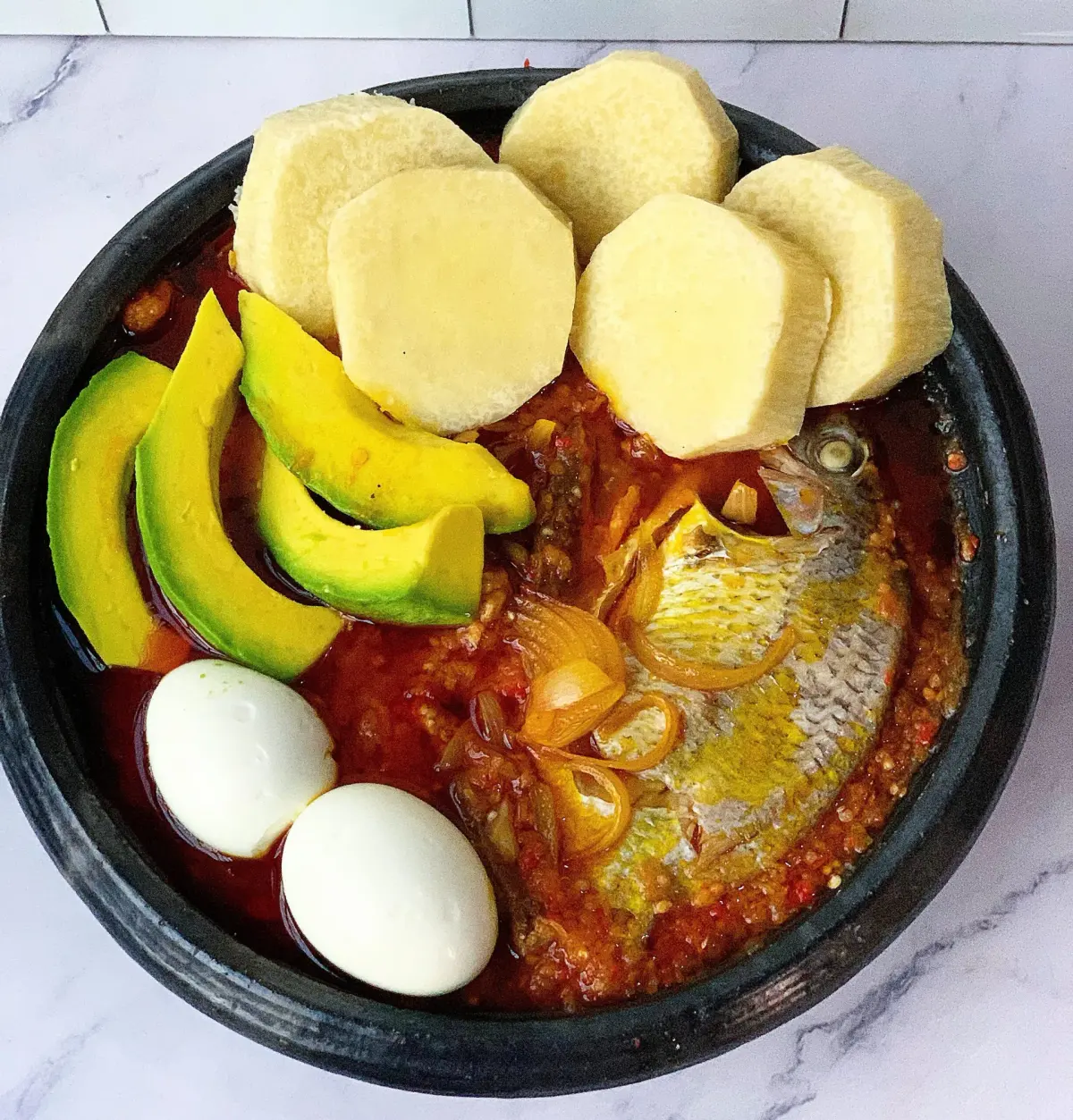
Garden Egg Stew (Earthenware Bowl Method)
Kontomire Stew