
Githeri
Aperçu
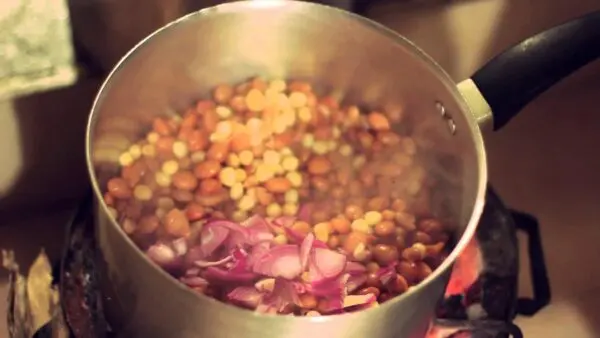
Githeri is boiled maize and beans, and it is the staple dish of the Kikuyu people of central Kenya, also eaten by the Meru, Mbeere, Embu and Kamba communities of the central and eastern provinces, and now widely across the country. Its importance is nutritional as much as cultural, and the reason is worth stating precisely. Maize and beans eaten together form a complete protein: maize is short on lysine, beans are short on methionine, and each supplies what the other lacks. Neither alone would do it. In a diet where meat is occasional rather than daily, that combination has done an enormous amount of work, and it is the reason githeri has stayed central rather than being displaced. Both crops are grown locally on smallholdings across the region, which is the other half of the explanation. Githeri is made from what the farm produces, and it is cheap in a way imported staples are not. Fresh maize and beans are preferred where available, and most cooks say the taste is better; dried is used the rest of the year and needs longer cooking. The basic dish is plain, boiled together, salted. From there it is often fried up with onion, tomato and greens into something richer, and potatoes are a common addition.
Note de Patrimoine AFN
Githeri is documented as a staple of the Gikuyu, Meru, Mbeere and Embu peoples of Kenya's central and eastern provinces, and is also eaten by the Kamba. The maize and bean combination supplies a complete protein, each crop compensating for the amino acid the other lacks.
Ingrédients
Les mentions alimentaires sont fournies par les contributeurs à titre indicatif. Elles ne sont pas vérifiées par AFN et dépendent des produits que vous achetez. En cas d’allergie grave, vérifiez vous-même chaque ingrédient. Cuisine, allergies et votre propre jugement
Préparation
- 1
In a large pan, add olive oil over medium heat.
- 2
Once heated, saute onions for a couple of minutes until lightly golden and translucent in appearance
- 3
Reduce heat to low and simmer until cooked through, 8 to 10 minutes.
- 4
Cook on low heat while stirring for a minute
- 5
Now, add tomatoes; cook for three minutes or until the tomatoes are soft and mushy
- 6
Next, stir in beans, corn kernels, stock and salt; cover the githeri mixture and reduce heat to low-medium
- 7
Simmer for about 8 minutes, stirring occasionally
- 8
Garnish githeri with spring onion (scallion) and cilantro
Notes de l’Africook
- Soak dried beans overnight and cook them until genuinely soft before anything else joins them. Undercooked beans are the usual fault.
- Cook the maize and beans together from the start so the flavours combine, rather than boiling separately and mixing.
- Do not salt the beans early. Salt at the start toughens the skins and lengthens cooking considerably.
- Fresh maize and beans cook much faster and taste better, use them in season and expect a shorter pot.
- Leftover githeri fried with onion, tomato and greens is arguably better than the first serving.
Questions fréquentes
Why are maize and beans always eaten together?
Because together they make a complete protein and separately they do not. Maize is low in the amino acid lysine; beans are low in methionine. Eaten in the same meal, each covers the other's gap. In a diet where meat is not eaten daily, that combination is doing real nutritional work, and it explains why the pairing appears in staple dishes across several continents.
Fresh or dried maize and beans?
Fresh is generally preferred where it is available and most cooks say it tastes noticeably better. Dried is used out of season and needs soaking and considerably longer cooking. Neither is wrong, it is a question of what the season and the market offer.
Is githeri eaten plain?
It can be, and in its simplest form it is just boiled maize and beans with salt. Very commonly it is then fried up with onion, tomato, greens and sometimes potato into a richer dish, which is how most households actually eat it. Both versions are githeri.
How long does it take?
With dried beans, a long time, soaking overnight and then well over an hour of boiling, sometimes considerably more depending on the age of the beans. Fresh maize and beans cut that down substantially. This is a dish traditionally cooked in a large pot and eaten across more than one meal.
Avis
Soyez le premier à noter cette recette
Vous l’avez cuisinée ? Votre note aide la personne suivante à se décider.
Aucun avis sur cette recette pour le moment. Si vous l’avez cuisinée, le vôtre serait le premier.