
Homemade Fermented Lemonade
Birmingham, United Kingdom · Voir toutes les recettes
Aperçu
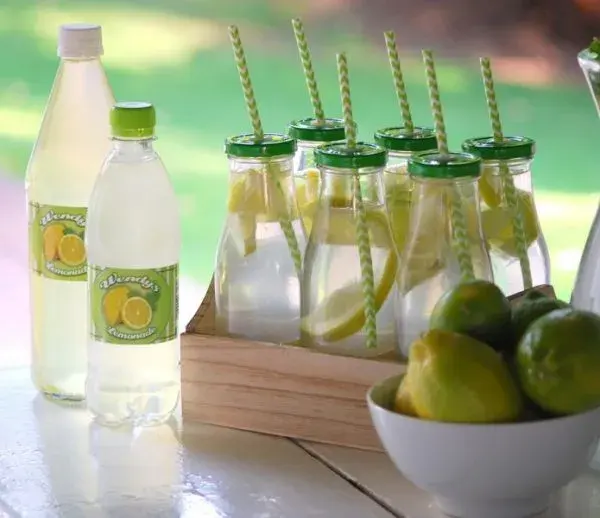
Lemon juice, sugar syrup and water, with raisins left in overnight to start a light fermentation and give the drink a natural fizz. No country is claimed. The raisins are the interesting part, and the source rather buries them. Dried fruit carries wild yeasts on its skin; left in a sweet liquid at room temperature, those yeasts begin converting sugar into carbon dioxide, which is what produces the fizz. This is the same principle behind ginger beer plants and a great many traditional home-fermented drinks, and it is why the method says to leave it overnight rather than serving immediately. Two consequences follow, and neither is in the source. Fermentation produces a small amount of alcohol alongside the carbon dioxide, usually well under one per cent for an overnight ferment, but not zero. And a fermenting drink in a sealed container builds pressure, so it should be left loosely covered rather than tightly capped. The source's history is muddled. It dates lemonade to Paris around 1630, which refers specifically to the French *limonade* sold by the Compagnie des Limonadiers; sweetened lemon drinks are considerably older and are documented in medieval Egypt. No quantities are given at all; those below are working proportions.
Ingrédients
Les mentions alimentaires sont fournies par les contributeurs à titre indicatif. Elles ne sont pas vérifiées par AFN et dépendent des produits que vous achetez. En cas d’allergie grave, vérifiez vous-même chaque ingrédient. Cuisine, allergies et votre propre jugement
Préparation
- 1
Make a simple syrup by dissolving the sugar in the warm water, so it disperses evenly rather than sinking to the bottom.
- 2
Extract the juice from the lemons.
- 3
Pour the juice and the sugar syrup into a jug and drop in the raisins.
- 4
Leave it somewhere cool, loosely covered rather than sealed, for several hours or overnight. The wild yeasts on the raisin skins begin fermenting the sugar, which is what produces the fizz. Do not cap it tightly, fermentation builds pressure.
- 5
Before serving, pour in about two cups of cold water and a good quantity of ice.
- 6
Taste. If it is still too sweet, drop a slice or two of lemon into each glass.
Notes de l’Africook
 Notes personnelles de Beatrice Ige
- Leave it loosely covered, never tightly sealed. A fermenting drink builds pressure and a sealed bottle is a genuine hazard.
- The overnight rest is the recipe. Served immediately it is ordinary lemonade; left with the raisins it develops a light natural fizz.
- An overnight ferment produces a small amount of alcohol, well under one per cent, but not none. Worth knowing if you are serving children.
- Dissolve the sugar in warm water first. Granulated sugar tipped into cold lemon juice sinks and stays there.
- Use unwaxed or well-scrubbed raisins. Sulphured dried fruit ferments poorly, since the sulphur inhibits the yeast.
- Refrigerate once it has the fizz you want. Cold slows the fermentation right down.
Questions fréquentes
What are the raisins for?
Fermentation. Dried fruit carries wild yeasts on its skin, and in a sweet liquid at room temperature those yeasts start converting sugar into carbon dioxide, which is what gives the drink its natural fizz. It is the same principle behind ginger beer plants and many traditional home-fermented drinks. Without the raisins and the overnight rest, you have ordinary still lemonade, perfectly good, but not what this recipe is doing.
Does it contain alcohol?
A very small amount. Fermentation produces alcohol alongside carbon dioxide, and an overnight ferment at room temperature typically yields well under one per cent by volume, comparable to some commercial soft drinks and far below anything intoxicating. It is worth knowing if you are serving children or anyone who avoids alcohol entirely. Refrigerating the drink once it has fizzed slows the process almost to a stop.
Is it safe to seal the bottle?
No, not while it is fermenting. Carbon dioxide has to go somewhere, and in a tightly capped bottle it builds pressure until something gives, burst bottles from home-fermented drinks are a real and reasonably common accident. Leave the jug loosely covered with a cloth or a lid resting on top. Once you refrigerate it and the fermentation slows, a sealed container is fine for short storage.
Where does lemonade come from?
Sweetened lemon drinks are old and widespread, versions are documented in medieval Egypt, where lemons were grown and a sugared lemon drink called qatarmizat was recorded. The source's date of Paris around 1630 refers to something more specific: the French limonade sold by the Compagnie des Limonadiers, a licensed guild of vendors. Carbonated lemonade, which is what the word means in much of Europe today, came considerably later.
Avis
Soyez le premier à noter cette recette
Vous l’avez cuisinée ? Votre note aide la personne suivante à se décider.
Aucun avis sur cette recette pour le moment. Si vous l’avez cuisinée, le vôtre serait le premier.