
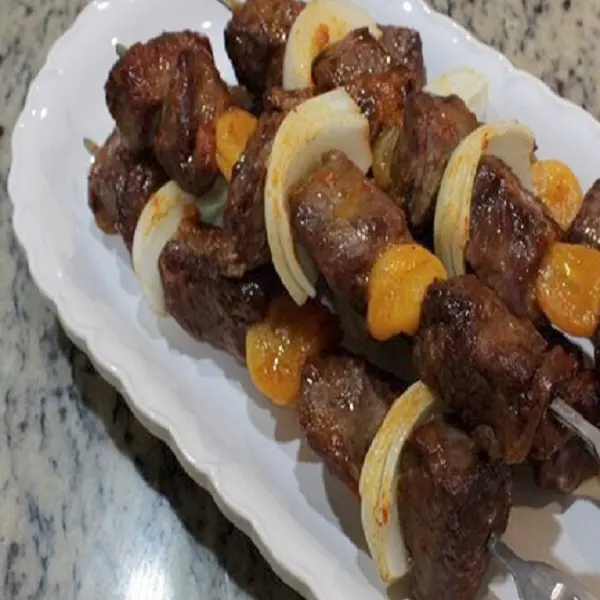
Dried Apricot and Lamb Sosaties
Aperçu
Sosaties are South African kebabs, marinated meat threaded onto skewers with dried apricots and grilled over a braai. Lamb is the national favourite. The name comes from Afrikaans, from sate, the Malay word for skewered meat, and saus for sauce. That etymology points directly at the origin: sosaties are a Cape Malay dish, developed by the community descended from people brought to the Cape from the Indonesian archipelago and South Asia under Dutch colonial rule. The curried, fruit-sweetened marinade is characteristic of that cooking, and it is where South African food gets much of its sweet-savoury instinct. The apricots are the distinctive part. Dried apricots are threaded between the meat, and during grilling they soften and caramelise while the curry and vinegar marinade cuts through the lamb fat. Some of the marinade is usually thickened into a sauce and served alongside. They belong at a braai alongside boerewors, chops and steaks, which is where most South Africans encounter them. Marinating overnight is standard and makes a substantial difference, the acid in the marinade works on the meat over hours.
Note de Patrimoine AFN
Sosaties take their name from the Malay sate, skewered meat, and the Afrikaans saus. They are a Cape Malay dish, developed by the community descended from people brought to the Cape from the Indonesian archipelago and South Asia under Dutch colonial rule.
Ingrédients
Les mentions alimentaires sont fournies par les contributeurs à titre indicatif. Elles ne sont pas vérifiées par AFN et dépendent des produits que vous achetez. En cas d’allergie grave, vérifiez vous-même chaque ingrédient. Cuisine, allergies et votre propre jugement
Préparation
- 1
Combine the jam, vinegar, curry powder, garlic, salt, ginger, cinnamon, allspice, brown sugar, and paprika.
- 2
Put the lamb in a large glass baking dish, add the marinade and toss to coat evenly. Cover and refrigerate for 2 hours, tossing the meat 2 or 3 times.
- 3
In a small heatproof bowl, cover the apricots with boiling water and let plump for 1 hour; drain before using. Soak eight 8-inch bamboo skewers in water.
- 4
Thread the lamb cubes, onion and apricots onto the skewers, using 3 apricots per skewer.
- 5
Light the grill or preheat the broiler. Grill or broil the skewers for 12 to 15 minutes, basting and turning occasionally, until the lamb is still slightly pink inside. Serve at once.
Notes de l’Africook
- Marinate overnight. This is the step that matters most and a short marinade gives a noticeably flatter result.
- Soak wooden skewers in water for half an hour first so they do not burn through.
- Thread the apricots between the meat rather than at the ends, where they scorch.
- Reserve some marinade before it touches raw meat, and cook it down into a sauce to serve.
Questions fréquentes
Where does the name come from?
From the Malay word sate, meaning skewered meat, and the Afrikaans saus for sauce. It reflects the dish's Cape Malay origins, the community descended from people brought to the Cape from the Indonesian archipelago and South Asia under Dutch rule, whose cooking shaped a great deal of South African food.
Why apricots with lamb?
The sweet-and-savoury combination is characteristic of Cape Malay cooking. Dried apricots soften and caramelise on the grill, and their sweetness plays against the curry spicing and the vinegar in the marinade, both of which cut through lamb fat. It is a deliberate balance rather than a garnish.
Can I use other meat?
Yes. Lamb is the traditional favourite, but beef, pork and chicken sosaties are all common at a braai. The marinade works with all of them. Cooking times differ, chicken needs to be cooked through, while lamb and beef are usually served pink in the middle.
Avis
Soyez le premier à noter cette recette
Vous l’avez cuisinée ? Votre note aide la personne suivante à se décider.
Aucun avis sur cette recette pour le moment. Si vous l’avez cuisinée, le vôtre serait le premier.
Vous Aimerez Aussi
Voir toutes les recettes South Africa →
Dombolo (Dumplings or Steamed Bread)
Boeber (Cape Malay Sweet Milk Drink)