

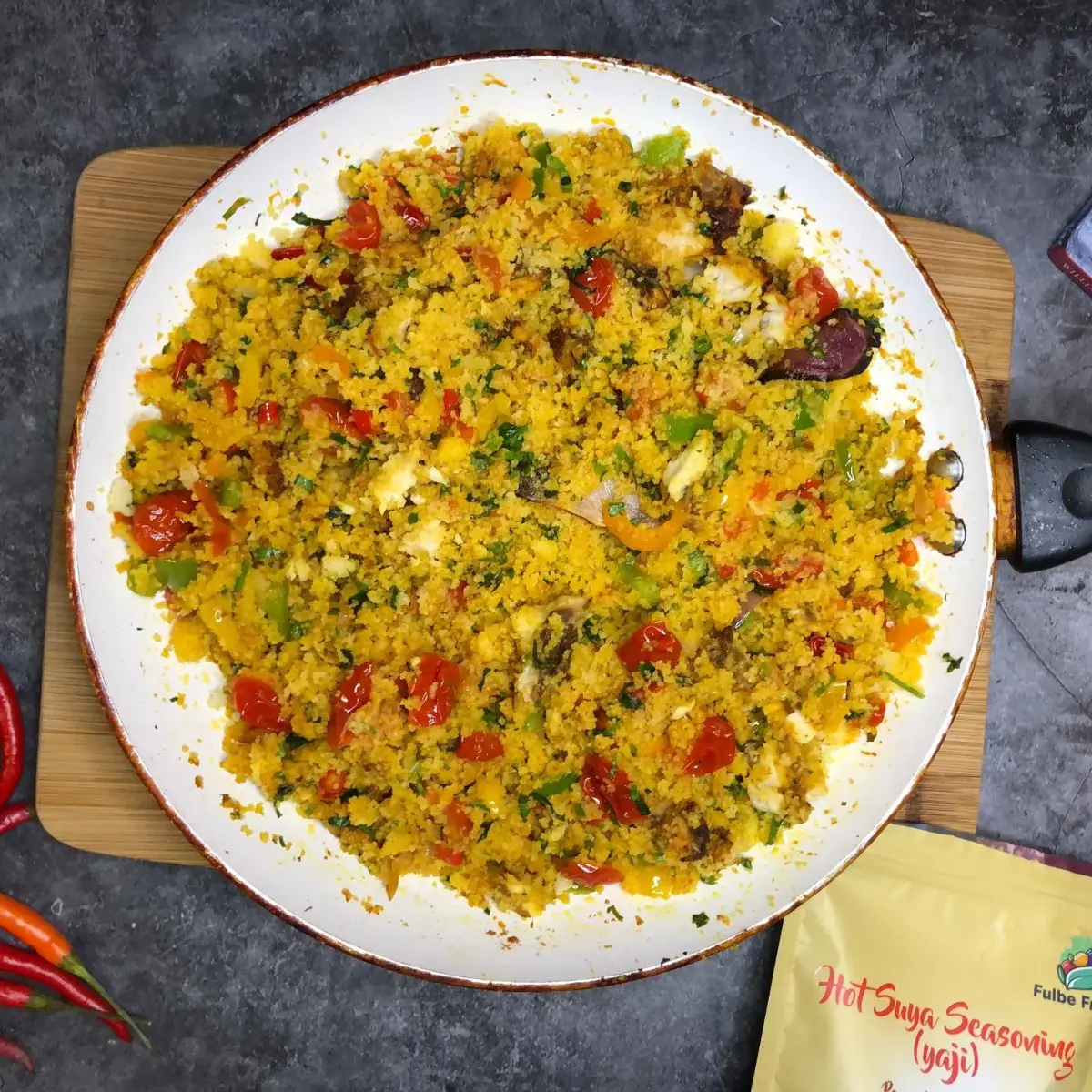
Dambu With Veggies
Aperçu
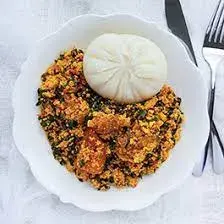
Dambu is a Hausa steamed grain dish made from grits rather than flour, and the distinction is what gives it its texture. Whole maize, wheat, sorghum or millet is cracked into coarse pieces called tsaki, moistened, and steamed until the grains separate into something that looks and eats a great deal like couscous. Which grain goes in decides which dambu you are making. Tsakin masara is maize grits and tsakin alkama is wheat, and Hausa households treat the versions as distinct in the same way they distinguish between the tuwo made from each grain. The steaming is done in two stages, with the additions going in halfway, which is what lets the groundnuts and vegetables perfume the grain rather than sit on top of it. In its plain form dambu is eaten with oil and chilli flakes and served alongside a soup such as miyan taushe, miyan kuka or a tomato stew. It can also be built out into a complete dish with meat, vegetables, oil and seasoning worked through it, which is what this version does and which Hausa cooks describe as making it jollof. The word dambu also names a shredded dried meat, dambu nama, which is a different preparation entirely despite the shared name.
Note de Patrimoine AFN
Dambu is documented as a Hausa preparation of Northern Nigeria, made by steaming cracked grain known as tsaki rather than flour, from maize, wheat, sorghum or millet. Its earliest documented date is uncertain.
Ingrédients
Les mentions alimentaires sont fournies par les contributeurs à titre indicatif. Elles ne sont pas vérifiées par AFN et dépendent des produits que vous achetez. En cas d’allergie grave, vérifiez vous-même chaque ingrédient. Cuisine, allergies et votre propre jugement
Préparation
- 1
Add water to the maize grits.
- 2
Add the vegetable oil and salt.
- 3
Mix thoroughly.
- 4
Put the mixture in a colander and cover with a light cloth.
- 5
Steam for 15 minutes. The dambu should be soft but not completely cooked.
- 6
Remove the half cooked dambu from the steam.
- 7
Add the vegetables, shredded boiled meat, seasoning and coarsely ground groundnuts.
- 8
Add the spring onions.
- 9
Cover again and return to the steam for a further 10 minutes.
- 10
The aroma of the groundnuts and spring onions will become obvious at this point.
- 11
Remove from the steam and serve.
Notes de l’Africook
 Notes personnelles de Maryam Al-Mansour
- Stop the first steaming while the grain is still slightly underdone. It finishes in the second stage, and grain that is already soft at the halfway point turns to mush by the end.
- Adding the groundnuts and spring onions halfway through is the technique. Ten minutes of steam is what carries their aroma into the grain rather than leaving them sitting on the surface.
- Use grits, not flour. Cracked grain is what gives dambu its separate, couscous like texture, and flour will give you a tuwo instead.
- Fluff with a fork between the two steamings so the grains separate rather than compacting into a block.
- Plain dambu, eaten with oil and chilli flakes alongside miyan taushe, miyan kuka or a tomato stew, is the base version. This one is deliberately built out.
Questions fréquentes
What is dambu made from?
Cracked grain rather than flour, known in Hausa as tsaki. Maize grits, tsakin masara, and wheat grits, tsakin alkama, are the most common, and sorghum and millet are also used. The grain is moistened, seasoned and steamed until the pieces separate, giving a texture close to couscous. The grain you choose determines which dambu you have made.
Is dambu the same as dambu nama?
No, despite the shared word. Dambu here is a steamed grain dish. Dambu nama is dried beef shredded into fine fibres and eaten as a snack. The word dambu refers to the shredded or crumbled form in both cases, which is why the two share it, but they are entirely different foods.
What is dambu eaten with?
In its plain form, with oil and chilli flakes alongside a Northern Nigerian soup such as miyan taushe or miyan kuka, or with a tomato stew. Built out with meat, vegetables and seasoning, as in this version, it works as a complete dish on its own, which Hausa cooks describe as cooking it as jollof.
Can I make dambu without a steamer?
Yes, and the method here does not use a dedicated one. A colander or sieve set over a pot of simmering water, covered with a light cloth or a lid, is the standard household approach. What matters is that the water does not touch the grain and that steam cannot escape freely at the sides.
Avis
6 avis
Vous Aimerez Aussi
Voir toutes les recettes Nigeria →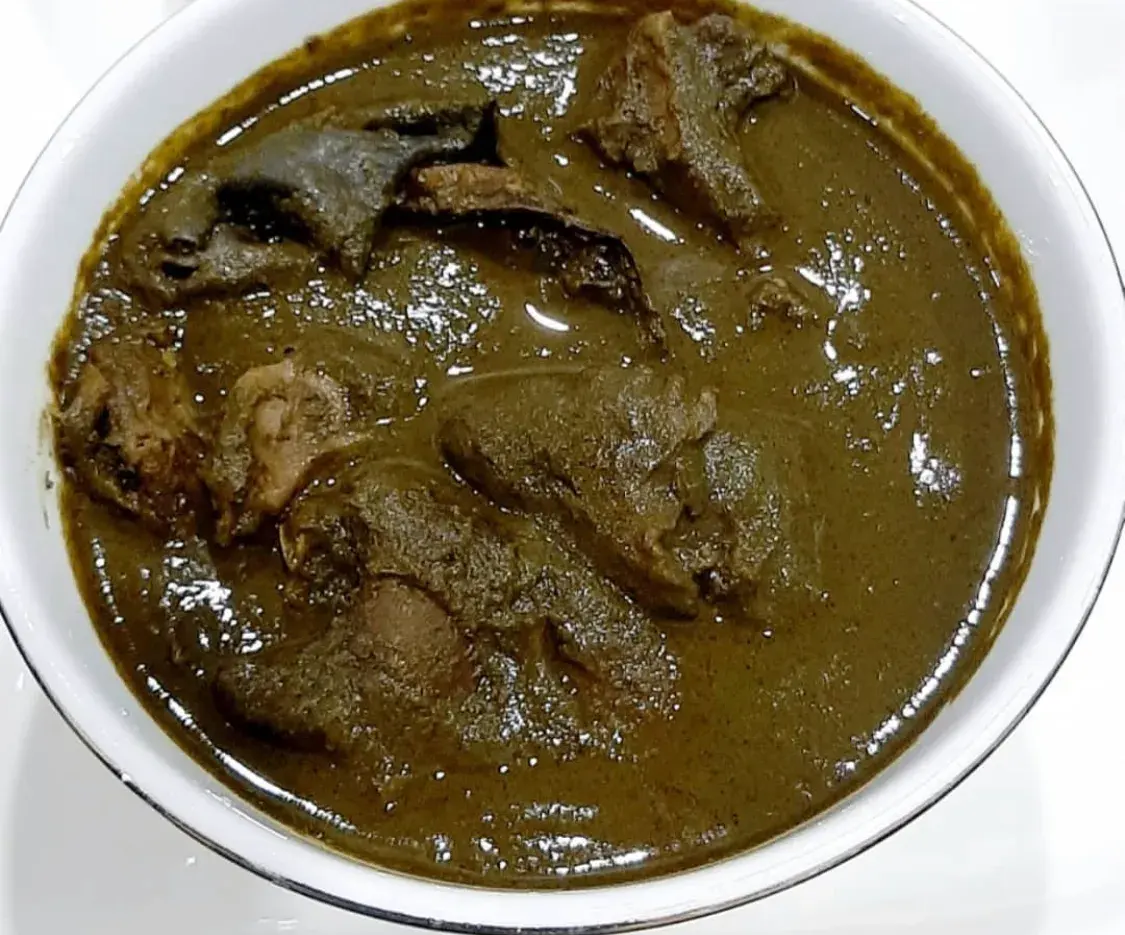
Edo Black Soup
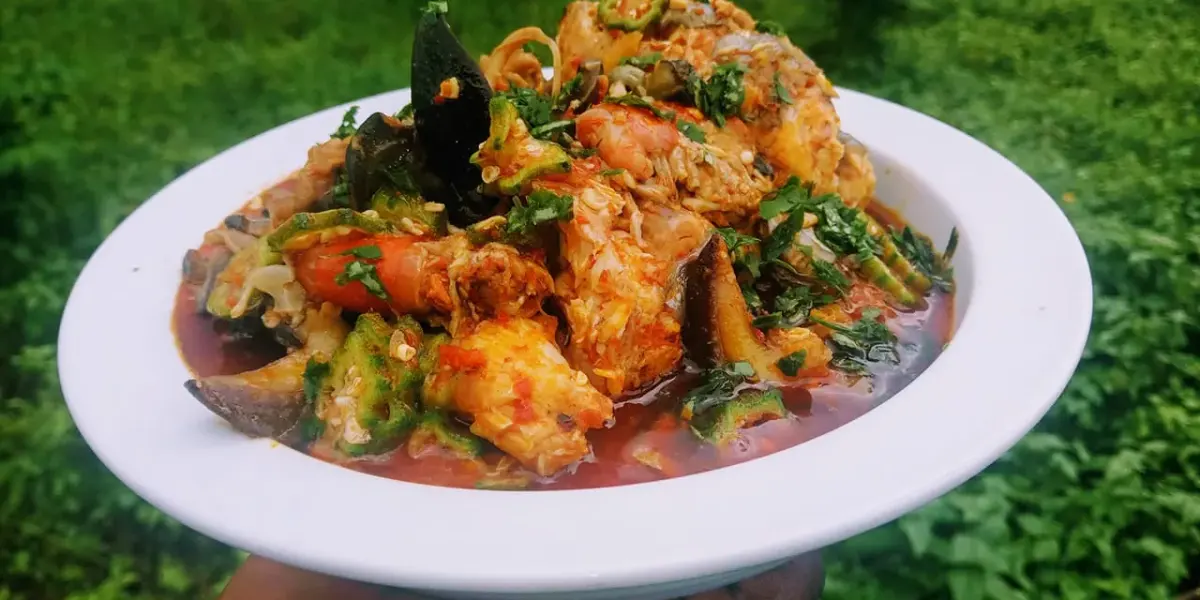
Nigerian Fisherman Soup
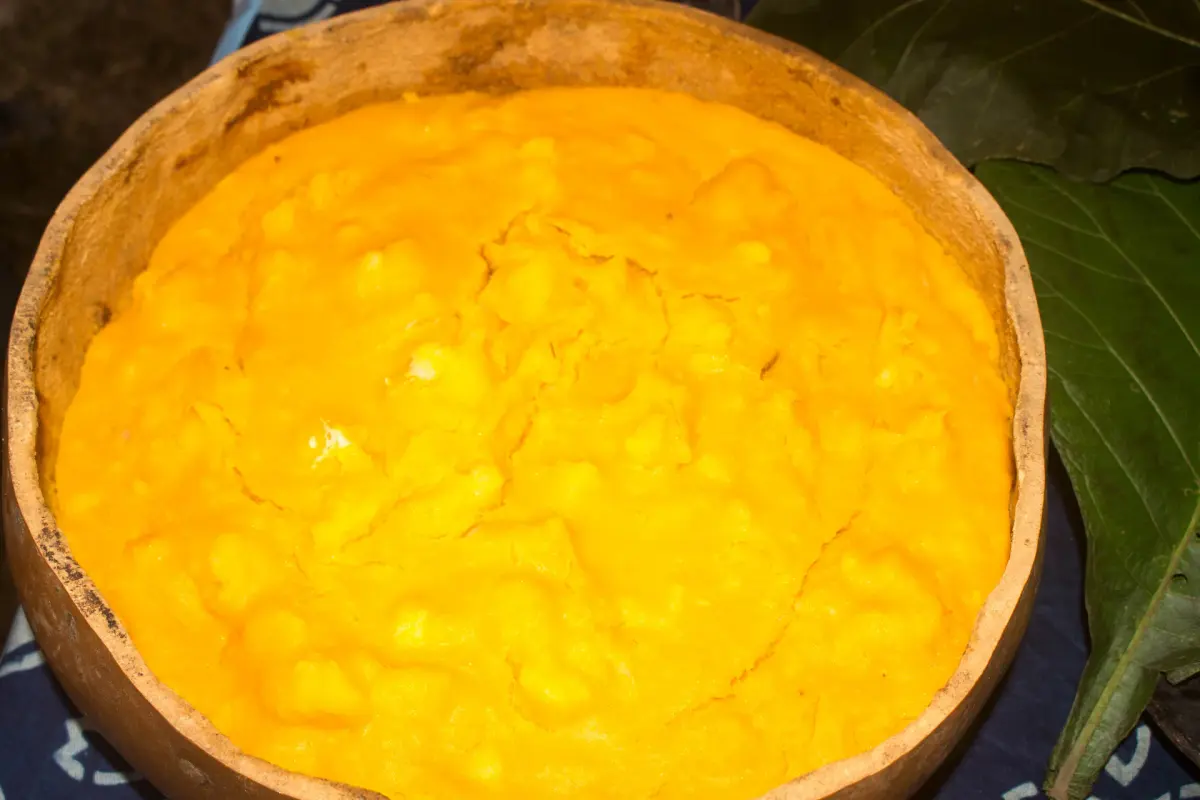
Igbo Yam Porridge
I wish people who posted would use grammerly, or a proper education for their Grammer. Like I'm not being funny or anything, but there is a severe lack of Grammer in our country when it comes to people speaking languages other than their mother toungh, I just wish there would be some indication of what language the article is in. I would much rather prefer to read an article written by an English speaking wh**e person, rather than trying to decipher the broken English presented in this article. Please fix this slur on English language, if you have more articles than this, you should look at fixing them and learn the language before you use it. Very good recipe. Was helpfull.
Tried making this with coarse Ace maize meal since we cant get tsakin masara easily here in Joburg. Steamed it in the colander over boiling water for 15 min like you said and the texture turned out so lekker! Added extra ground peanuts at the end.
chale this is very similar to how my grandmother makes her steamed corn meal oo. but she always adds a bit more spring onions and ground peanuts to give it that extra crunch. steaming it in the cloth colander is definitely the secret paa.
Herh, dambu masara is a daily staple for us here in Tamale! We always use shredded boiled beef or ram meat from home. Just make sure the meat is well seasoned before mixing with the steamed maize grits or it will be too bland. I added extra peanuts to mine.
Fabulous , fantastic ,bravo ,great job keep it up
Dan Allah za ki iya koyamun danbunnan please