

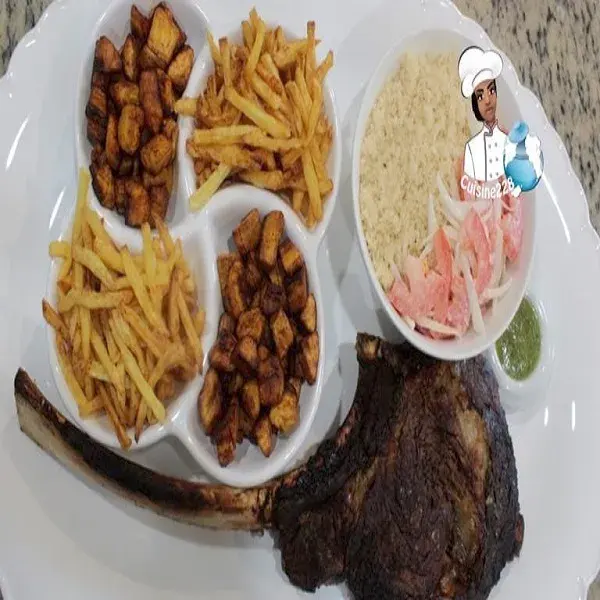
Attiéké Steak Alloco
Aperçu
This is a plate rather than a dish: attiéké, steak and alloco together, which is how Ivorians eat all three. Each element is a staple in its own right and the combination is what turns them into a meal. Attiéké is the foundation. It is fermented cassava, grated and steamed into fine pale granules that look like couscous and taste nothing like it, carrying a distinct sourness from a fermentation of a few days. It originated in the coastal districts of Côte d'Ivoire centuries ago and is eaten at every meal of the day by Ivorians of every age. That sour note is the thing people either take to immediately or need a few platefuls to appreciate, in the same way sourdough divides opinion. Alloco is fried ripe plantain, and it is eaten across the region under different names: dodo in Nigeria, makemba in the Congo, amanda in Togo, kelewele in Ghana. Its caramelised sweetness against the sour attiéké is the balance the plate depends on, with the steak providing the third element. In Abidjan the combination is sold from roadside maquis and eaten with the fingers, and any drink at all is considered appropriate alongside it.
Note de Patrimoine AFN
Attiéké originated among the lagoon peoples of coastal Côte d'Ivoire, who developed the fermentation and steaming of grated cassava into fine granules. Cassava itself reached West Africa through Portuguese Atlantic trade from the 16th century.
Ingrédients
Les mentions alimentaires sont fournies par les contributeurs à titre indicatif. Elles ne sont pas vérifiées par AFN et dépendent des produits que vous achetez. En cas d’allergie grave, vérifiez vous-même chaque ingrédient. Cuisine, allergies et votre propre jugement
Préparation
- 1
Preheat the oven to 200°C.
- 2
Season the steaks and let them rest for about 40 minutes.
- 3
Place the steak on a small baking sheet and roast until an instant read thermometer inserted into the centre registers 57°C, about 1 hour.
- 4
Place the attiéké in a microwave safe dish.
- 5
Add half a cup of water and salt to the attiéké and let it absorb.
- 6
Microwave for 5 minutes, repeating with a further quarter cup of water until the consistency is right.
- 7
Peel and cut the plantains diagonally into slices about 5mm thick, and salt them.
- 8
Heat oil in a non stick skillet over medium heat.
- 9
When the oil shimmers but does not smoke, fry the plantains in batches for about 90 seconds on one side and a minute on the other.
- 10
Drain the plantains on paper towels and continue in batches.
- 11
Rest the steak, slice it, and serve with the attiéké and alloco.
Notes de l’Africook
- Attiéké is sold ready fermented and only needs steaming or rehydrating. Do not try to make it from raw cassava, which is a multi day process.
- Add water to attiéké gradually. It swells fast and over watered attiéké turns to paste.
- Use plantains that are yellow with black patches. Green plantain will not caramelise and fully black plantain collapses in the pan.
- Rest the steak properly before slicing. It is the largest component and cutting it early loses the juices.
- Fry the alloco in batches. Crowding the pan drops the oil temperature and the plantain absorbs rather than caramelising.
Questions fréquentes
What is attiéké and what does it taste like?
Attiéké is fermented grated cassava, steamed into fine pale granules resembling couscous. The flavour is distinctly sour from a few days of fermentation, comparable to a mild sourdough, with a starchy, slightly sticky texture. It is sold ready made in balls or vacuum packs at African grocers, and it only needs rehydrating and steaming rather than cooking from scratch.
Is attiéké the same as couscous?
No, only similar in appearance. Couscous is rolled semolina made from durum wheat and is bland and neutral. Attiéké is fermented cassava, is naturally gluten free, and is noticeably sour. They look alike on the plate and eat quite differently, and one cannot substitute for the other without changing the dish entirely.
What is alloco and how is it different from other fried plantain?
Alloco is the Ivorian name for fried ripe plantain, cut into thick diagonal slices and fried until caramelised at the edges. The same thing is called dodo in Nigeria, makemba in DR Congo and amanda in Togo. Ghanaian kelewele is a relative but is spiced with ginger and pepper before frying, which alloco is not.
Can I use a different cut of steak?
Yes. Ribeye is specified here but sirloin, rump and entrecôte all work, and in Abidjan the cut used depends entirely on what the maquis has. What matters more is that the steak is properly seasoned and rested. The attiéké and alloco are the constants; the protein varies, and grilled fish or chicken are equally common.
Avis
4 avis
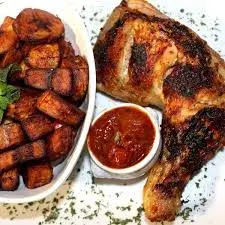
Made this for dinner tonight and my family devoured the alloco! I'd never cooked attieke before so I was worried it would stay dry, but absorbing that salted water made it so light. Quick question, should the oil be super hot for the plantains? Mine absorbed a bit too much oil before browning.
Had to track down a ball of attiéké from a local Afro-Caribbean shop since the high street supermarkets don't carry it. The microwave method with the half cup of water plumped it up nicely, though 1 hour at 200°C left my steak a bit past medium rare so I'll pull it earlier next time.
Herh, eating attiéké with big ribeye steak instead of tilapia? In Tema we usually pair it with fish oo, but I tried this for my brothers. The plantains must be very ripe so they fry dark brown to cut through the sour cassava paa. Good dish though.
put the 3kg bone-in ribeye on the braai grid instead of the oven roast, took it off right as my thermo hit 57C. That half cup of salted water in the attieke worked a charm in the microwave, totally lekker contrast with the sweet fried plantains.