

Akwadu
Aperçu
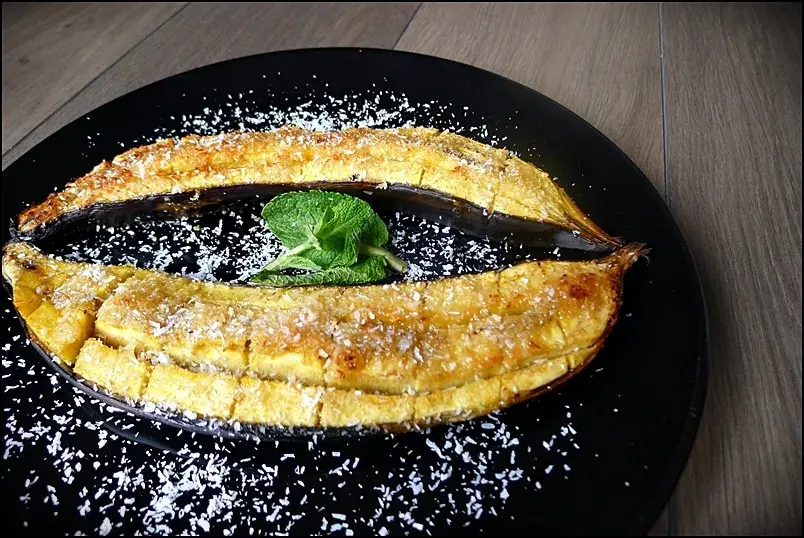
Akwadu is baked banana with coconut, and it belongs to Equatorial Guinea, one of the few Spanish speaking countries in Africa. Bananas are split, dressed with butter, citrus juice and brown sugar, covered in shredded coconut and baked until the sugar caramelises and the coconut toasts. The combination is coastal Central African: bananas and coconut both grow there in quantity, and the citrus and sugar are the only additions. There is nothing complicated about it, and its appeal is the contrast between the soft, almost jammy fruit and the crisp toasted coconut on top. Two versions exist and both are given here. Leaving the skins on and splitting the bananas lengthways lets them act as their own dish, holding the juices that collect and can be spooned back over during baking, and this takes about twenty minutes. Slicing peeled bananas into a dish is quicker, around ten minutes, and gives a softer result. Ripe plantain works in place of banana and is firmer, which some people prefer. The honey is added at the end rather than the start, so it does not burn under the grill.
Note de Patrimoine AFN
Akwadu is a baked banana and coconut dessert associated with Equatorial Guinea, where both bananas and coconut are locally grown.
Ingrédients
Les mentions alimentaires sont fournies par les contributeurs à titre indicatif. Elles ne sont pas vérifiées par AFN et dépendent des produits que vous achetez. En cas d’allergie grave, vérifiez vous-même chaque ingrédient. Cuisine, allergies et votre propre jugement
Préparation
- 1
For the version with skins on, set the oven to 200°C on convection.
- 2
Cut the bananas in half lengthways without removing their skins, and score the flesh.
- 3
Arrange them in a baking dish and pour over the melted butter.
- 4
Drizzle over the orange and lemon juices, and sprinkle with cinnamon if using.
- 5
Sprinkle generously with brown sugar and shredded coconut.
- 6
Bake for 20 minutes, basting regularly with the juices collecting in the dish.
- 7
Take the bananas out and put a little honey on each.
- 8
Return to the oven under the grill and brown the top for about 5 minutes, watching closely.
- 9
Baste with the juices once more and serve.
- 10
For the peeled version, set the oven to 200°C and cut the bananas into thick slices.
- 11
Arrange them in a baking dish, pour over the butter and drizzle with the citrus juices.
- 12
Sprinkle with cinnamon if using, then with brown sugar and coconut.
- 13
Bake for 10 minutes, then put a little honey on top.
- 14
Return to the grill and brown for about 2 minutes, watching closely.
Notes de l’Africook
 Notes personnelles de Nympha Nzeribe
- Baste with the juices that collect in the dish. That syrup is the best part and it will otherwise catch and burn at the edges.
- Add the honey at the end rather than the start. Under the grill from the beginning it scorches and turns bitter.
- Watch the grilling stage constantly. Coconut goes from golden to burnt in well under a minute.
- Leaving the skins on keeps the fruit in shape and holds the juices, which is the better version if you have the extra ten minutes.
- Ripe plantain in place of banana gives a firmer result that holds up better to the heat.
- Serve it warm rather than hot. Straight from the oven the sugar syrup is fierce.
Questions fréquentes
What is the difference between the two versions?
Whether the skins stay on. Split lengthways in their skins, the bananas hold their shape and collect a syrup you can baste with, and they take about twenty minutes. Peeled and sliced into a dish they cook in about ten and come out softer. Both are given in the recipe and neither is more correct.
Can I use plantain instead of banana?
Yes, and the recipe allows for it. Ripe plantain is firmer and less sweet than banana, so it holds its shape better under the heat and gives a less jammy result. Use plantain that is yellow with black patches; fully green will not soften enough in the baking time given.
Should the coconut be fresh or dried?
Shredded dried coconut is what the recipe uses and it toasts reliably under the grill, which is the point of it. Fresh grated coconut works and has a better flavour, but it holds more moisture so it browns more slowly. Either way, add it before baking rather than at the end.
What is it served with?
On its own, warm, most often. A spoonful of cream or ice cream works well against the hot caramelised fruit, though that is not traditional. It is a simple dessert and does not need much: the toasted coconut is providing the texture that would otherwise have to come from something else.
Avis
3 avis
Vous Aimerez Aussi
Voir toutes les recettes Equatorial Guinea →
Isombe
Tripe (Mogodu)
Papaya Smoothie for Weight Loss
Finding ripe plantains in Seattle in the winter is always a hunt, but I managed to grab some at the market in Chinatown. The sharpness of the lemon and orange juice balances the melted butter and honey so well. In Ethiopia we usually serve fresh fruit plain after meals, but baking them like this with cinnamon made the whole kitchen smell amazing.
herh the shredded coconut on top gets so nice and toasted in the oven paa! my grandmother always insisted on using very ripe plantains instead of bananas for akwadu so the orange juice really sinks into the flesh. only thing is 25 minutes was a bit too long for my plantains, they got a bit mushy oo. will check at 18 mins next time.
couldnt get ripe plantains at the afro shop in neukölln today so I just used normal bananas from edeka sha. cut them lengthways with skin on like you said and the lemon juice with melted butter caramelising under the brown sugar was no be small thing o! e sweet well well.