
Peri Peri Spiced Rice
Overview
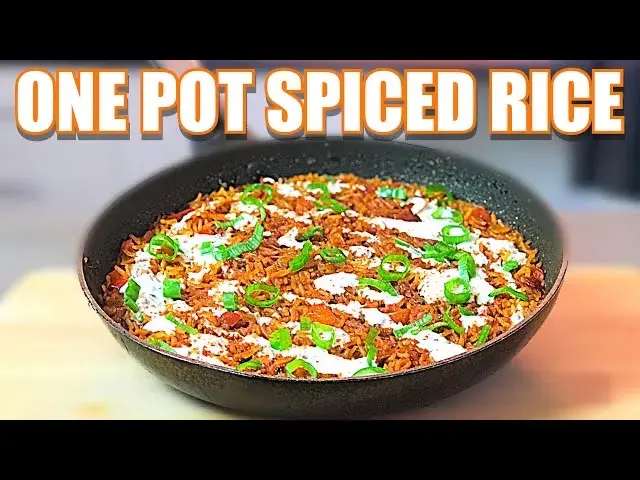
This is rice cooked in a peri peri spiced tomato and vegetable base, served with a lemon and garlic coconut yoghurt alongside. It belongs to the southern African peri peri tradition, and no single country is named in the source. Peri peri itself is Mozambican and Angolan, built on the African bird's eye chilli that naturalised there after Portuguese traders brought chillies from South America. The seasoning blend here is a dry rub of salt, chilli, onion powder, garlic powder, ground coriander and oregano, which is the restaurant-style formulation rather than the fresh sauce. The technique is the interesting part and the contributor is emphatic about it. The rice cooks in just enough water to cover it, under a lid on a low flame, until every drop has gone, and it then rests for ten minutes untouched. The instruction in the source is in capitals: leave the rice alone, because the aim is a crust on the bottom of the pan. That is the same principle behind Persian tahdig, Senegalese thieboudienne and Spanish socarrat, and it turns a side dish into something worth the pan.
AFN Heritage Note
Peri peri seasoning derives from the African bird's eye chilli of Mozambique and Angola. The technique of leaving rice undisturbed to form a crust at the base of the pan is shared with Senegalese thieboudienne and other rice traditions.
Ingredients
Dietary tags are provided by contributors as a guide, not verified by AFN, and they depend on the products you buy. If you have a serious allergy, check every ingredient yourself. Cooking, allergies and your own judgement
Directions
- 1
Slice the spring onion, saving the green part for garnish.
- 2
Chop the celery and peppers and mince the garlic.
- 3
Chop the tomato and set aside.
- 4
Mix all the peri peri seasoning ingredients together.
- 5
Mix the coconut yoghurt with the lemon zest and juice and the garlic powder, and set aside.
- 6
Heat sunflower oil to medium in a pan.
- 7
Add the vegetables and garlic and sauté until browned.
- 8
Add the rice and cook for 1 minute.
- 9
Stir in the tomato paste and cook until it just starts to catch on the bottom of the pan.
- 10
Season well with the peri peri seasoning.
- 11
Add the chopped tomato and cook for 1 minute.
- 12
Pour in enough water to just cover the rice.
- 13
Bring just to the boil, then turn the heat down low.
- 14
Cover the pan with a lid and cook until all the water has evaporated.
- 15
Switch off the heat and let it sit for 10 minutes. Do not stir the rice: the aim is a crust at the bottom of the pan.
- 16
Garnish with the reserved spring onion greens and serve with the lemon yoghurt.
Africook’s Notes
 Personal notes from Chef Donkey
- Do not stir the rice once the water is in. The whole point is the crust that forms at the base of the pan, and stirring destroys it.
- Let it rest the full ten minutes off the heat with the lid on. That is when the crust sets and releases from the pan.
- Cook the tomato paste until it catches slightly before the liquid goes in. That browning is where the depth comes from.
- Just cover the rice with water, no more. Too much water gives soft rice and no crust at all.
- The MSG is optional and is in the source's seasoning blend. Leave it out if you prefer; the salt and chilli carry it.
- Coconut yoghurt keeps this vegan. Plain dairy yoghurt works identically if that does not matter to you.
Questions cooks ask
What is peri peri seasoning?
A dry blend built around chilli, with salt, onion powder, garlic powder, ground coriander and oregano. It derives from the African bird's eye chilli of Mozambique and Angola, and this dry formulation is the restaurant-style version rather than the fresh blended sauce, which uses whole chillies, lemon and vinegar.
Why should I not stir the rice?
Because a crust forms at the bottom of the pan if it is left alone, and that crust is the best part. The same principle produces Persian tahdig, the Senegalese xoon at the base of a thieboudienne, and Spanish socarrat. Stirring breaks it up and disperses it through the rice.
How much water should I use?
Just enough to cover the rice and no more. This is not a measured ratio: the rice absorbs everything and the pan is left to dry out completely. Extra water gives soft rice and prevents any crust forming, which is the opposite of what this method is for.
What is it served with?
The lemon and garlic yoghurt that is part of the recipe, and grilled meats or vegetables. It works as a side to peri peri chicken in particular, and it is substantial enough with the yoghurt to be a light meal on its own.
Reviews
Be the first to rate this recipe
Cooked it? Your rating helps the next person decide whether to try it.
No reviews on this one yet. If you have cooked it, yours would be the first.
You Might Also Like
Browse all South African recipes →
Dombolo (Dumplings or Steamed Bread)
Boeber (Cape Malay Sweet Milk Drink)