
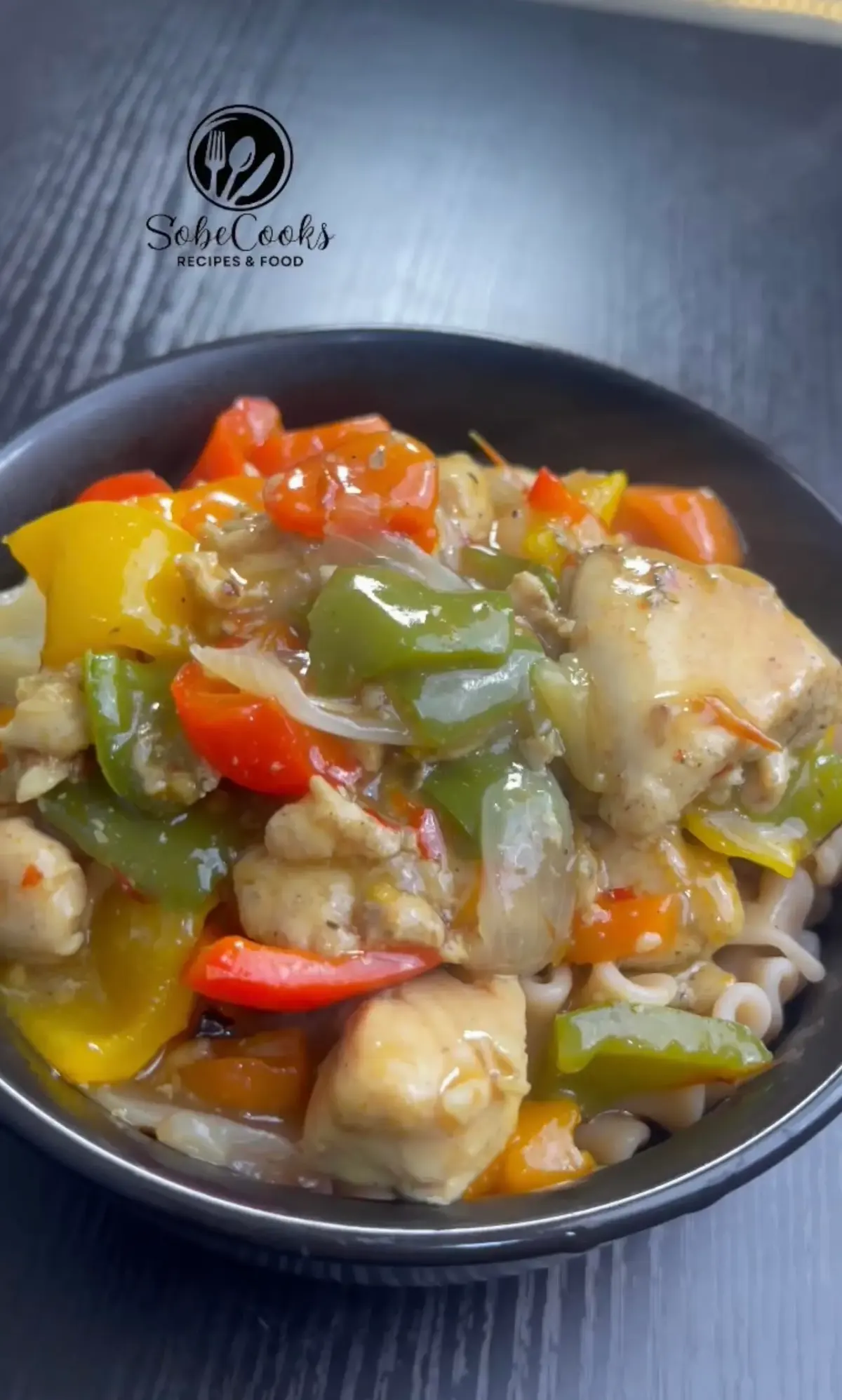
Spiced Chicken Curry Sauce
Aperçu
Chicken and a great many vegetables cooked down with curry powder, sazon and scotch bonnet, then thickened with a cornflour slurry. The source calls it South Asian; the ingredients say otherwise, and it is worth being straight about which. A genuine South Asian curry is built on whole spices bloomed in fat, on ginger and garlic paste, and on onions cooked down at length. This one uses curry powder, all-purpose seasoning, bouillon cubes and blended scotch bonnet, the standard vocabulary of West African and Caribbean home cooking, plus sazon, which is a Puerto Rican seasoning blend now sold everywhere. Sesame oil is the one genuinely East Asian note. What that amounts to is a diaspora dish that borrows the word curry rather than the tradition, and it is more interesting described accurately than mislabelled. The cabbage, carrots and three colours of bell pepper are not a South Asian habit either. They are what makes this closer to a Nigerian or Ghanaian fried pepper sauce, the kind ladled over rice on a weeknight. No country is claimed for it, and the flags note that its own description contradicts its ingredients. The source's closing line is garbled, it promises the streets of somewhere and then names no city, so it has not been carried across.
Ingrédients
Les mentions alimentaires sont fournies par les contributeurs à titre indicatif. Elles ne sont pas vérifiées par AFN et dépendent des produits que vous achetez. En cas d’allergie grave, vérifiez vous-même chaque ingrédient. Cuisine, allergies et votre propre jugement
Préparation
- 1
Warm a splash of sesame oil in a large pan over medium heat.
- 2
Put in the chicken pieces and cook until no longer pink.
- 3
Tip in the sliced onion, carrots, bell peppers and cabbage.
- 4
Stir-fry until the vegetables begin to soften but still have bite.
- 5
Season with the sazon, all-purpose seasoning, curry powder and seasoning cubes, turning everything over so the chicken and vegetables are evenly coated.
- 6
Pour in the blended scotch bonnet and mix thoroughly.
- 7
Lower the heat and let it cook gently for a few minutes so the flavours settle together.
- 8
Pour in the cornflour slurry gradually, stirring constantly, until the sauce reaches the thickness you want.
- 9
Taste, adjust the seasoning, and serve over rice.
Notes de l’Africook
 Notes personnelles de Sobecooks
- Add the cornflour slurry a little at a time. It thickens fast, and a sauce taken too far cannot easily be loosened again.
- Keep the vegetables slightly firm. They carry on softening in the hot sauce, and limp cabbage is the usual failure here.
- Blend the scotch bonnet rather than chopping it, so the heat spreads evenly instead of arriving in ambushes.
- Cut the chicken small and evenly so it cooks in the same time as the vegetables.
- Sazon contains a good deal of salt, as do most seasoning cubes. Taste before adding any more.
- It reheats well and the vegetables hold up better than you would expect, so it suits batch cooking.
Questions fréquentes
Is this an Indian curry?
Not really, despite what the source says. A South Asian curry is built on whole spices bloomed in fat, ginger and garlic paste, and slowly cooked onions. This uses curry powder, all-purpose seasoning, bouillon cubes and blended scotch bonnet, which is the vocabulary of West African and Caribbean home cooking, with sazon from Puerto Rico and a splash of sesame oil. It borrows the word rather than the tradition, and it is a perfectly good dish on those terms.
What is sazon?
A seasoning blend of Puerto Rican origin, now sold widely in supermarkets and African and Caribbean grocers. Recipes vary but it usually combines coriander, cumin, annatto for colour, garlic powder and a substantial amount of salt. The annatto is what gives dishes made with it a warm orange tint. If you cannot find it, a mix of ground coriander, cumin, garlic powder and paprika gets close, and you will need to salt separately.
How hot is it?
As written, quite hot. Two blended scotch bonnets in a dish this size gives a persistent heat that builds rather than hits immediately. Scotch bonnets vary a great deal between individual peppers, so start with one, taste once it has cooked into the sauce, and add more if you want it. Removing the seeds and membrane reduces the heat considerably without losing the fruity flavour that makes scotch bonnet worth using.
What should I serve it with?
Plain rice is what the source suggests and it is the right choice, the sauce is thick, heavily seasoned and full of vegetables, so it wants a neutral starch beside it. Boiled yam, pasta, or bread all work too. Because the vegetables are already in the sauce it does not need a side vegetable, which is part of what makes it a practical weeknight dish.
Avis
Soyez le premier à noter cette recette
Vous l’avez cuisinée ? Votre note aide la personne suivante à se décider.
Aucun avis sur cette recette pour le moment. Si vous l’avez cuisinée, le vôtre serait le premier.