

Ghana Abomu Recipe
Aperçu
Abom, written abomu here, is the simpler of the two main Ghanaian cocoyam leaf preparations. Where the tomato based kontomire stew is thickened with ground melon seed and cooked in a pot, abom is steamed leaves ground in an asanka with onion, pepper and ginger, finished with hot palm oil poured over the top. It is closer to a relish than to a stew. The asanka is the tool that defines it. The ridged earthenware bowl grinds rather than purees, and everything in an abom passes through it: the aromatics first, then the salted fish, then the greens, each stage mashed into the last. That produces a coarse, uneven texture that a blender cannot reproduce and that Ghanaians would notice immediately. It is Asante food particularly, and it is assembled rather than cooked in the ordinary sense. Plantain, egg, avocado and several kinds of fish, koobi, kakro, smoked mackerel and smoked turkey, go onto the plate around the greens, and hot palm oil is ladled over at the end. Kontomire is the proper leaf. Ghanaians abroad substitute spinach, which the source acknowledges directly, and the result is milder and softer than the cocoyam leaf gives.
Note de Patrimoine AFN
Abom is documented as an Asante preparation of steamed cocoyam leaves ground in an asanka, the ridged earthenware bowl of Ghanaian kitchens, and is distinguished from kontomire stew, which is tomato based and thickened with ground melon seed.
Ingrédients
Les mentions alimentaires sont fournies par les contributeurs à titre indicatif. Elles ne sont pas vérifiées par AFN et dépendent des produits que vous achetez. En cas d’allergie grave, vérifiez vous-même chaque ingrédient. Cuisine, allergies et votre propre jugement
Préparation
- 1
Rinse the greens and boil until fully cooked.
- 2
Add a small amount of koobi to the greens while they boil, watching so the koobi does not fully cook.
- 3
Cut the onion in half. Slice one half to cook with the palm oil, and chop the other half to mash in the asanka with the habanero and ginger.
- 4
Take the koobi out of the greens and add it to the mashed aromatics.
- 5
Once smoothly mashed, remove the mixture from the asanka and mash the fresh peanuts until smooth.
- 6
Combine the mixtures and add a little ground shrimp seasoning.
- 7
Drain the cooked greens and mash them separately in the asanka until fully blended.
- 8
Add the mixed vegetables and peanuts to the blended greens and mix together with a spoon.
- 9
Heat oil in a small pan and add the kakro and koobi. Cook for a few minutes.
- 10
Add the sliced onions and cook in the oil.
- 11
Add the smoked turkey to the onions over medium heat.
- 12
Cut the plantains in half with the skin on. Boil with the eggs and a little salt for 20 to 25 minutes, until fully cooked.
- 13
Drain and cover the plantain with cold water. Peel and hold in cold water until serving. Peel the eggs.
- 14
While the palm oil is still hot, ladle it over the greens.
- 15
Arrange the turkey, fish and eggs on top of the greens, and serve the plantain separately with avocado.
Notes de l’Africook
 Notes personnelles de Fante_Oh3maa_
- The asanka does the work. Grinding rather than blending gives the coarse uneven texture that defines abom, and a food processor produces a smooth puree that reads as a different dish.
- Pour the palm oil over hot at the very end. That final ladle of hot oil over the greens is a step, not a garnish.
- Koobi is heavily salted. Taste before adding any salt of your own, and rinse or briefly soak it if you are sensitive.
- Kontomire, the cocoyam leaf, is the proper green. Spinach is the standard substitute abroad and gives a softer, milder result. Collard greens hold their texture better.
- This is an assembled plate rather than a single pot. Get the components ready before you start putting it together.
Questions fréquentes
What is the difference between abom and kontomire stew?
Method and consistency. Abom is steamed cocoyam leaves ground in an asanka with onion, pepper and ginger, finished with hot palm oil poured over, and eats as a thick relish. Kontomire stew is tomato based, cooked in a pot and thickened with ground melon seed, so it is looser and richer. Both use the same leaf.
What is an asanka and do I need one?
An asanka is the ridged earthenware bowl used across Ghana for grinding, paired with a wooden pestle. It crushes rather than purees, which is what gives abom its coarse texture. A large mortar and pestle is the closest substitute. A blender will make the dish but not the texture, so pulse briefly if you must use one.
What is koobi?
Koobi is Ghanaian salted, cured tilapia, dried hard and used in small quantities as a savoury base across Ghanaian cooking. It is intensely salty and gives abom much of its depth. It is sold at Ghanaian and West African grocers. Salted cod, soaked first to draw out some of the salt, is a workable substitute.
Can I use spinach instead of cocoyam leaves?
Yes, and it is what most Ghanaian cooks abroad do, which the source acknowledges directly. Spinach gives a softer, milder result, since cocoyam leaves are thicker and hold more structure. Collard greens are closer on texture. Frozen kontomire is sold by some West African grocers if you want the real thing.
Avis
5 avis
Vous Aimerez Aussi
Voir toutes les recettes Ghana →
Easy and Simple Way to Make Banku
Garden Egg Stew (Earthenware Bowl Method)
Kontomire Stew
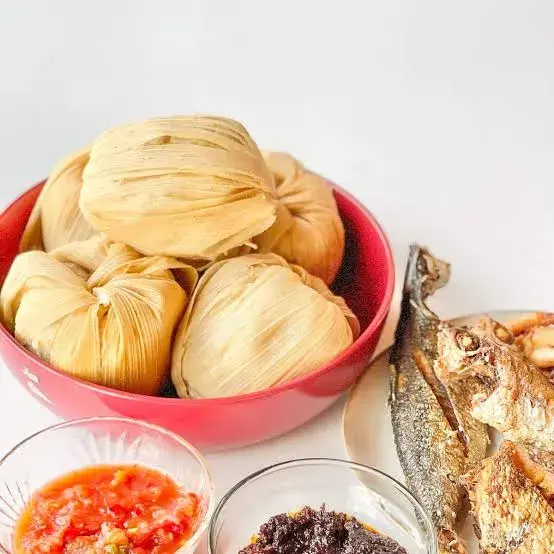
I don't own an asanka so I used a heavy granite mortar and pestle to crush the peanuts and raw ginger onion mix. The smell of the hot palm oil poured over the greens was incredible! Quick question though, is the baked mackerel supposed to be shredded into the greens or kept in larger chunks on the side? Made this for my roommates and the sweet boiled plantains balanced the habanero heat perfectly.
Couldn't find fresh cocoyam leaves anywhere near Bury Park so had to use two big bags of baby spinach from Sainsbury's instead. Boiling the koobi briefly with the greens gave it that proper rich salty depth we get back home with cooked muriwo. Had to serve it with sadza instead of plantains because my kids demand mealie meal every weekend, but the ground peanut and palm oil base blended so well. A bit too spicy with 3 whole habaneros for my youngest though, will drop to one next time.
My grandmother in Tamale always steams the ginger a bit first so the raw bite doesn't overpower the peanuts, chale. But boiling the koobi directly with the kontomire leaves to draw out the salt is authentic paa! Just be careful not to leave the salted fish in the boiling water too long or the whole abomu becomes overly salty oo. The palm oil fried onions at the end made it taste proper.
The heat from 3 habaneros completely overpowered the peanut taste sha. I bought smoked mackerel from the Afro market in Wedding but the koobi I used was way too salty even after boiling it inside the spinach water like you said. The whole dish turned out overly salty and my tongue was burning. Next time I will soak the salted fish in warm water first and use just one pepper.
Getting real koobi in Atlanta isn't easy but I found some at the African shop off Jimmy Carter Blvd. Mashing the raw red onion and habanero straight into the asanka before adding the fresh peanuts is where all the flavour lives o. The combination of smoked turkey and baked mackerel made the stew so rich. Ate mine with ripe boiled plantain, e sweet well well.