

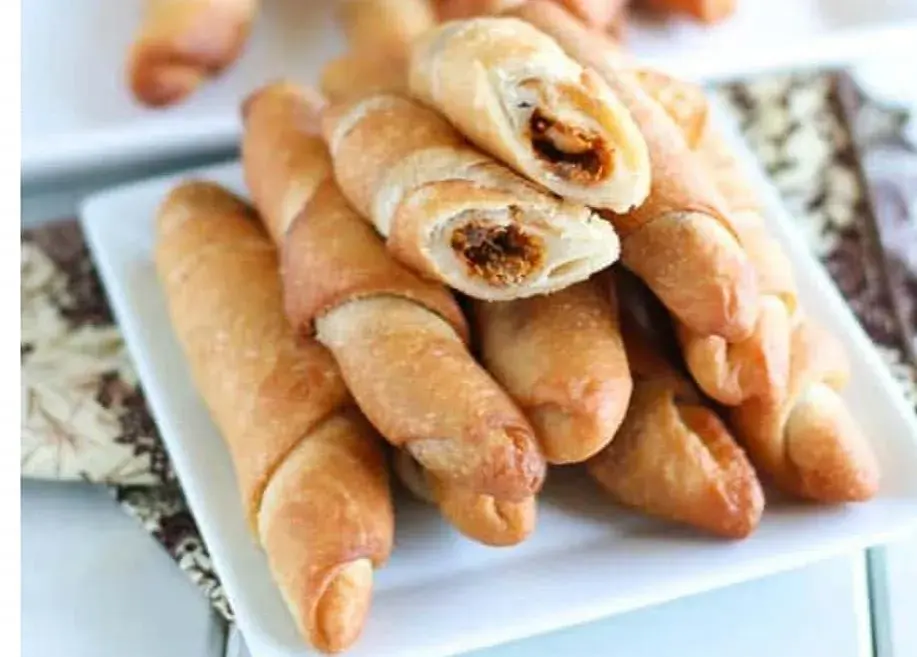
African Fish Roll
Aperçu
The fish roll is a West African street snack: a simple enriched dough wrapped around seasoned flaked fish and deep fried until crisp. It is eaten across Cameroon, Nigeria and Ghana, sold from bakeries, roadside stands and glass warmers, and it sits on the small chops platter alongside meat pie, puff puff and spring rolls. Its name shifts with its shape. Rolled into a cylinder it is a fish roll; made in the manner of a folded half moon pie it is called a fish pie. The two are the same idea and Nigerians and Ghanaians use both terms. The source for this recipe gives Cameroonians the credit for making them best, which is the kind of claim that gets argued about rather than settled. Mackerel is the standard fish, called titus in Nigeria after a brand name that became the general term for the frozen fish sold across the country. It is steamed, boned, flaked and seasoned with onion, spring onion and cayenne, which is a short ingredient list doing a lot of work. The dough is where the technique sits: too much handling gives a hard roll rather than a crisp one, which the source identifies as the usual failure. Baking is possible and gives a lighter, less crisp result.
Ingrédients
Préparation
- 1
Steam or boil the mackerel until cooked through.
- 2
Remove the bones and flake the fish into small pieces with a fork.
- 3
Finely chop the spring onions and add them to the flaked fish.
- 4
Add the chopped small onion to the fish mixture.
- 5
Season with cayenne pepper or paprika to your preferred heat.
- 6
Mix well so the seasoning is evenly distributed. Set aside to cool completely.
- 7
In a mixing bowl, combine the flour, sugar, baking powder and salt.
- 8
Rub in the margarine until the mixture resembles breadcrumbs.
- 9
Add the egg and enough water to bring the mixture into a firm dough. Knead only until it comes together.
- 10
Lightly flour a clean surface and roll the dough out to about 1/4 inch thick. Cut into smaller pieces.
- 11
Place a spoonful of the fish mixture onto one end of each piece.
- 12
Fold or roll the dough over the filling, covering it completely.
- 13
Press the edges together and crimp with a fork to seal, so the filling cannot leak during frying.
- 14
Heat vegetable oil in a deep pot, enough for the rolls to be fully submerged.
- 15
Slide in a few rolls at a time without crowding the pot. Fry in batches.
- 16
Fry until golden brown and crisp, turning occasionally, about 4 to 5 minutes per batch.
- 17
Lift out with a slotted spoon and drain on paper towels.
Notes de l’Africook
 Notes personnelles de Deborah Olayiwola
- Do not overwork the dough. Kneading it hard develops the gluten and gives a tough, hard roll rather than a crisp one, which the source identifies as the most common failure.
- Cool the fish filling completely before it goes into the dough. Warm filling makes the pastry greasy and difficult to seal.
- Seal properly and crimp all the way round with a fork. A roll that opens in the oil empties its filling and takes on oil in exchange.
- Keep the oil deep enough to submerge the rolls fully and fry in batches. Crowding drops the temperature and the pastry absorbs oil.
- To bake instead, brush with oil or egg wash and bake at 175 to 190°C for 20 to 25 minutes until golden. Lighter, but noticeably less crisp.
Questions fréquentes
What is the difference between a fish roll and a fish pie?
The shape. Rolled into a cylinder around the filling it is a fish roll. Folded into a half moon like a small pie it is called a fish pie. The dough and the filling are the same, and both terms are used across Nigeria and Ghana for what is essentially one snack.
What fish should I use?
Mackerel is standard and is called titus in Nigeria, after a brand name that became the general term. Salmon, tuna and tinned sardines are all workable alternatives, which the source notes directly. What matters is that the fish flakes cleanly and is well drained, since wet filling makes the dough difficult to seal.
Can I bake fish rolls instead of frying them?
Yes, and it is a common choice for home cooking. Brush them with oil or egg wash and bake at around 175 to 190°C for 20 to 25 minutes until golden. The result is lighter but noticeably less crisp, and frying is what gives the snack its characteristic texture.
Why did my fish rolls come out hard?
The dough was overworked. Rub the fat into the flour to a breadcrumb texture, add just enough liquid to bring it together, and knead only until it forms a dough. Extra kneading develops gluten and produces a tough result. Using too little fat has the same effect.
Avis
5 avis
Couldn't get whole Titus fish at the Luton Sainsbury's so I used frozen mackerel fillets from the shop on Dunstable Road instead. Flaked it up with the spring onions and added extra cayenne pepper because we like the heat. Dough turned out so crisp with the margarine. Took me right back home, even if we mostly ate sadza for main meals.
Titus fish is always the best for fish roll, e sweet no be small thing o! Steamed the mackerel with chopped onions before flaking it with fork. Abeg make sure your vegetable oil for deep frying is not too hot so the pastry cooks right through to the middle without burning outside. Very nice recipe.
We made a batch of these savory rolls for breaking fast yesterday instead of our usual koesisters. Flaking the steamed mackerel with spring onions gave such a fresh taste, and the dough went lovely golden brown in the oil. Pure comfort food for the whole family during Ramadan.
Chale, the pastry dough came out very soft and easy to roll paa. Only small thing is back home in Accra my grandmother always puts a tiny pinch of nutmeg in the flour before rubbing in the margarine, but this mackerel and cayenne filling is still so tasty oo.
made these for Sunday afternoon tea and my broer ate four before they even cooled down! I sommer added extra spring onion to the steamed fish filling because we love that sharp bite. The pastry dough fries so nice and golden with the margarine.