
Mujadara
Abuja, Nigeria · Voir toutes les recettes
Aperçu
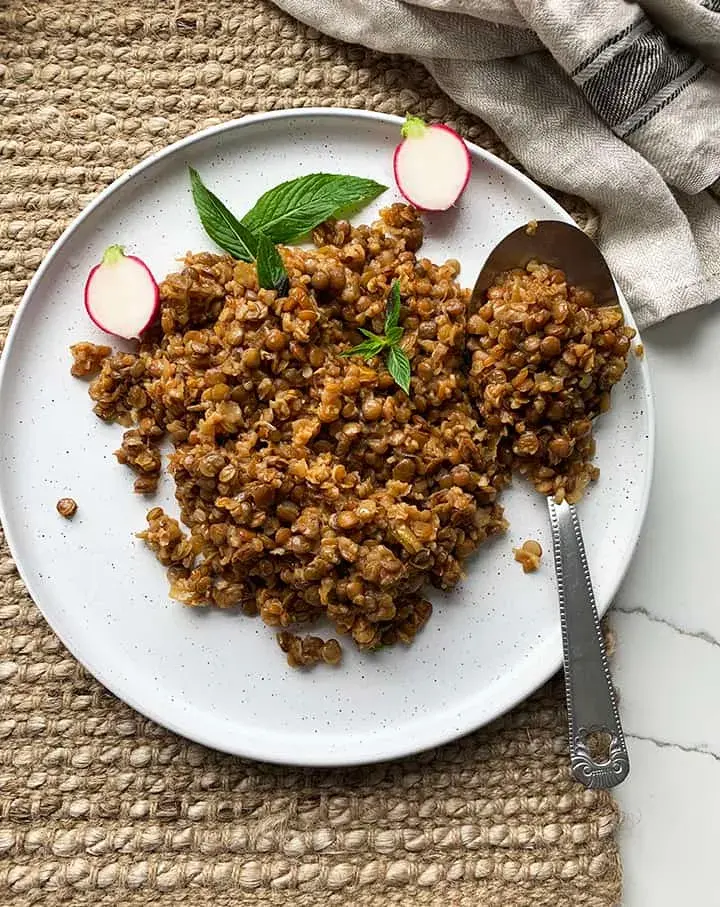
Mujadara is lentils and rice cooked together and topped with deeply caramelised onions, and the source names it a signature Middle Eastern dish. It belongs to the Levant rather than to Africa, and it sits in Worldwide Recipes for that reason. The name is unflattering and accurate. In Arabic mujaddara means riddled with small holes, or pockmarked, and it describes the appearance of the lentils scattered through the rice. It is nicknamed the dish of the poor everywhere it is eaten, because it contains no meat and nothing expensive, and the source makes a fair comparison: mujadara is to the Middle East what couscous is to the Maghreb. Its age is what makes attribution impossible. The first recorded recipe goes back centuries, and as the source observes, the older and simpler a dish is, the more cultures claim its paternity. What matters technically is the onions: they need to be fried until the edges genuinely curl and darken, and the flavoured oil they leave behind is poured into the pot without them, so the onions stay crisp on top rather than softening into the rice.
Ingrédients
Les mentions alimentaires sont fournies par les contributeurs à titre indicatif. Elles ne sont pas vérifiées par AFN et dépendent des produits que vous achetez. En cas d’allergie grave, vérifiez vous-même chaque ingrédient. Cuisine, allergies et votre propre jugement
Préparation
- 1
Put the drained lentils in a large Dutch oven and cover with four times their volume of cold water.
- 2Bring to the boil, then cover and cook for 20 minutes
the first 10 on high heat and the next 10 on medium to high.
- 3
Add the rice and 3/4 cup of boiling water. Mix well and cook uncovered for 15 minutes over medium heat, stirring regularly.
- 4
Add a little more boiling water if the rice absorbs it quickly.
- 5
A few minutes before the end, season with salt and pepper and mix well.
- 6
While the lentils and rice cook, heat the olive oil in a large skillet and fry the sliced onions until the edges curl and turn golden brown.
- 7
When both are ready, pour the hot oil into the mujadara pot without the onions, and mix well.
- 8
Arrange on a plate and top with the fried onions.
Notes de l’Africook
- Fry the onions until the edges genuinely curl and darken. Pale onions give a bland dish, and this is where all the flavour comes from.
- Pour in the oil without the onions. The oil flavours the rice and lentils while the onions stay crisp on top rather than going soft.
- Cook the lentils before the rice goes in. They take considerably longer and adding them together leaves either hard lentils or mushy rice.
- Stir regularly once the rice is in, since lentils and rice together catch on the base easily.
- Half a cup of olive oil for this quantity looks generous and is correct: it is both the frying medium and the dressing.
- Bulgur or groats can replace the rice, which is traditional in some places.
Questions fréquentes
What does mujadara mean?
Riddled with small holes, or pockmarked, in Arabic. It refers to the appearance of the brown lentils scattered through the pale rice. The source is candid that it is not an appealing name, and it is the kind of plain descriptive naming that older dishes often carry.
Is mujadara African?
No. The source describes it as a signature Middle Eastern dish and it belongs to the Levant. It sits in Worldwide Recipes under Middle Eastern, with its URL unchanged. Egypt has its own related dish, koshari, which combines lentils, rice and pasta with tomato sauce.
Why is it called the dish of the poor?
Because it contains no meat and nothing expensive: lentils, rice, onions and oil. It is filling, cheap and nutritionally complete, which is why it has been eaten for centuries. The source compares its place in Middle Eastern cooking to that of couscous in the Maghreb.
What is it served with?
Plain yoghurt on the side and a fresh salad, with crispy fried onion rings over the top. That combination is standard. The yoghurt in particular balances the richness of the oil, and a sharp salad cuts through what is otherwise quite a heavy dish.
Avis
Soyez le premier à noter cette recette
Vous l’avez cuisinée ? Votre note aide la personne suivante à se décider.
Aucun avis sur cette recette pour le moment. Si vous l’avez cuisinée, le vôtre serait le premier.
Vous Aimerez Aussi
Tripe (Mogodu)
Dombolo (Dumplings or Steamed Bread)

Boeber (Cape Malay Sweet Milk Drink)