
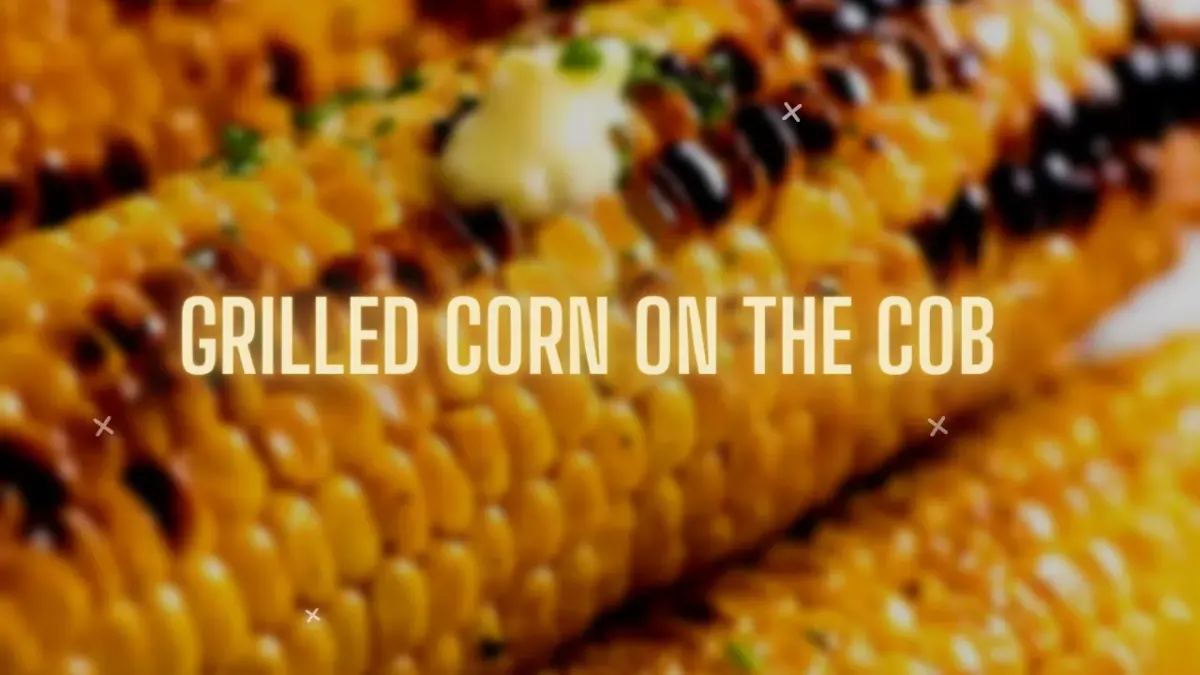
Grilled Corn on the Cob
Abuja, Nigeria · Voir toutes les recettes
Aperçu
Corn grilled in its husk, buttered and salted, is street food across a great deal of Africa. It is sold from braziers and roadside grills in Nigeria as agbado, in Ghana, in Kenya as mahindi choma, and across the continent wherever maize grows, which is nearly everywhere. Maize is not indigenous to Africa. It came from the Americas through Portuguese trade in the sixteenth century and became one of the continent's dominant staples within a few hundred years, ground into the flours behind ugali, sadza, pap, banku and kenkey. Grilled on the cob it is the simplest thing done with it. The technique here differs from the street version in one respect worth knowing. Roadside corn across Africa is grilled directly over coals, husk removed, so the kernels char and blister, and it is usually sold with a piece of raw coconut alongside. This recipe keeps the husk on, butters underneath it and pulls it back up, which steams the corn as much as it grills it and gives a softer, more evenly cooked result with no char. Both are good; they are different things. Dry husks are soaked briefly first so they do not burn through.
Note de Patrimoine AFN
Maize reached Africa from the Americas through Portuguese trade from the 16th century and became a dominant staple. Grilled corn on the cob is sold as street food across the continent, known as agbado in Nigeria and mahindi choma in Kenya.
Ingrédients
Les mentions alimentaires sont fournies par les contributeurs à titre indicatif. Elles ne sont pas vérifiées par AFN et dépendent des produits que vous achetez. En cas d’allergie grave, vérifiez vous-même chaque ingrédient. Cuisine, allergies et votre propre jugement
Préparation
- 1
Preheat the grill to medium-high heat.
- 2
Peel back the husks of the corn without removing them completely, and remove the silk threads.
- 3
Spread a thin layer of softened butter over each ear of corn.
- 4
Season with salt, pepper and any herbs or spices you like.
- 5
Pull the husks back up over the corn to cover it. If the husks are dry, soak them in water for a few minutes first.
- 6
Place the corn on the grill and cook for about 10 to 15 minutes, turning occasionally, until the kernels are tender and slightly charred.
- 7
Carefully remove the husks before serving.
Notes de l’Africook
 Notes personnelles de Laila Yetunde
- Soak dry husks before grilling. They burn through otherwise and the corn scorches on one side.
- Peel the husks back rather than off, so you can butter underneath and then close them again.
- Remove the silk properly. It burns and is unpleasant to eat around.
- Turn the corn regularly. The side facing the coals cooks far faster than the rest.
- For the street version, take the husks off entirely and grill directly over coals until the kernels blister and char. It is smokier and less evenly cooked.
- Raw coconut alongside is how grilled corn is sold in much of West Africa, and the combination is genuinely good.
Questions fréquentes
Is grilled corn an African dish?
Grilled corn is eaten in many parts of the world, but it is genuinely a street food staple across Africa, sold from braziers as agbado in Nigeria and mahindi choma in Kenya among many other names. No single country is claimed here because it belongs to a great many of them.
Should the husk stay on or come off?
Both are done and they give different results. Husk on, as in this recipe, steams the corn as it grills, giving tender evenly cooked kernels with no char. Husk off, directly over coals, is the street method and gives blistered, smoky, charred kernels. Neither is more correct.
Why soak the husks?
So they do not burn through before the corn is cooked. Fresh green husks hold enough moisture of their own, but dry ones catch quickly over a hot grill. A few minutes in water is enough, and it also creates a little steam inside as the corn cooks.
What is it served with?
On its own, most often, which is how it is sold on the street. In much of West Africa it comes with a piece of raw coconut alongside, and the combination of hot charred corn and cool sweet coconut is the traditional pairing. Butter, salt, chilli and lime are all common additions.
Avis
Soyez le premier à noter cette recette
Vous l’avez cuisinée ? Votre note aide la personne suivante à se décider.
Aucun avis sur cette recette pour le moment. Si vous l’avez cuisinée, le vôtre serait le premier.