
Gorraasa (Sudanese Flatbread)
London, United Kingdom · Voir toutes les recettes
Aperçu
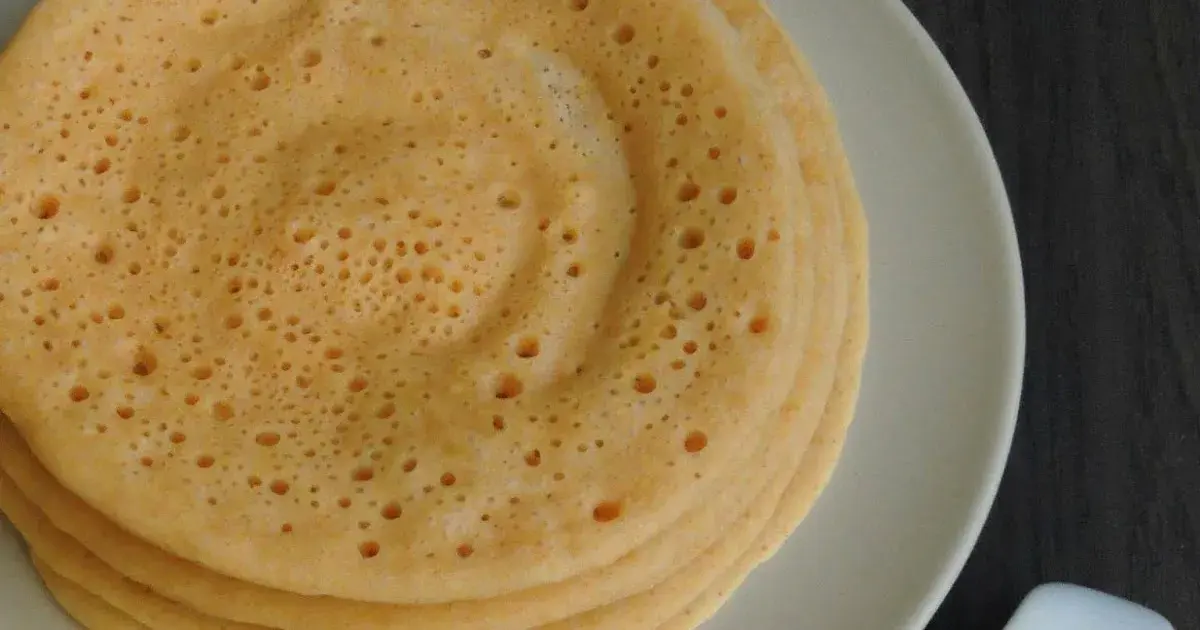
Gorraasa is a thick, spongy Sudanese flatbread cooked in a pan from a pourable batter rather than a kneaded dough. It is one of Sudan's two national breads, alongside kisra, and it is used as a tool as much as a food. Its purpose shapes its texture. A round of gorraasa goes under stewed meat or a saucy dish, and pieces are torn off to pick food up, so it needs to be soft enough to tear cleanly and springy enough not to disintegrate under sauce. That is why it is thick and slightly elastic rather than crisp or brittle. It is often eaten with damaa, the Sudanese meat and tomato stew, in a combination known as gorraasa be dama. Two things in the method are worth taking seriously. The batter must be thick, pancake-batter thick, because a thin one will not hold the bubbles that give the bread its sponginess. And it is cooked on one side only, over medium heat, until the top dries out completely. The heat needs watching: too high and the base burns before the top sets. The source is emphatic about salting the batter properly, and it is right. Gorraasa made without enough salt is bland in a way that no accompaniment fixes, because there is nothing else in it.
Note de Patrimoine AFN
Gorraasa is a thick, soft Sudanese flatbread cooked from a batter in a pan, and one of Sudan's two national breads alongside kisra. It is placed under stews and torn into pieces to pick up food, and is commonly eaten with the meat and tomato stew damaa.
Ingrédients
Les mentions alimentaires sont fournies par les contributeurs à titre indicatif. Elles ne sont pas vérifiées par AFN et dépendent des produits que vous achetez. En cas d’allergie grave, vérifiez vous-même chaque ingrédient. Cuisine, allergies et votre propre jugement
Préparation
- 1
Whisk the flour, baking powder, water and salt together in a large bowl. Use plenty of salt, there is nothing else in this bread to carry flavour.
- 2
You are aiming for a thick, pancake-like batter. If it is too thin the bubbles will not form properly; work in a little extra flour to correct it.
- 3
Brush a non-stick skillet with oil and place it over medium heat.
- 4
Ladle batter into the pan and spread it into a wide circle with the back of the ladle.
- 5
Cook until the top has dried out completely, about 4 to 5 minutes. Do not turn it over.
- 6
Adjust the heat as you go, the aim is for the top to finish before the base browns too far. Covering the pan with foil or a loose lid speeds the top along.
- 7
Keep the finished rounds warm under a towel and serve.
Notes de l’Africook
 Notes personnelles de Nympha Nzeribe
- Salt it properly. This is a two-ingredient bread and unsalted gorraasa tastes of nothing.
- Keep the batter thick. A thin batter will not hold the bubbles that give gorraasa its spongy texture.
- Cook on one side only. The top sets from the heat rising through the batter, and turning it defeats the texture.
- Watch the heat closely. The balance between a set top and an unburnt base is the whole difficulty here.
- A lid or a sheet of foil over the pan traps heat and dries the top faster, which helps if the base is colouring too quickly.
- Stack the finished rounds under a cloth. They stay soft that way and dry out fast if left uncovered.
Questions fréquentes
What is gorraasa eaten with?
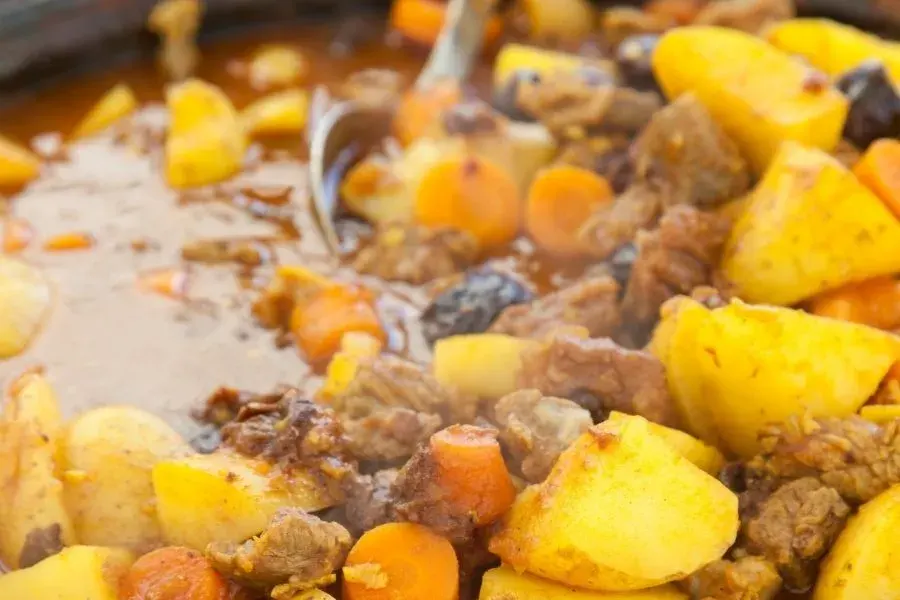
Stews, most classically damaa, the Sudanese meat and tomato stew, the combination is called gorraasa be dama. A round is placed under the stew and pieces are torn off to scoop it up, so the bread functions as both plate and utensil. It also accompanies vegetable dishes, and any Sudanese meal built around a shared central dish. It is one of Sudan's two national breads, alongside kisra.
How is it different from kisra?
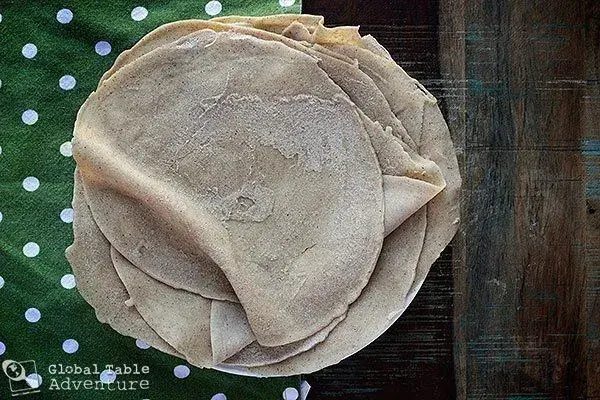
Substantially. Kisra is a thin, fermented sorghum crêpe, made from a batter left to sour over a day or more, and it is almost paper-thin. Gorraasa is thick, soft and spongy, made from unfermented wheat flour with baking powder, and cooked immediately. They serve similar purposes at the table but the ingredients, the fermentation and the texture are all different. Both have their own page on this site.
Why don't you flip it?
Because the top cooks from the heat rising through the batter, and turning it would flatten the bubbles that give gorraasa its spongy texture. The method instead waits for the top to dry out completely, and covers the pan if it needs speeding up. This is the same reasoning behind Moroccan beghrir, which is also cooked on one side only for the same structural reason.
My batter isn't bubbling. What went wrong?
It is almost certainly too thin. Gorraasa batter needs to be thick, comparable to a pancake batter, so that the bubbles produced by the baking powder are held in place as the bread sets rather than escaping through liquid batter. Whisk in a little more flour and try again. Old baking powder is the other possible culprit; it loses potency over time and a batch more than six months open is worth replacing.
Avis
Soyez le premier à noter cette recette
Vous l’avez cuisinée ? Votre note aide la personne suivante à se décider.
Aucun avis sur cette recette pour le moment. Si vous l’avez cuisinée, le vôtre serait le premier.