
Tamarind Juice
Aperçu
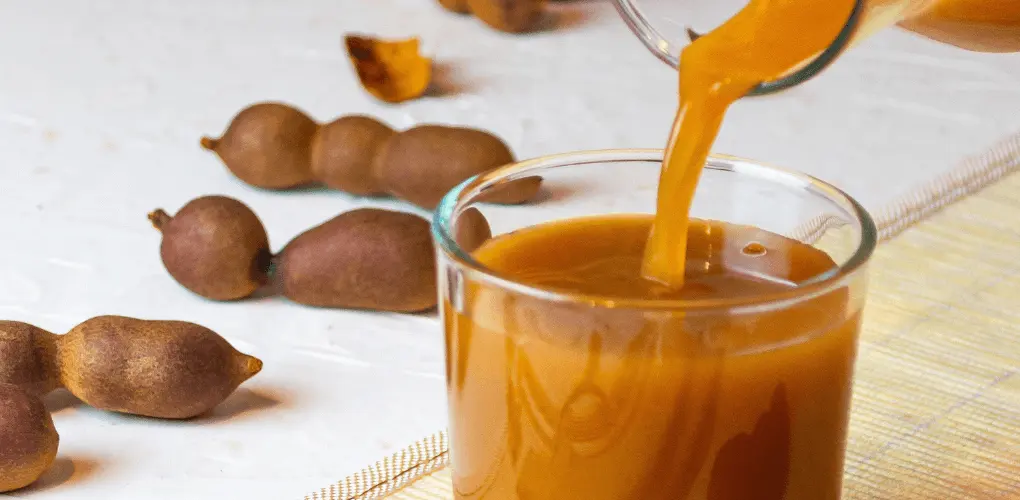
Tamarind juice is made by soaking the pulp of the tamarind pod in water, working it loose from the seeds and fibre, straining it and sweetening to taste. It is sharp, dark and genuinely refreshing, and it is drunk across a very wide stretch of the world. The tree is African. Tamarindus indica is indigenous to tropical Africa and grows wild across Sudan, Cameroon, Nigeria, Kenya, Zambia, Somalia, Tanzania and Malawi. It has been cultivated on the Indian subcontinent for so long that it is frequently reported as native there, and India is now among the largest producers, but the origin is African, and the confusion is a good example of how completely a crop can be absorbed somewhere it did not begin. The fruit is a long pod with a brittle brown shell. Inside is a sticky, dark, intensely sour pulp packed around hard seeds. That pulp is what everything is made from: the juice, and also the souring agent used across African, Indian and Southeast Asian cooking. It is drunk across the Sahel under a range of names, and in West Africa it is a standard hot-weather drink sold alongside zobo and other cold infusions. Sweetening is essential rather than optional. Unsweetened tamarind is bracingly sour.
Note de Patrimoine AFN
Tamarindus indica is indigenous to tropical Africa and grows wild across Sudan, Cameroon, Nigeria, Kenya, Zambia, Somalia, Tanzania and Malawi. Long cultivation on the Indian subcontinent has led it to be widely but incorrectly reported as native there.
Ingrédients
Les mentions alimentaires sont fournies par les contributeurs à titre indicatif. Elles ne sont pas vérifiées par AFN et dépendent des produits que vous achetez. En cas d’allergie grave, vérifiez vous-même chaque ingrédient. Cuisine, allergies et votre propre jugement
Préparation
- 1
Macerate the seeds in the water for about ten minutes.
- 2
Knead with your own hand to extract the juice then filter, sweeten and perfume eventually.
- 3
Serve well fresh.
Notes de l’Africook
- Soak the pulp in warm water and work it with your fingers. It needs physical help to separate from the seeds and fibre.
- Strain thoroughly, twice if necessary. Tamarind fibre is unpleasant to drink and does not settle out.
- Sweeten generously and taste as you go. Unsweetened tamarind is extremely sour and pod sourness varies a lot.
- Blocks of tamarind pulp are easier to work with than whole pods and are widely sold, check they are seedless or expect to strain more.
- Serve very cold. It is a hot-weather drink and the sourness reads better chilled.
Questions fréquentes
Where does tamarind come from?
Tropical Africa. Tamarindus indica is indigenous to the continent and grows wild across a broad band including Sudan, Cameroon, Nigeria, Kenya, Zambia, Somalia, Tanzania and Malawi. It has been cultivated in India for long enough that it is often reported as native there, and India is now one of the largest producers, but the tree's origin is African.
Is tamarind juice very sour?
Yes, unsweetened it is bracingly so, closer to a concentrated lemon than to a fruit juice. Sweetening is a necessary part of making it drinkable rather than an optional extra. How much depends on the pods, which vary considerably, so add gradually and taste.
Should I use pods or block pulp?
Either. Whole pods need shelling and more work to separate the pulp from the seeds and fibre. Compressed blocks of pulp are widely sold, easier to handle, and give a consistent result. Check whether the block is seedless, because some are not and you will need to strain more carefully.
What else is tamarind used for?
It is a souring agent across a wide range of cuisines, in West African and Sahelian cooking, in Indian dishes such as sambar and chutneys, and in Southeast Asian cooking including pad Thai. Where a Western recipe might reach for lemon or vinegar, many of these traditions reach for tamarind, which brings sourness with a deeper, fruitier body.
Avis
Soyez le premier à noter cette recette
Vous l’avez cuisinée ? Votre note aide la personne suivante à se décider.
Aucun avis sur cette recette pour le moment. Si vous l’avez cuisinée, le vôtre serait le premier.
Vous Aimerez Aussi
Zobo Drink