
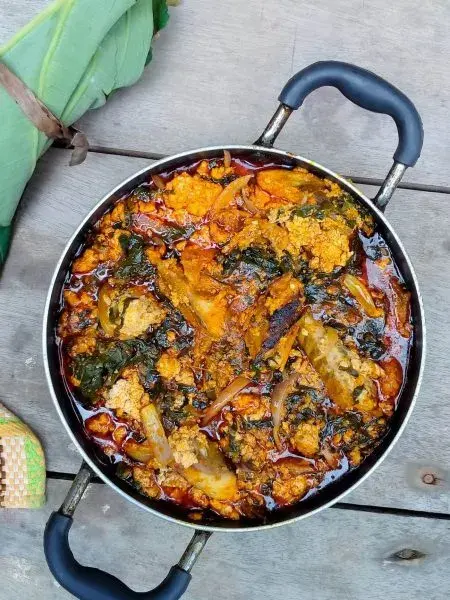
Seafood Garden Egg Stew
Aperçu
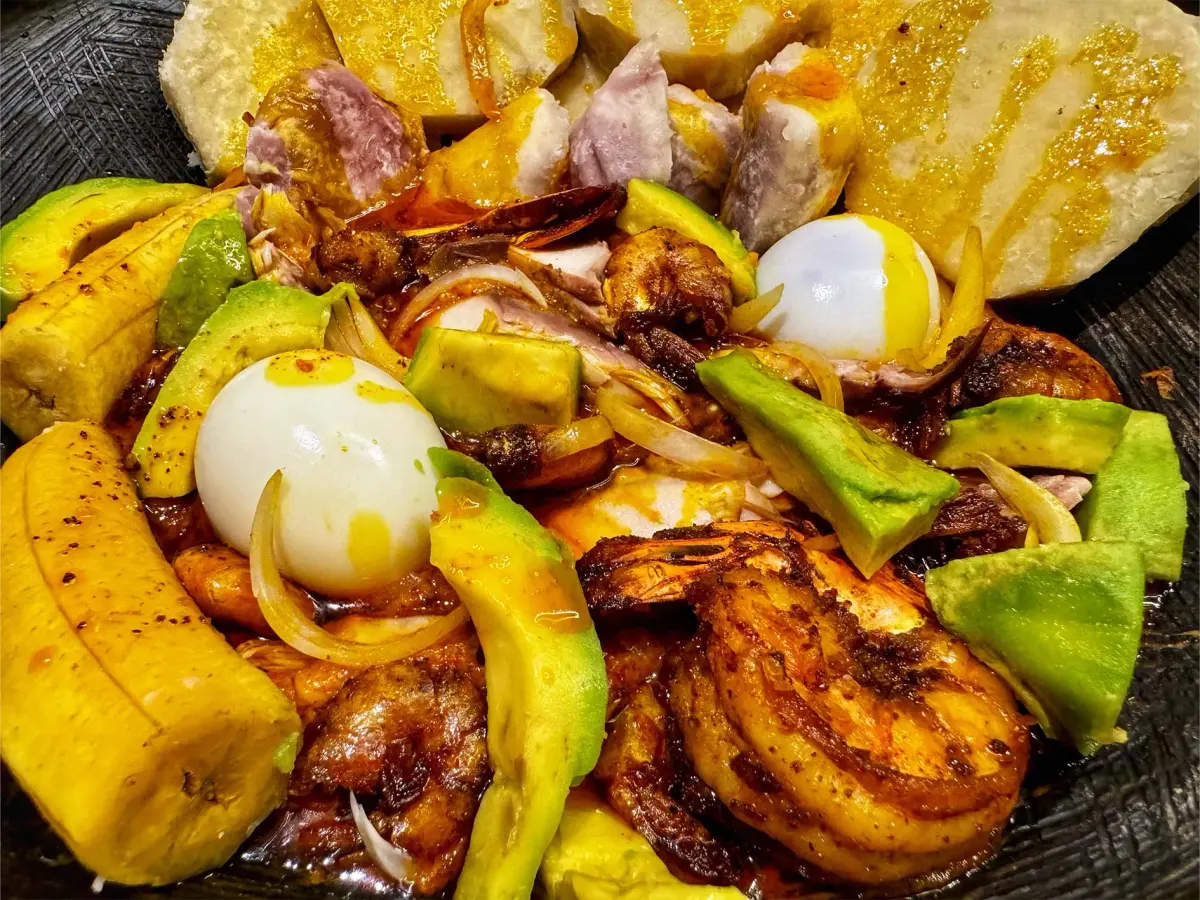
Garden egg stew is a West African palm oil stew built on garden eggs, the small white and green African aubergines that are nothing like the large purple ones sold in most supermarkets. They are firmer, more bitter and hold their shape, and they are eaten across Ghana and Nigeria both cooked and raw. This version is a seafood one, with prawns, shrimp and smoked mackerel, and it departs from the plain garden egg stew in one further respect: a spoonful of peanut butter goes into the ground pepper base. That is not universal but it is a recognised West African move, giving body and a background richness that thickens the stew without flour. What it is served with is the point. The stew is made to go with yam, plantain and cocoyam, all cooked plain, and the contributor is explicit that palm oil is what makes that combination work. Vegetable oil is possible and gives a different, lighter dish. The method also uses an air fryer to char the peppers, tomatoes and onion before grinding, which is a modern substitute for roasting them over an open flame, and it produces the same smokiness. Contains peanut.
Note de Patrimoine AFN
Garden eggs are small African aubergines eaten across Ghana and Nigeria, and garden egg stew is a palm oil stew conventionally served with boiled yam, plantain and cocoyam.
Ingrédients
Les mentions alimentaires sont fournies par les contributeurs à titre indicatif. Elles ne sont pas vérifiées par AFN et dépendent des produits que vous achetez. En cas d’allergie grave, vérifiez vous-même chaque ingrédient. Cuisine, allergies et votre propre jugement
Préparation
- 1
Clean and wash the garden eggs properly and cut them into smaller pieces.
- 2
Put them into a saucepan with water and bring to the boil.
- 3
Clean and wash the tomatoes, one onion, the fresh chilli and the scotch bonnets.
- 4
Put them into a preheated air fryer and set the time to 10 minutes.
- 5
Clean and slice the second onion and set aside.
- 6
Peel the yam, cocoyam and plantain and cook them in a pan of water.
- 7
Wash the shrimp and prawns and fry them in a pan of palm oil.
- 8
To the same oil, add the chopped onions and the seasoning cube.
- 9
Grind the air fried peppers, onions and tomatoes in a grinder.
- 10
Add the peanut butter and grind together.
- 11
Add the cooked garden eggs to the mixture and grind until roughly ground, then salt to taste.
- 12
Pour the palm oil with the onions, shrimp and prawns over the ground mixture.
- 13
Garnish with the smoked mackerel, hard eggs and sliced avocado.
- 14
Serve the yam, plantain and cocoyam alongside.
Notes de l’Africook
 Notes personnelles de Rashidatu Alhassan
- Grind the garden eggs roughly rather than smooth. The texture is part of the dish and a purée loses it entirely.
- Char the peppers, tomatoes and onion before grinding, whether in an air fryer, under a grill or over a flame. That smokiness is what lifts the stew.
- Cook the garden eggs until genuinely soft before grinding. Underdone, they stay bitter and fibrous.
- Palm oil is what makes this work with yam and plantain. Vegetable oil gives a lighter, quite different stew.
- The peanut butter is a thickener as much as a flavour, so do not skip it unless you need to avoid peanuts.
- Add the fried prawns and their oil over the ground mixture at the end rather than cooking them into it, so they keep their texture.
Questions fréquentes
What are garden eggs?
Garden eggs are small African aubergines, usually white or pale green and roughly the size of a hen's egg. They are firmer and more bitter than the large purple aubergine and hold their shape when cooked. They are eaten across Ghana and Nigeria, both cooked into stews and raw with groundnut paste.
Why is there peanut butter in it?
For body and background richness. A spoonful ground into the pepper base thickens the stew without flour and adds a mild nuttiness against the bitterness of the garden eggs. It is not universal in garden egg stew but it is a recognised West African technique. It also means the dish contains peanut.
What is it served with?
Boiled yam, boiled plantain and cocoyam, all three of which this recipe prepares alongside it. The stew is made specifically for that combination, and the palm oil is what carries it. Rice works but is not what the dish is built around.
Can I use vegetable oil instead of palm oil?
You can, and the contributor says so directly. It gives a lighter stew with a quite different character: palm oil brings colour, a distinct sweetness and the richness that stands up to yam and plantain. If you substitute, expect something closer to a tomato stew with garden eggs in it.
Avis
Soyez le premier à noter cette recette
Vous l’avez cuisinée ? Votre note aide la personne suivante à se décider.
Aucun avis sur cette recette pour le moment. Si vous l’avez cuisinée, le vôtre serait le premier.
Vous Aimerez Aussi
Voir toutes les recettes Ghana →
Easy and Simple Way to Make Banku
Garden Egg Stew (Earthenware Bowl Method)
Kontomire Stew