
Halaweh
Abuja, Nigeria · Voir toutes les recettes
Aperçu
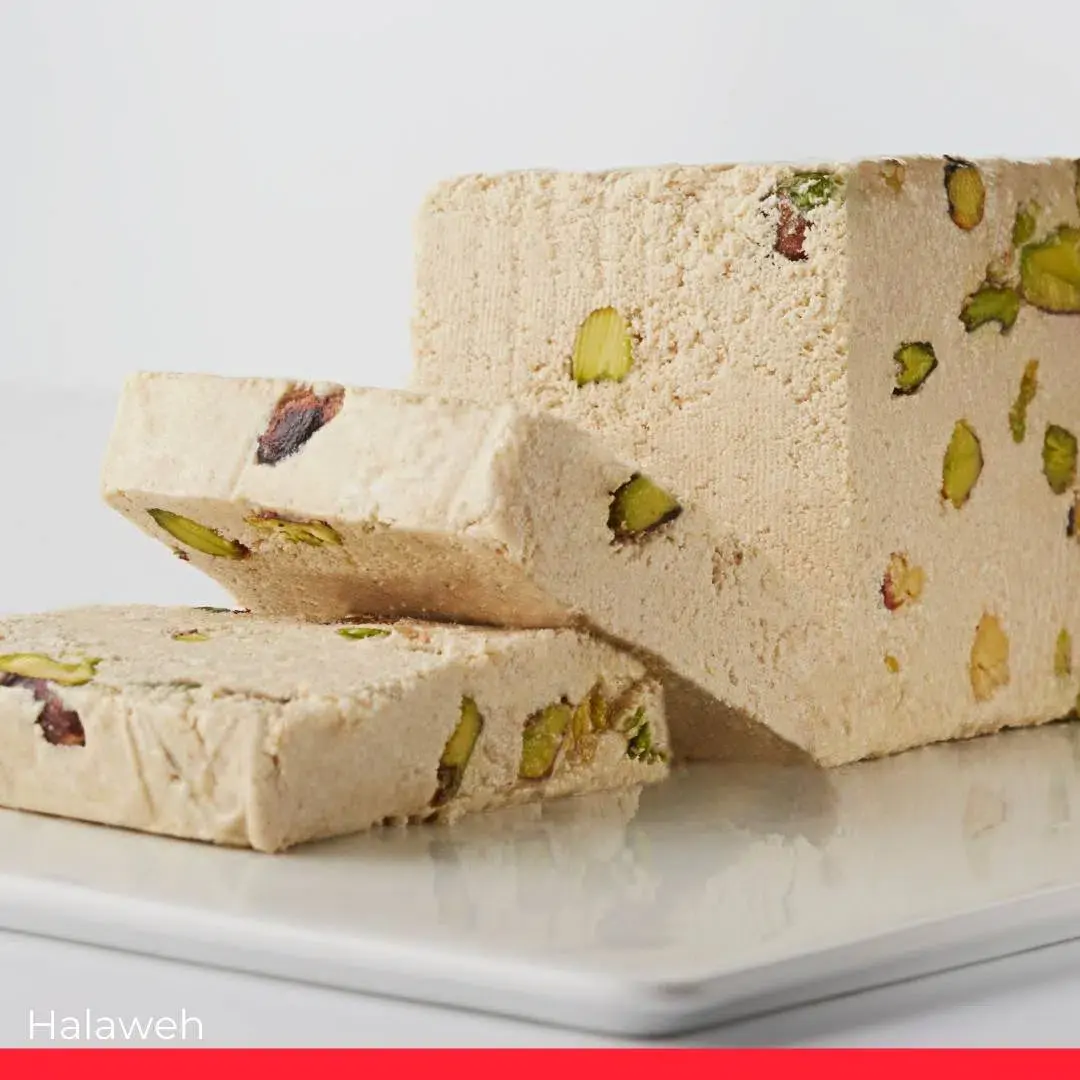
Halaweh, halva, halawa, depending on the transliteration, is a dense sesame confection made from tahini and sugar syrup, set into a firm block with a texture somewhere between fudge and compressed sand. It is eaten across an enormous area, from the Balkans through Turkey and the Levant to Egypt and out to India, and the sesame-based version is the one that dominates the eastern Mediterranean and North Africa. Raisins, pistachios and almonds are common inclusions. What is distinctively Egyptian is how it is eaten. Despite being extremely sweet and very rich, Egyptians commonly make halaweh sandwiches, the block sliced or spread into bread and eaten for breakfast or dinner. Mothers make them for children as something filling and energy-dense. That treatment of a confection as a staple food is unusual and says a good deal about how calorie-dense it is. It is sold in supermarkets in small packets and keeps for a long time without refrigeration, which is part of its usefulness. Making it at home is a sugar-syrup exercise, and the temperature of the syrup decides whether it sets crumbly or sticky.
Note de Patrimoine AFN
Sesame halva is eaten from the Balkans through Turkey, the Levant, Egypt and into South Asia. In Egypt it is commonly eaten in sandwiches at breakfast or dinner rather than only as a confection.
Ingrédients
Les mentions alimentaires sont fournies par les contributeurs à titre indicatif. Elles ne sont pas vérifiées par AFN et dépendent des produits que vous achetez. En cas d’allergie grave, vérifiez vous-même chaque ingrédient. Cuisine, allergies et votre propre jugement
Préparation
- 1
Place all the ingredients in a food processor and process until thick.
- 2
Pour into a lined pan and allow to firm up slightly.
Notes de l’Africook
- Take the sugar syrup to the right stage and use a thermometer. This is what decides the final texture and guessing rarely works.
- Warm the tahini slightly before combining, cold tahini seizes when hot syrup hits it.
- Do not overmix once combined. Working it too long gives a greasy rather than crumbly texture.
- Press it firmly into the mould and let it set fully before cutting, which can take several hours.
Questions fréquentes
What is halaweh made of?
Tahini, ground sesame paste, combined with a hot sugar syrup, which sets the mixture into a firm block. Raisins, pistachios or almonds are commonly added. There is no dairy in the sesame version, which is why it is suitable for people avoiding milk, though it is not suitable for anyone with a sesame or nut allergy.
Egyptians really eat it in sandwiches?
Yes, and it is entirely normal there. Halaweh is sliced or spread into bread and eaten at breakfast or as an evening meal, particularly for children, because it is extremely energy-dense and filling. To someone who thinks of halva as a confection this seems surprising; in Egypt it is closer to how peanut butter is treated elsewhere.
Why did mine come out sticky rather than crumbly?
The sugar syrup was almost certainly undercooked. Halva's texture is decided by the stage the syrup reaches, and a few degrees makes the difference between crumbly and tacky. A sugar thermometer removes the guesswork. Hot syrup also burns severely on contact with skin, so handle it carefully.
Avis
Soyez le premier à noter cette recette
Vous l’avez cuisinée ? Votre note aide la personne suivante à se décider.
Aucun avis sur cette recette pour le moment. Si vous l’avez cuisinée, le vôtre serait le premier.
Vous Aimerez Aussi
Voir toutes les recettes Egypt →
Tarb (Grilled Kofta Wrapped in Lamb Fat)
Egyptian Meshabek