
Shrimp and Egg Stir-Fry
Aperçu
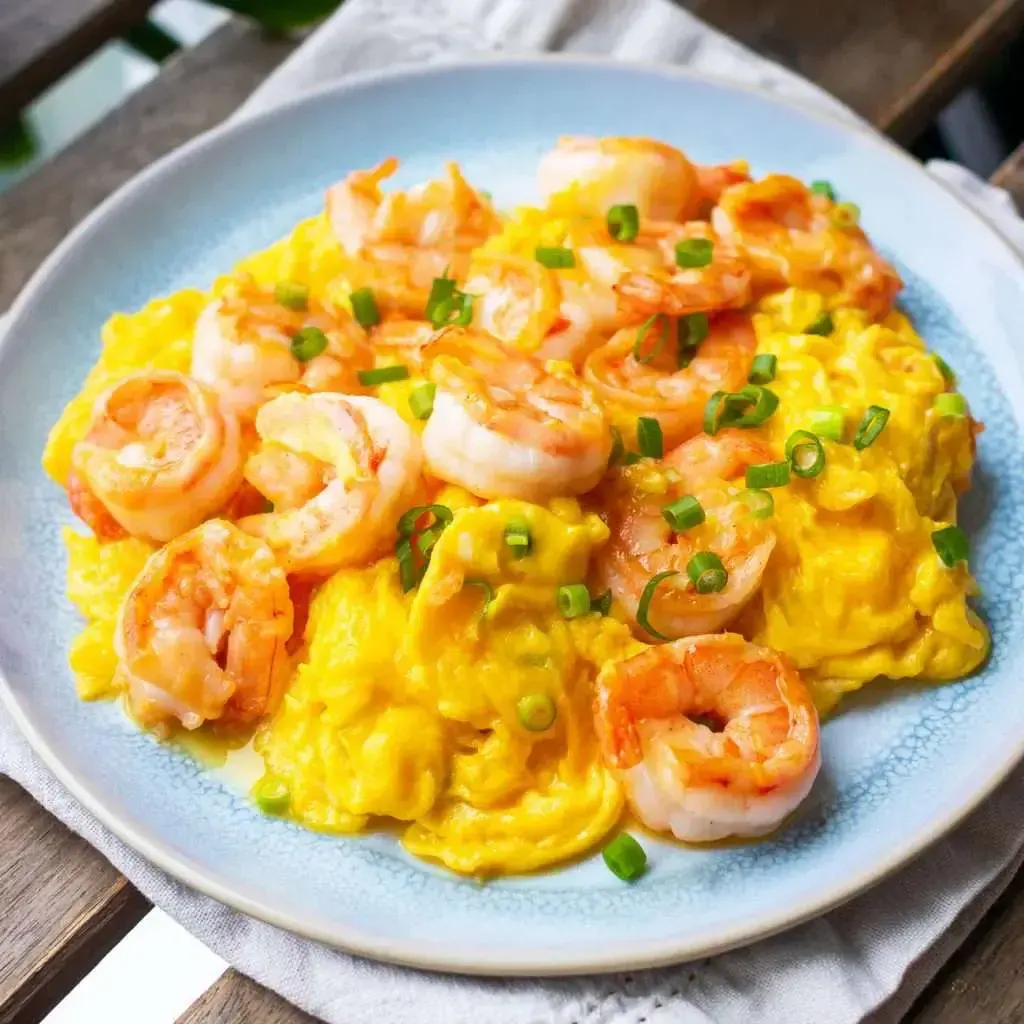
Shrimp cooked briefly in hot oil and folded through softly scrambled egg. It is Cantonese, and it sits in Worldwide Recipes with its URL unchanged. The Chinese name explains the whole dish. Huá dàn xiā rén, 滑蛋虾仁, contains the word huá, meaning slippery or smooth, and that texture is the point: the egg is meant to be soft, silky and barely set, not dry and crumbly. Everything in the method exists to achieve it. Two details do the work. The eggs must be at room temperature, which the source flags as very important and is right about, cold eggs hitting a hot wok seize and set into firm curds instead of staying soft. And the egg goes in last, over the cooked shrimp, and is folded rather than stirred, coming off the heat while it still looks slightly underdone. The shrimp needs almost no time at all. They are done the moment they turn pink and curl, which is a matter of a minute or so, and shrimp cooked past that point go rubbery. Sesame oil goes into the beaten egg rather than the pan, which is unusual and deliberate, it seasons from within rather than burning off. It is a good example of what the source calls less is more.
Ingrédients
Les mentions alimentaires sont fournies par les contributeurs à titre indicatif. Elles ne sont pas vérifiées par AFN et dépendent des produits que vous achetez. En cas d’allergie grave, vérifiez vous-même chaque ingrédient. Cuisine, allergies et votre propre jugement
Préparation
- 1
Clean the shrimp. Take the eggs out of the refrigerator well before you start, cold eggs seize in a hot pan and set firm instead of staying silky.
- 2
Beat the eggs in a large bowl with the salt, white pepper and sesame oil. The sesame oil goes into the eggs rather than the pan, so it seasons from within rather than burning.
- 3
Chop the scallions.
- 4
Add the canola oil to a hot pan. Put in the garlic and cook for 30 seconds, taking care not to burn it.
- 5
Tip in the shrimp and toss until they just turn pink. This happens very fast, a minute or so, and shrimp cooked longer go rubbery.
- 6
Swirl the oil around the wok and pour in the egg mixture over the shrimp.
- 7
Fold the eggs gently but quickly with a wooden spoon or spatula, as you would for scrambled eggs.
- 8
Take the pan off the heat while the eggs still look slightly underdone, they carry on setting on the plate.
- 9
Transfer to a plate, garnish with scallion and serve with steamed rice.
Notes de l’Africook
- Bring the eggs to room temperature. Cold eggs in a hot wok set into firm curds and you lose the silky texture the dish is named for.
- Take the shrimp out at the moment they turn pink. A minute too long and they are rubbery.
- Fold the eggs rather than stirring them. Vigorous stirring breaks them into small dry pieces.
- Take it off the heat looking underdone. The residual heat finishes it and overcooked egg cannot be rescued.
- Sesame oil in the eggs, not the pan. It burns readily and its flavour is better carried from inside.
- Have everything ready before you start. The whole cook takes about two minutes.
Questions fréquentes
Why do the eggs need to be at room temperature?
Because cold eggs hitting a hot wok seize and set almost instantly into firm, separate curds, which is the opposite of what this dish wants. Room-temperature eggs set more gradually and stay soft and silky. The Chinese name for the dish, huá dàn xiā rén, contains the word huá, slippery or smooth, and that texture is precisely what the room-temperature step protects.
How long do the shrimp need?
Barely any time, a minute or so, until they just turn pink and begin to curl. Shrimp are small and cook extremely fast, and the window between properly cooked and rubbery is very narrow. They also carry on cooking once the eggs go in on top of them, so pulling them slightly early is safer than pulling them late. This is the most common mistake in the dish.
Why is the sesame oil in the eggs rather than the pan?
Two reasons. Sesame oil has a low smoke point and burns readily in a hot wok, turning acrid. And beaten into the eggs it seasons them from within, distributing evenly through every mouthful rather than sitting on the surface. It is a small detail and a deliberate one, and the same logic applies to most finishing oils in Chinese cooking, they go in at the end or off the heat.
Is this an African dish?
No. It is Cantonese, and the page sits in Worldwide Recipes under Asian with its URL unchanged. Africa has its own substantial egg and seafood traditions, several of which are on this site, Nigerian egg sauce, Tanzanian chips mayai, Ghanaian shito with shrimp, and the many coastal fish dishes of East and West Africa.
Avis
Soyez le premier à noter cette recette
Vous l’avez cuisinée ? Votre note aide la personne suivante à se décider.
Aucun avis sur cette recette pour le moment. Si vous l’avez cuisinée, le vôtre serait le premier.
Vous Aimerez Aussi
Boeber (Cape Malay Sweet Milk Drink)
Mufete
Garden Egg Stew (Earthenware Bowl Method)