
French Toast with Brioche
Aperçu
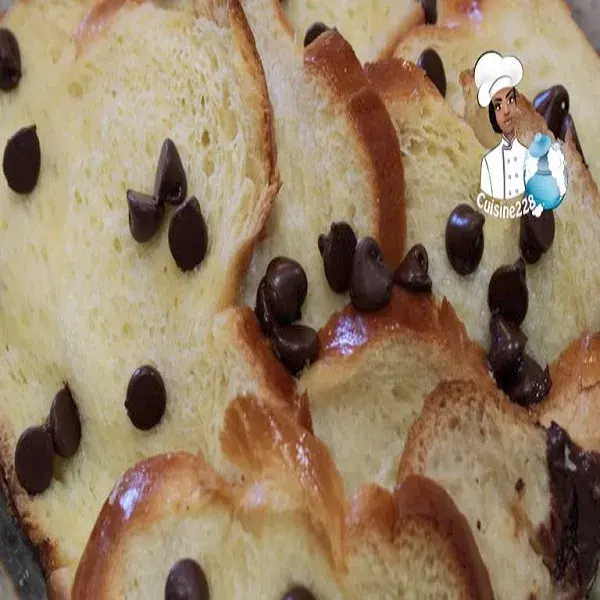
Thick slices of brioche soaked in a sweetened egg, milk and cream custard, then baked with chocolate and butter. No country is claimed. French toast in one form or another is eaten across Europe and beyond, and it is considerably older than its English name, a version appears in Apicius, the Roman recipe collection, and it is known in France as pain perdu, lost bread, because its purpose was to rescue bread that had gone stale. The bread choice is the substance of the recipe and the source is right about it. Brioche and challah are both enriched doughs, made with eggs and butter, which means they are structurally sturdier and can absorb a great deal of custard without collapsing. Plain sandwich bread turns to mush. Cutting the slices thick, around 2 cm, matters for the same reason. Baking rather than pan-frying is the other decision here, and it solves a real problem. Thick slices fried in a pan brown on the outside long before the custard in the middle has set, which is why so much home-made French toast is soggy inside. The oven cooks it through evenly. The method has a copy error worth noting: it refers to baguette slices twice, having specified brioche in the ingredients. Brioche is correct.
Ingrédients
Les mentions alimentaires sont fournies par les contributeurs à titre indicatif. Elles ne sont pas vérifiées par AFN et dépendent des produits que vous achetez. En cas d’allergie grave, vérifiez vous-même chaque ingrédient. Cuisine, allergies et votre propre jugement
Préparation
- 1
Cut the brioche into slices about 2 cm thick. Thin slices will not hold enough custard.
- 2
Whisk the eggs with the cream and milk in a large bowl, then mix in the vanilla extract and sugar.
- 3
Pour the mixture into a shallow, wide baking dish.
- 4
Arrange the brioche slices in the dish and leave them to soak for 20 minutes, turning them once so both sides take up the custard evenly.
- 5
Set the oven to around 180°C.
- 6
Scatter the chocolate over the top and dot with the butter.
- 7
Bake for about 30 minutes, until the custard has set and the top is golden.
- 8
Serve warm, with or without an accompaniment.
Notes de l’Africook
- Use brioche or challah. Enriched doughs hold together under a long soak where plain sandwich bread disintegrates.
- Cut the slices thick, around 2 cm. Thin slices cannot absorb enough custard to be worth making.
- Slightly stale bread works better than fresh. That is the whole origin of the dish: pain perdu means lost bread.
- Baking rather than frying is what stops thick slices being raw in the middle, which is the usual failure with French toast.
- Turn the slices halfway through the soak so both sides take up the custard evenly.
- Serve it warm. French toast cools quickly and the custard firms up unappealingly.
Questions fréquentes
What bread is best for French toast?
Brioche and challah, both enriched doughs made with eggs and butter, which gives them the structure to absorb a lot of custard without falling apart. A French baguette works too. Plain sliced sandwich bread is the common choice and the worst one, it turns to mush under a proper soak. Whatever you use, cut it thick, around 2 cm, and slightly stale bread holds up better than fresh.
Why is it called pain perdu?
Because that is its French name and it means lost bread, the dish exists to rescue bread that has gone stale and would otherwise be thrown out. Soaking it in egg and milk restores it. The idea is very old: a version appears in Apicius, the Roman recipe collection, and similar dishes are recorded across medieval Europe. The English name French toast is comparatively recent and somewhat arbitrary.
Should I bake it or fry it?
Baking, if the slices are thick, which is what this recipe does. Thick slices in a pan brown on the outside well before the custard at the centre has set, which is why home-made French toast is so often soggy in the middle. The oven cooks it through evenly. Pan-frying is faster and gives a better crust, and is the right choice for thinner slices. Some cooks do both, a quick fry, then the oven.
Is this an African dish?
No, and none is claimed. French toast is European, with a history reaching back to Roman cooking, and this page sits in Worldwide Recipes under European with its URL unchanged. Africa has its own fried and enriched breads with real traditions behind them, Moroccan sfenj, South African vetkoek, Somali doughnuts and Egyptian feteer among them, and those have their own pages on this site.
Avis
Soyez le premier à noter cette recette
Vous l’avez cuisinée ? Votre note aide la personne suivante à se décider.
Aucun avis sur cette recette pour le moment. Si vous l’avez cuisinée, le vôtre serait le premier.