
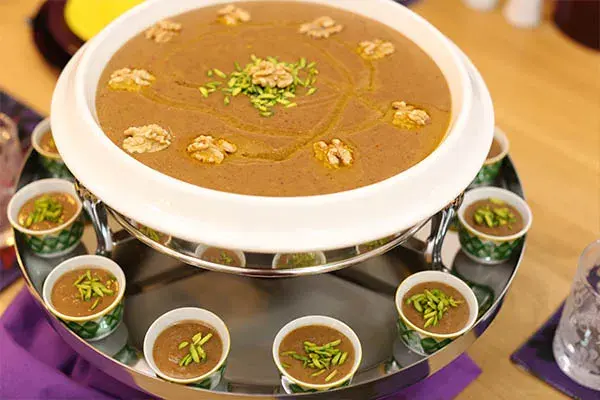
Asida (Flour Pudding)
Abuja, Nigeria · Voir toutes les recettes
Aperçu
Asida is a cooked flour pudding from the Maghreb, eaten with honey or date syrup and melted butter. Its first recorded appearance is in the Arabic cookbook Kitab al-Tabikh, around the tenth century, which makes it one of the older dishes in this collection with a documented date. It is communal food. Like bazeen, asida is served on a large flat plate called a gas'a and eaten with the fingers, though spoons are used. The distinction the source draws between the two is worth keeping: bazeen has Amazigh origins and is purely North African, while asida has an Arabic name and versions of it are made across the Arabian Peninsula as well. In Libya it is a breakfast dish, eaten to carry someone through a working day, and it appears at celebrations: births, Eid, Mawlid. The plain version is simply flour cooked in water, turned out, and served with a hollow pressed into the top for honey or date syrup, with melted butter or ghee poured around it. This particular recipe is a considerably richer version built on a date paste with cardamom, cinnamon, fenugreek, saffron, rose water and walnuts, which is a celebration preparation rather than the everyday one.
Note de Patrimoine AFN
Asida is first recorded in the Arabic cookbook Kitab al-Tabikh in around the 10th century. It is a communal Maghrebi dish served on a large flat plate called a gas'a, and in Libya it is eaten at breakfast and at celebrations including births, Eid and Mawlid.
Ingrédients
Les mentions alimentaires sont fournies par les contributeurs à titre indicatif. Elles ne sont pas vérifiées par AFN et dépendent des produits que vous achetez. En cas d’allergie grave, vérifiez vous-même chaque ingrédient. Cuisine, allergies et votre propre jugement
Préparation
- 1
Remove the stones from the dates. Blend them with about 2 cups of water into a liquid paste.
- 2
Put the saffron in the rose water and set aside.
- 3
In a saucepan, toast the flour with the cardamom over medium heat for a few minutes, stirring.
- 4
In another saucepan, warm the butter and oil gently until the butter melts.
- 5
Add the cardamom, cinnamon, fenugreek and pepper and leave for a few seconds to infuse into the fat.
- 6
Add the flour gradually to the butter, stirring quietly, adding a little hot water as you go, until you have a mixture like a heavy béchamel.
- 7
Add the date mixture and continue cooking and stirring to combine, adding more water as needed.
- 8
Let it cook gently while stirring for a few minutes until everything comes together.
- 9
Add the rose water and saffron and stir until the mixture is again like a heavy béchamel.
- 10
Transfer to serving dishes, pour over ghee and decorate with the walnuts.
Notes de l’Africook
- Toast the flour before the fat goes in. It removes the raw taste and is the step most often skipped.
- Add the water gradually and keep stirring. Poured in at once it lumps, and lumps in asida cannot be worked out.
- The consistency to aim for is a heavy béchamel, which the recipe names twice. Thicker than that and it sets solid as it cools.
- For the plain everyday version, leave out the dates, spices and nuts entirely: flour cooked in water, turned out, with a hollow for honey or date syrup and melted butter poured around.
- Serve it hot. Asida firms up considerably as it cools and is much harder to eat.
- Ghee works in place of butter for serving and is what is often used.
Questions fréquentes
What is asida?
A cooked flour pudding from the Maghreb, made from wheat or wholemeal flour cooked directly in water, and eaten with honey or date syrup and melted butter. It is first recorded in the Arabic cookbook Kitab al-Tabikh around the 10th century, which gives it an unusually well documented history.
What is the difference between asida and bazeen?
Origin and character. Bazeen has Amazigh roots and is a purely North African dish. Asida has an Arabic name and versions of it are made across the Arabian Peninsula as well as the Maghreb. Both are communal dishes served on a large flat gas'a plate and eaten with the fingers.
How is it served?
Turned out onto a plate with the smooth side up, and a hollow pressed into the top. Honey or date syrup goes into the hollow and melted butter or ghee is poured around the outside. Diners eat from the shared plate with their fingers, taking a piece and dipping it.
Is this the everyday version?
No. The plain everyday asida is flour cooked in water and nothing else, served with honey and butter. This recipe is a richer celebration version built on date paste with cardamom, cinnamon, fenugreek, saffron, rose water and walnuts. Both are made; this one belongs to Eid and Mawlid rather than to a working breakfast.
Avis
Soyez le premier à noter cette recette
Vous l’avez cuisinée ? Votre note aide la personne suivante à se décider.
Aucun avis sur cette recette pour le moment. Si vous l’avez cuisinée, le vôtre serait le premier.
Vous Aimerez Aussi
Voir toutes les recettes Libya →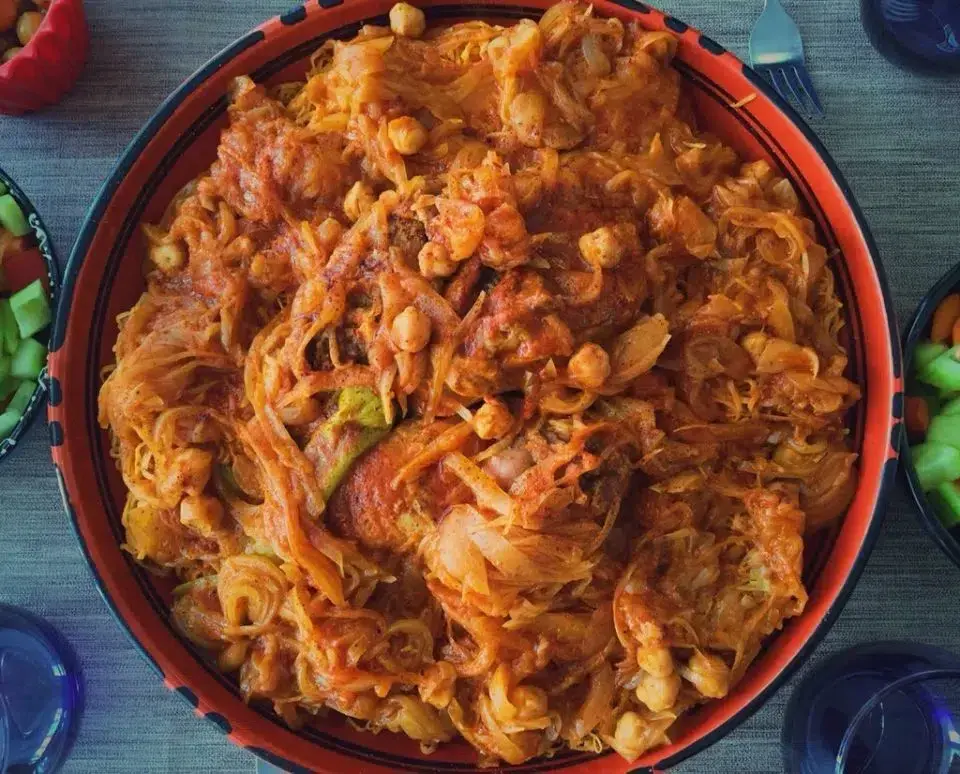
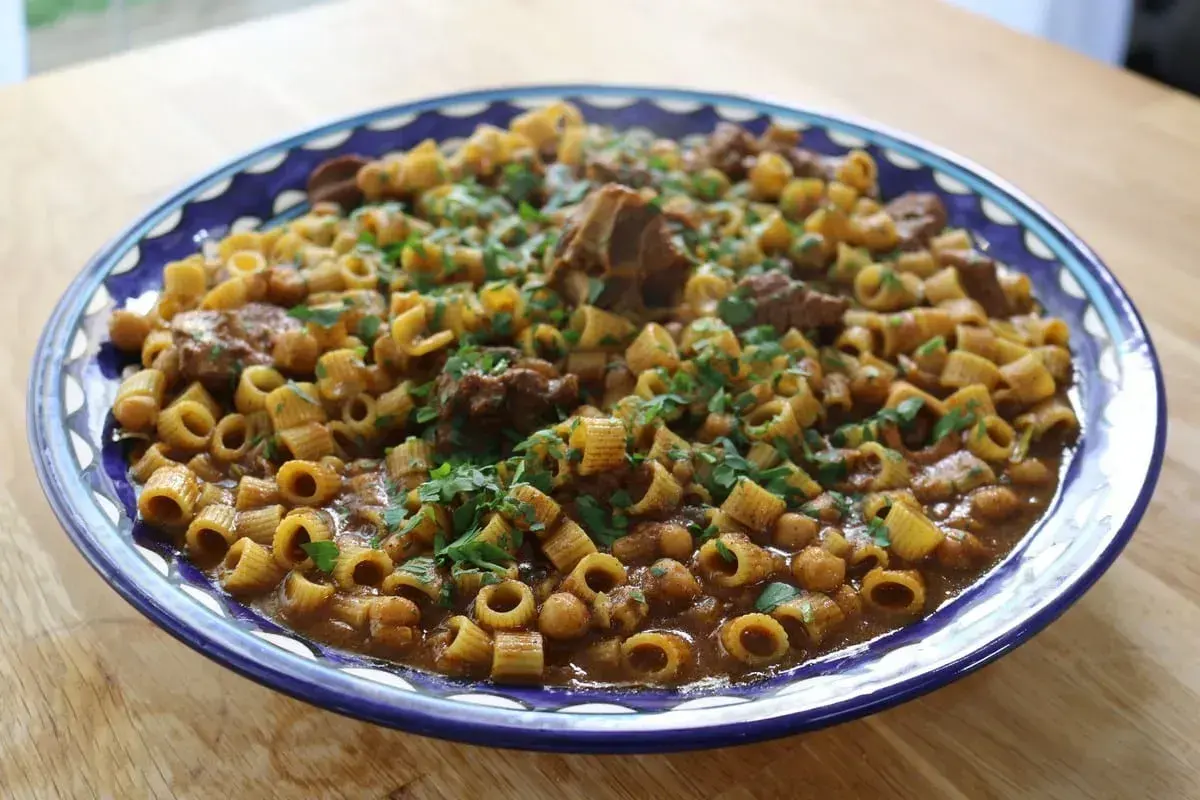
Mbakbaka (Libyan Pasta Stew)
Aslooz (Libyan Couscous-Based Dish)