


The principle of preserving fresh meat or fish is to handle the food in a way that spoilage is controlled, stopped or greatly slowed down. The aim of preservation is to protect the food from bacteria or enzymes that bcause it to spoil and this is achieved by creating an environment in which the bacteria cannot survive. Preservation also helps maintain optimal nutritional value, flavour and texture of the fresh food.
When it comes to freezing or refrigerating, the most important element is a freezer or a refrigerator. The population of Nigerians who own this devices is a little lower than 30%. Even those who have it are also limited by one factor 'Electricity'. Such people resort to cooking their fresh meat and fish after purchasing to prevent it from spoiling. When such foods are purchased in large quantity and will not be used up at once, people decide to cook over and over again which can cause the meat and fish to loose its nutritional value, flavour and texture. There are methods to preserve such foods that do not involve cooking or freezing and will retain the nutritional value of such food. The methods are salting and brine salting.
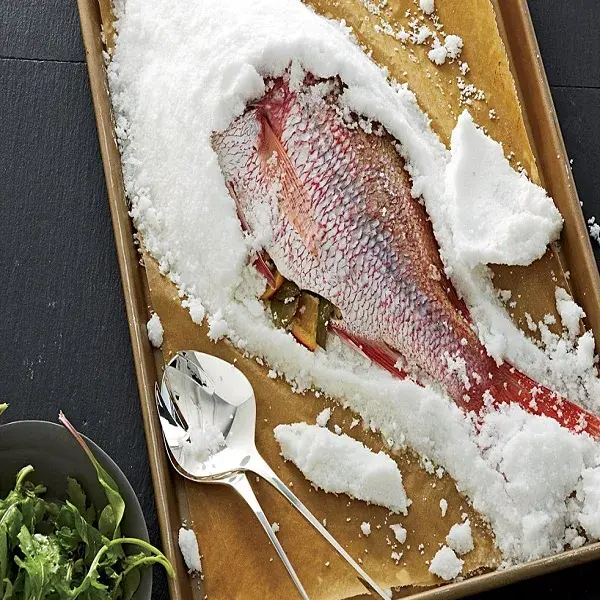
Salting or corning Salting is a process of packing layers of salt on fresh foods like meat and fish. Salting works with the principle of osmosis, this process accelerates drying by drawing out the water needed by microorganisms and making the meat or fish surface inadequate for the action of the bacteria.
Method:
* Cut and wash the fish or meat properly.
* Apply salt to the meat or fish surface. This enables the salt to penetrate and reduce the water content of the meat or fish.
* Put the fish or meat in a container and cover with a damp clothe.
For salting to work, the quantity of salt used should be more than a palatable quantity. When you want to cook the fish or meat, you can soak them in water for few hours so as to reduce the salt content. This method can store fish or meat for 24 hours.
Brine salting or Immersion in brine Brine is another name for a salt solution. This method can keep meat and fish fresh for up to nine months. A glass container and several cups of fine-grained salt is needed for this process.
Method;
*Cut and wash the fish or meat.
* Roll the fish or meat in salt and arrange them layered in each other in the glass container.
* Salt should be put on the bottom of the container and salt should be added after each layer of fish or meat. The salt will draw out water from the meat or fish and create a brine in which the food will be immersed.
* Make sure the fish or meat is submerged in the brine.
The meat or fish can be left in brine for a period of 7 days and then rinsed and repacked with fresh layers of salt. This can be done continously for a period of nine months.
Preservation of fresh meat or fish becomes cheaper and more accessible using this methods.



You glossed over the role of a vinegar dip when air-curing beef! When we hang silverside for biltong, soaking in brown vinegar and coarse salt for 30 mins before hanging is what stops mould. If you skip the acid in humid weather here in Jo'burg you'll just end up with spoiled meat in 48 hours.
Spot on, Lerato! Even here in dry Bloem, skipping the acid is a huge mistake. I always use 250ml Safari brown spirit vinegar mixed with 50g coarse salt per 1kg of silverside, left for exactly 45 minutes before dusting with Crown National spice. Gives it that properly lekker flavor and keeps it completely mould-free.
my grandma used to heavy-salt and smoke catfish over open woodfire for days back in Enugu to keep it shelf stable without fridge. Now here in Toronto I try doing low temp oven drying for mackerel because the smoke alarm in my building is way too sensitive sha. You didn't mention using a coarse salt rub before air-drying, that step is so crucial so flies don't get to the fresh flesh.
I was reading about dry-salting oily fish like mackerel, but what is the safe ambient temperature for this? My kitchen in the UK drops to around 14°C in autumn and I'm wondering if cold air slows down the salt absorption or if it actually helps stop the fats going rancid while curing.