We use essential cookies to make the site work. We would also like to set analytics cookies and advertising cookies, but only if you agree. You can choose each one separately. Read our cookie policy
Loading
Recipes
Browse the archive by country, course and cooking time.
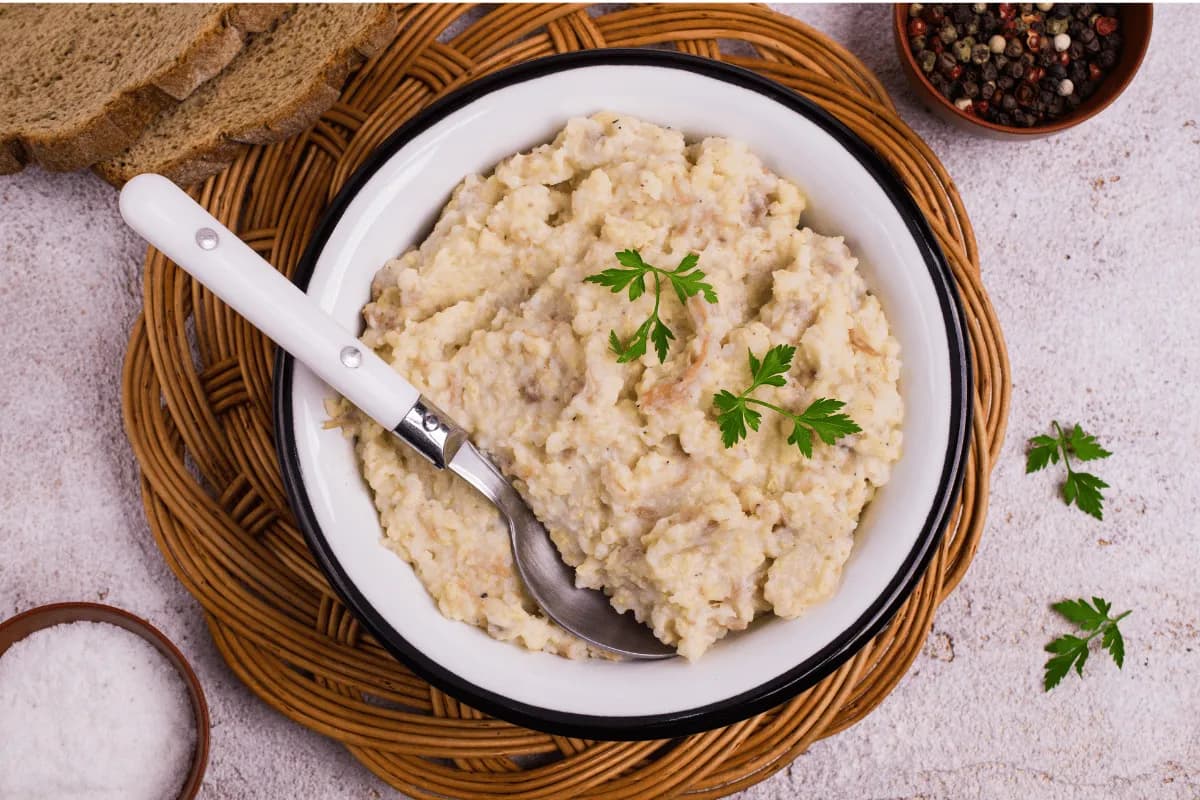
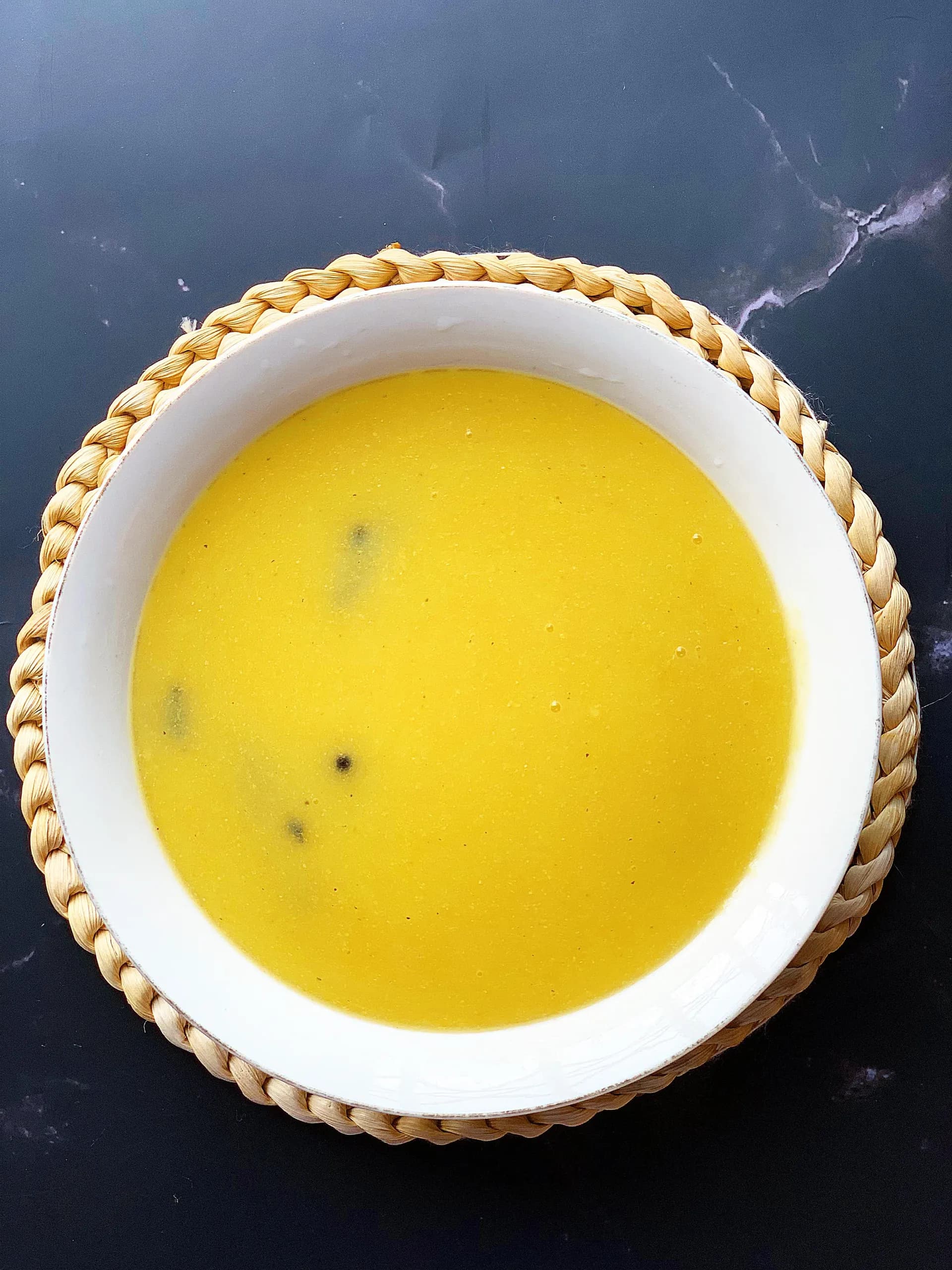
Millet porridge is one of the oldest breakfasts on the continent. Millet is an ancient cereal grain eaten across Africa and Asia for thousands of years, and pearl millet in particular is a staple across the Sahel, where it grows in conditions that defeat most other grains.
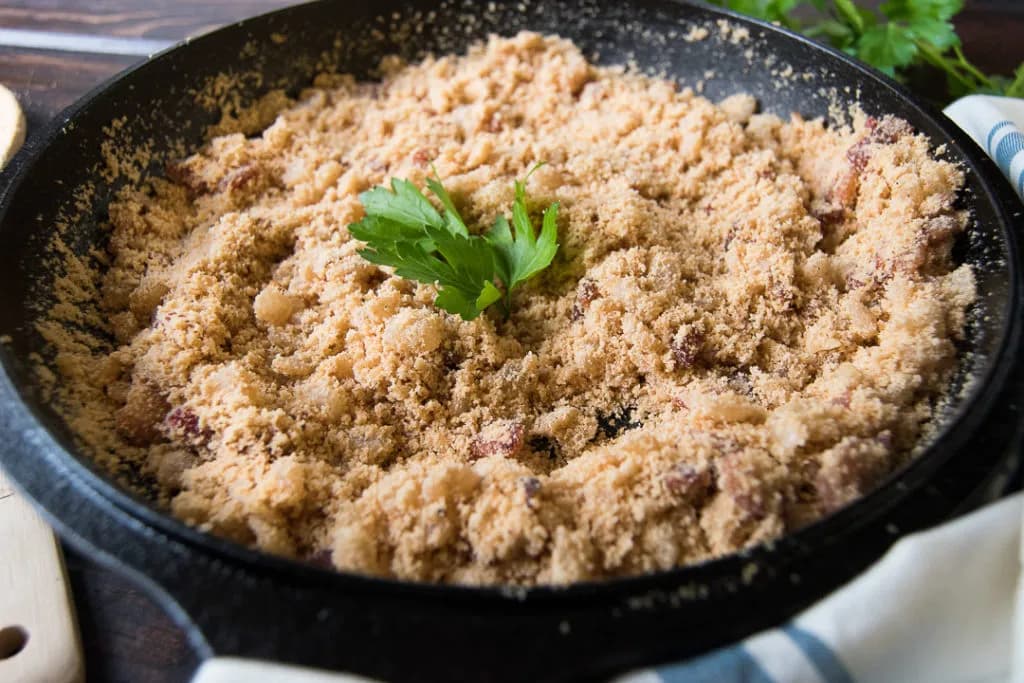
Porridges made from it appear under many names. Fura in northern Nigeria and Niger is millet worked into balls and mixed with fermented milk. Ogi and koko are made from fermented millet or maize across West Africa. Uji in East Africa is often millet based. This particular recipe is a plainer, contemporary preparation, rinsed and simmered rather than fermented, and its flavour ideas run to cinnamon apple and pumpkin spice, which places it in a Western health food register rather than a West African one.
The grain itself does the work. Millet has a mild, faintly sweet and nutty flavour, cooks to a texture close to cream of wheat, and turns genuinely creamy when blended after cooking. It carries more protein and fibre than most grains and no gluten at all, which is why it has found a second audience outside the regions that have always eaten it. No country is claimed here, because the porridge as written belongs to none in particular.
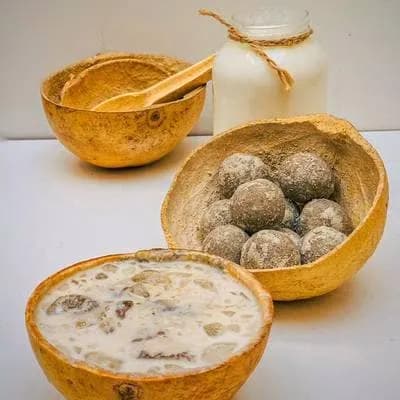
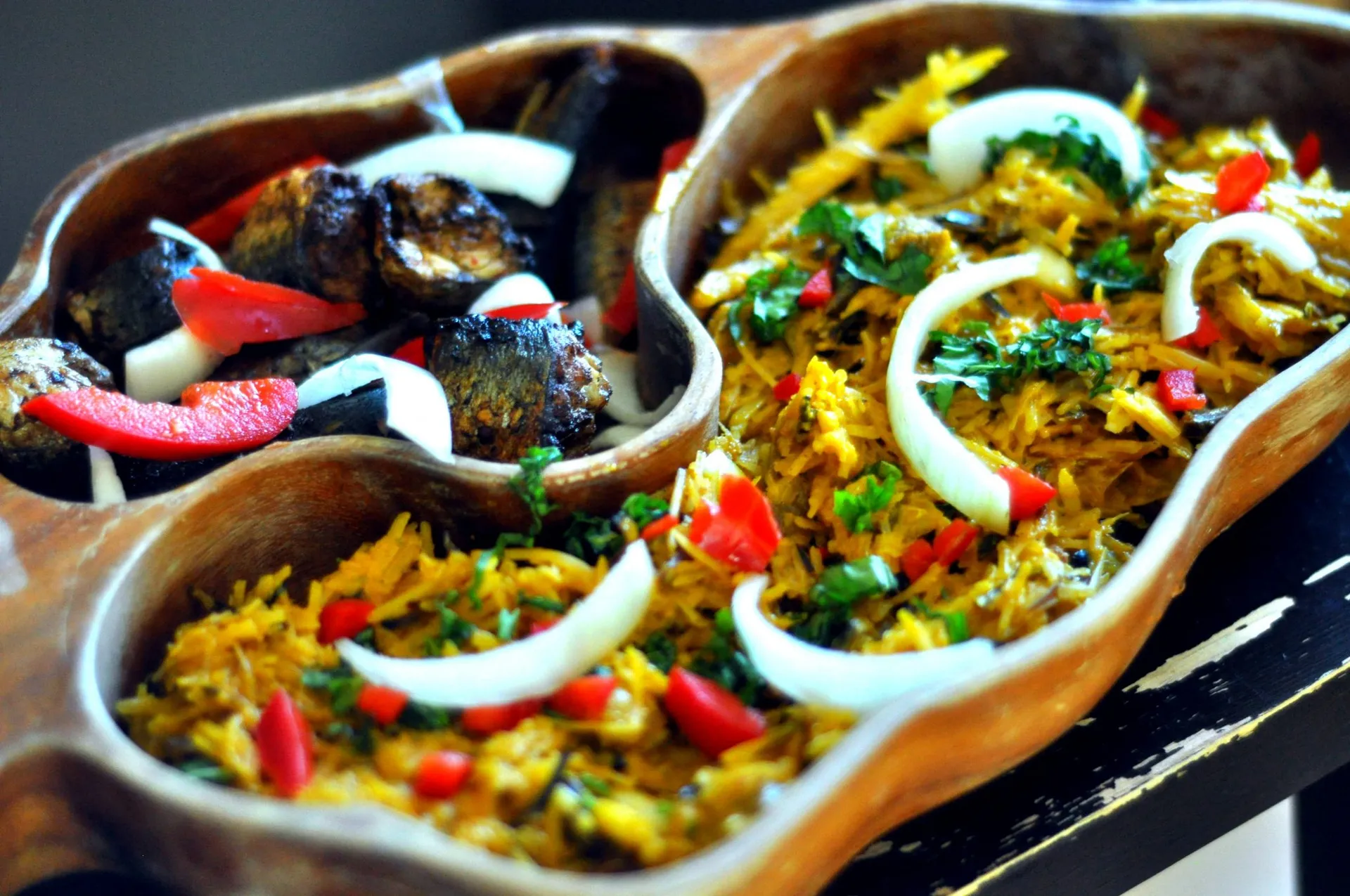
African salad is the Igbo dish of abacha and ugba, and it is a salad only in the loosest sense. Abacha is cassava that has been cooked, shredded on a special grater, soaked overnight, rinsed and dried in the sun. Ugba is fermented oil bean seed, cooked for hours, sliced, rinsed and left to ferment. Neither is cooked when the dish is assembled.
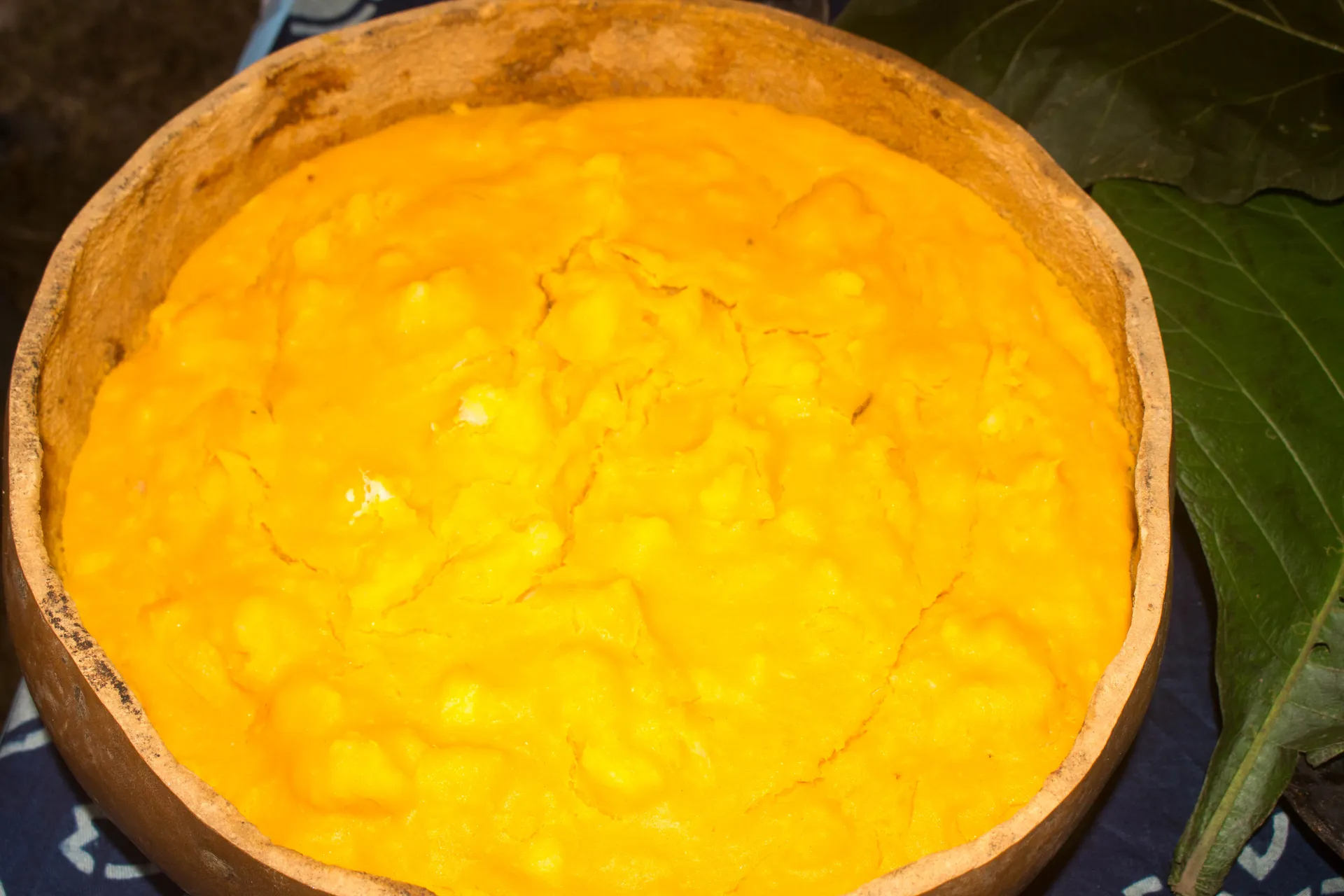
That is the striking thing about it: almost the entire preparation happens off the stove. Palm oil is turned into a thick yellow paste by working it with potash solution, and everything else is folded into that paste in sequence. The order matters, and Igbo cooks are firm about it, because the components will not distribute evenly if they all go in together.
It belongs to ceremony. At an Igbo wedding, abacha is reserved for the important guests, and it is served with chilled palm wine, which is the pairing anyone from the region will name. Despite being filling enough to be a meal, it is treated as a snack rather than a main course. It can be served cold or warmed briefly, and the choice between the two is a matter of household preference rather than correctness.
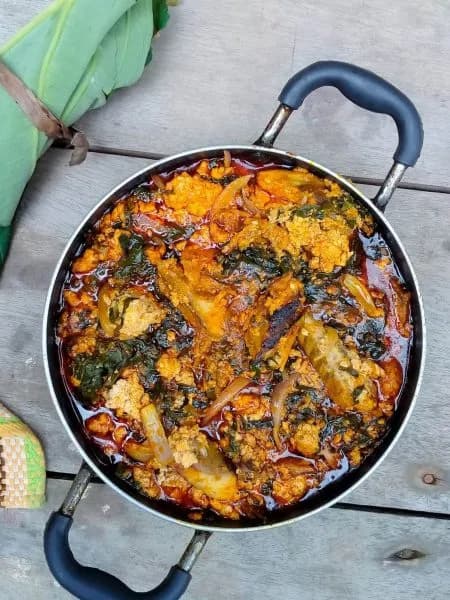
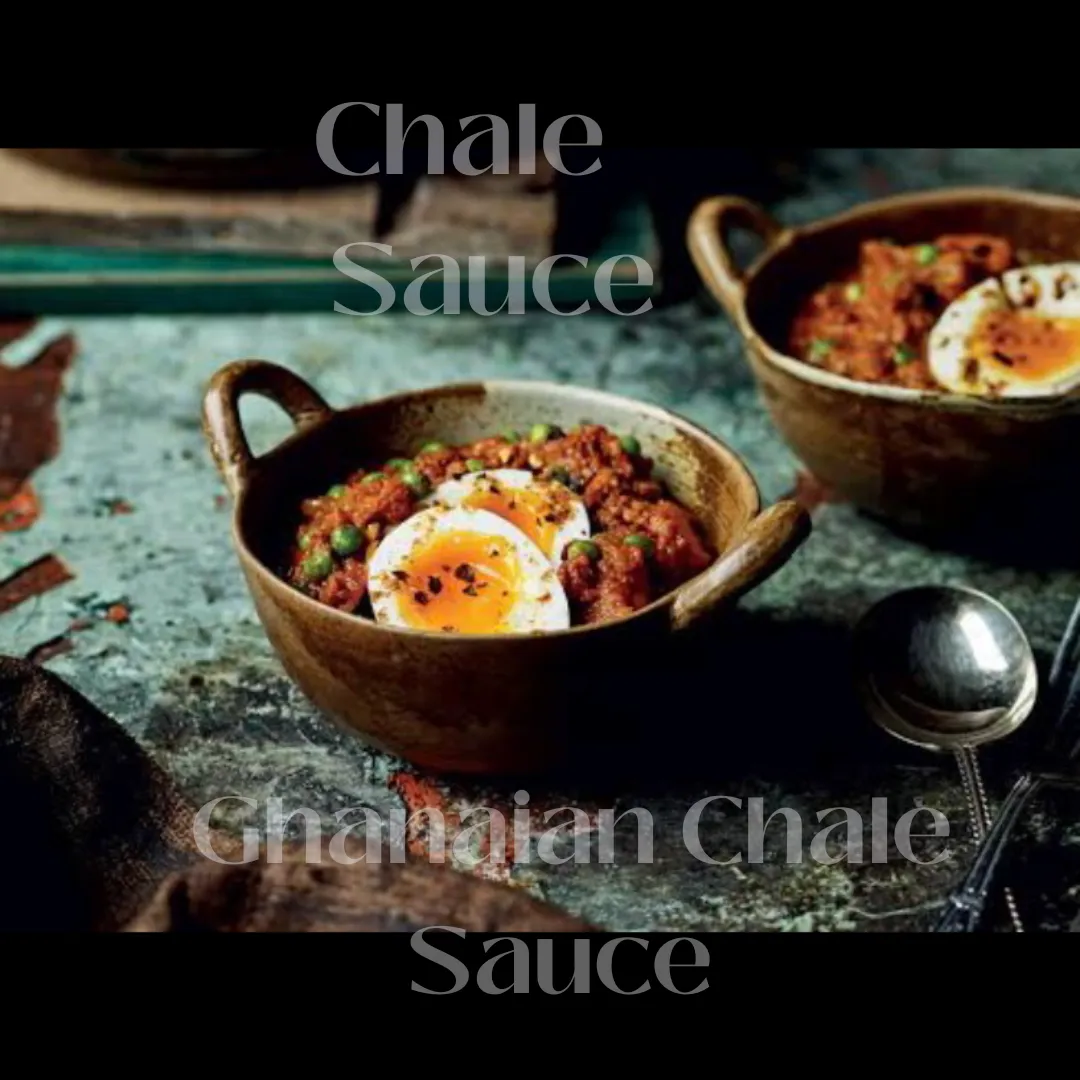
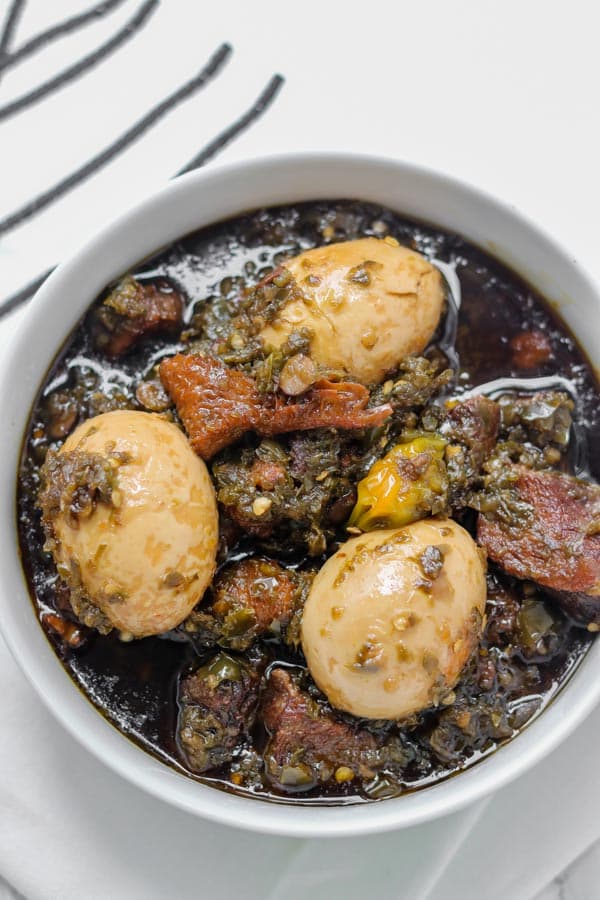
Ayamase is the green pepper stew of southwestern Nigeria, known almost as widely by two other names, ofada sauce, after the rice it is served with, and designer stew, which is what Lagos took to calling it.
It is defined by two things that would be faults in almost any other stew. The peppers are green rather than red, which gives the sauce its unusual dark olive colour. And the palm oil is deliberately bleached, heated until it stops smoking and loses its red pigment, which strips out the characteristic palm flavour and leaves something nuttier and smokier behind. That bleaching step is the whole signature of the dish, and a version made with unbleached oil is a different sauce.
Around that sit iru, the fermented locust bean that carries the deep savoury note, assorted meats including offal, and boiled eggs, which are close to obligatory.
The name points to a person. Ayamase is traced to Ikenne-Remo in Ogun State and to a woman remembered as Mrs Felicia, Iya Mase, the wife of Mase, who is credited with the dish. It travelled from there into Lagos party food, where its reputation as something special was made.
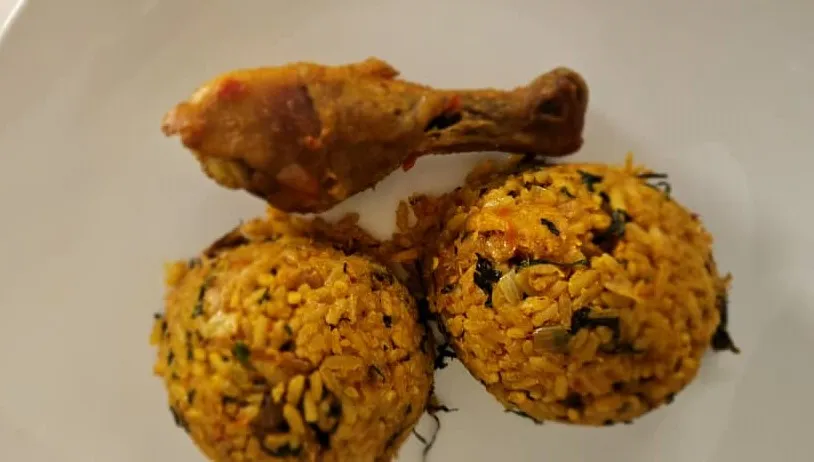
It is served with ofada rice, the short, unpolished local rice whose earthy flavour is the intended partner.
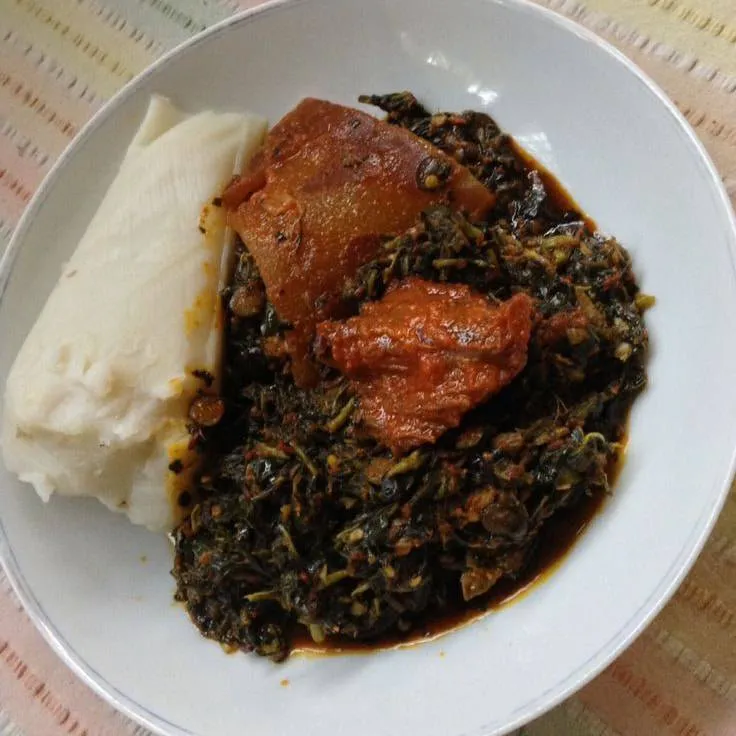
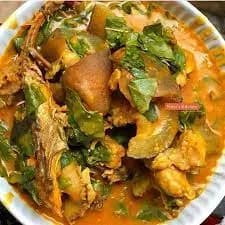
Oha soup is an Igbo soup from southeastern Nigeria, built on the leaves of Pterocarpus mildbraedii, an African evergreen tree. The leaves are seasonal, which makes the soup an occasion rather than an everyday dish, and there is no substitute that reproduces its flavour.
The leaves are shredded by hand, never cut with a knife. The reason given is that a blade turns the soup bitter, and whether or not that holds chemically, the practice is observed universally and is one of the more widely known food rules in Igbo cooking. It is worth following on its own terms.
Thickening is where families diverge. Cocoyam, pounded smooth after boiling, is the standard, though achi and ofor are both used and give slightly different bodies. The oil divides along geography: Anambra households use akwu, raw palm kernel oil, while Imo households use ordinary palm oil, and each considers its own version correct. Uziza leaves go in alongside the oha for a peppery counterpoint, and ogiri igbo, the fermented seasoning paste, supplies the deep savoury note the soup is built around.
Dietary tags are provided by contributors as a guide, not verified by AFN, and they depend on the products you buy. If you have a serious allergy, check every ingredient yourself. Cooking, allergies and your own judgement