We use essential cookies to make the site work. We would also like to set analytics cookies and advertising cookies, but only if you agree. You can choose each one separately. Read our cookie policy
Loading
Recipes
Browse the archive by country, course and cooking time.
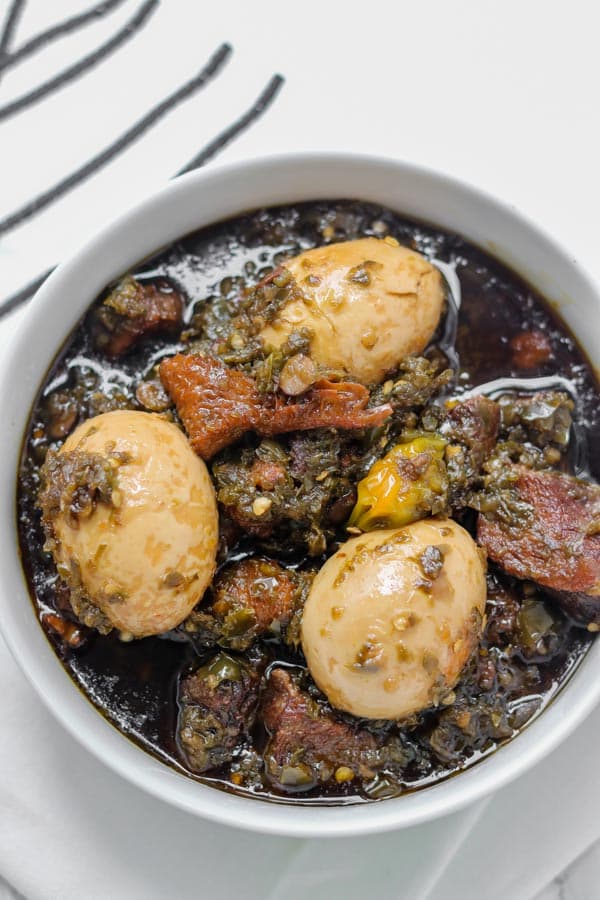
Ayamase is the green pepper stew of southwestern Nigeria, known almost as widely by two other names, ofada sauce, after the rice it is served with, and designer stew, which is what Lagos took to calling it.
It is defined by two things that would be faults in almost any other stew. The peppers are green rather than red, which gives the sauce its unusual dark olive colour. And the palm oil is deliberately bleached, heated until it stops smoking and loses its red pigment, which strips out the characteristic palm flavour and leaves something nuttier and smokier behind. That bleaching step is the whole signature of the dish, and a version made with unbleached oil is a different sauce.
Around that sit iru, the fermented locust bean that carries the deep savoury note, assorted meats including offal, and boiled eggs, which are close to obligatory.
The name points to a person. Ayamase is traced to Ikenne-Remo in Ogun State and to a woman remembered as Mrs Felicia, Iya Mase, the wife of Mase, who is credited with the dish. It travelled from there into Lagos party food, where its reputation as something special was made.
It is served with ofada rice, the short, unpolished local rice whose earthy flavour is the intended partner.
Lemon juice, sugar syrup and water, with raisins left in overnight to start a light fermentation and give the drink a natural fizz. No country is claimed.
The raisins are the interesting part, and the source rather buries them. Dried fruit carries wild yeasts on its skin; left in a sweet liquid at room temperature, those yeasts begin converting sugar into carbon dioxide, which is what produces the fizz. This is the same principle behind ginger beer plants and a great many traditional home-fermented drinks, and it is why the method says to leave it overnight rather than serving immediately.
Two consequences follow, and neither is in the source. Fermentation produces a small amount of alcohol alongside the carbon dioxide, usually well under one per cent for an overnight ferment, but not zero. And a fermenting drink in a sealed container builds pressure, so it should be left loosely covered rather than tightly capped.
The source's history is muddled. It dates lemonade to Paris around 1630, which refers specifically to the French *limonade* sold by the Compagnie des Limonadiers; sweetened lemon drinks are considerably older and are documented in medieval Egypt.
No quantities are given at all; those below are working proportions.
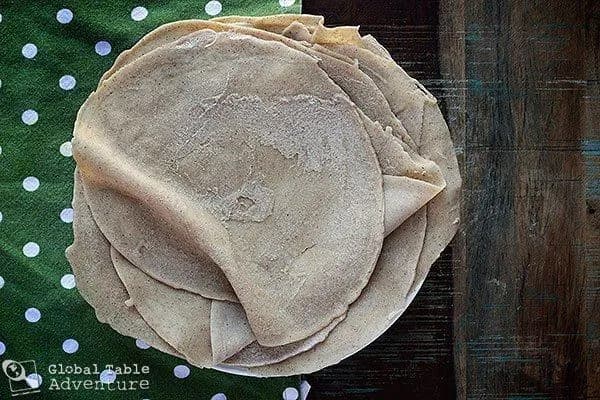
Kisra, also spelled kissra, is the fermented flatbread of Sudan, South Sudan and Chad, made from sorghum flour left to ferment overnight and spread paper thin on a hot griddle. It is a staple rather than an accompaniment, and in Sudan its production has become a home based industry supplying households that no longer make it themselves.
It comes in two forms. Kisra rhaheefa is the thin baked sheet, closely comparable to Ethiopian injera in appearance and in the lactic fermentation that produces it, though made from sorghum rather than teff. Kisra aseeda, also called aceda, is the same base cooked into a thick porridge instead. The two are eaten in different contexts and both are called kisra.
The fermentation is what determines quality, and Sudanese cooks judge it by several variables at once: the sorghum genotype, the age and strength of the starter, the temperature and the time. Lactic acid bacteria and yeast do the work, producing the acids and alcohols that give kisra its sour flavour and its aroma. A weak or young starter gives a bland bread, which is why starters are kept going and shared between households.
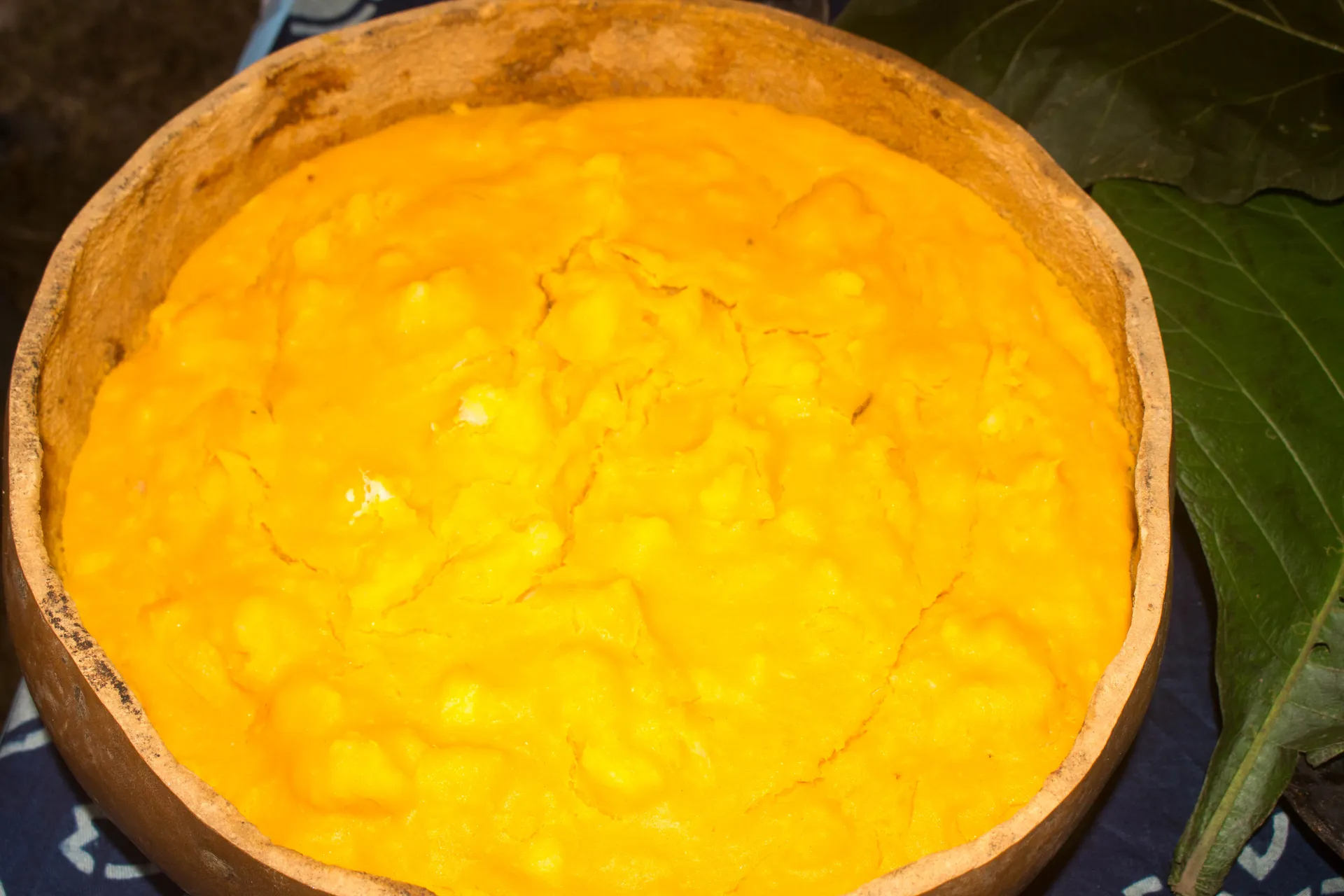
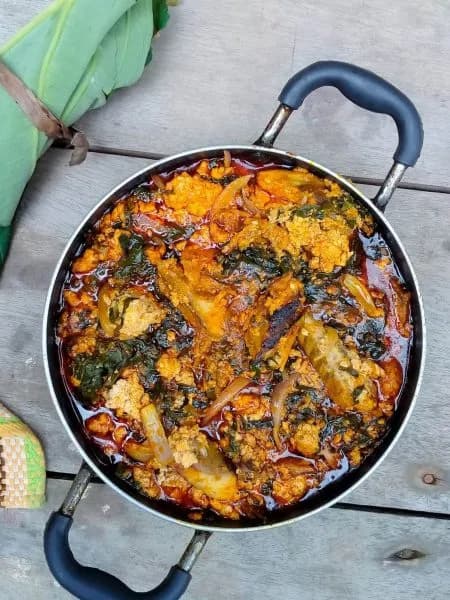
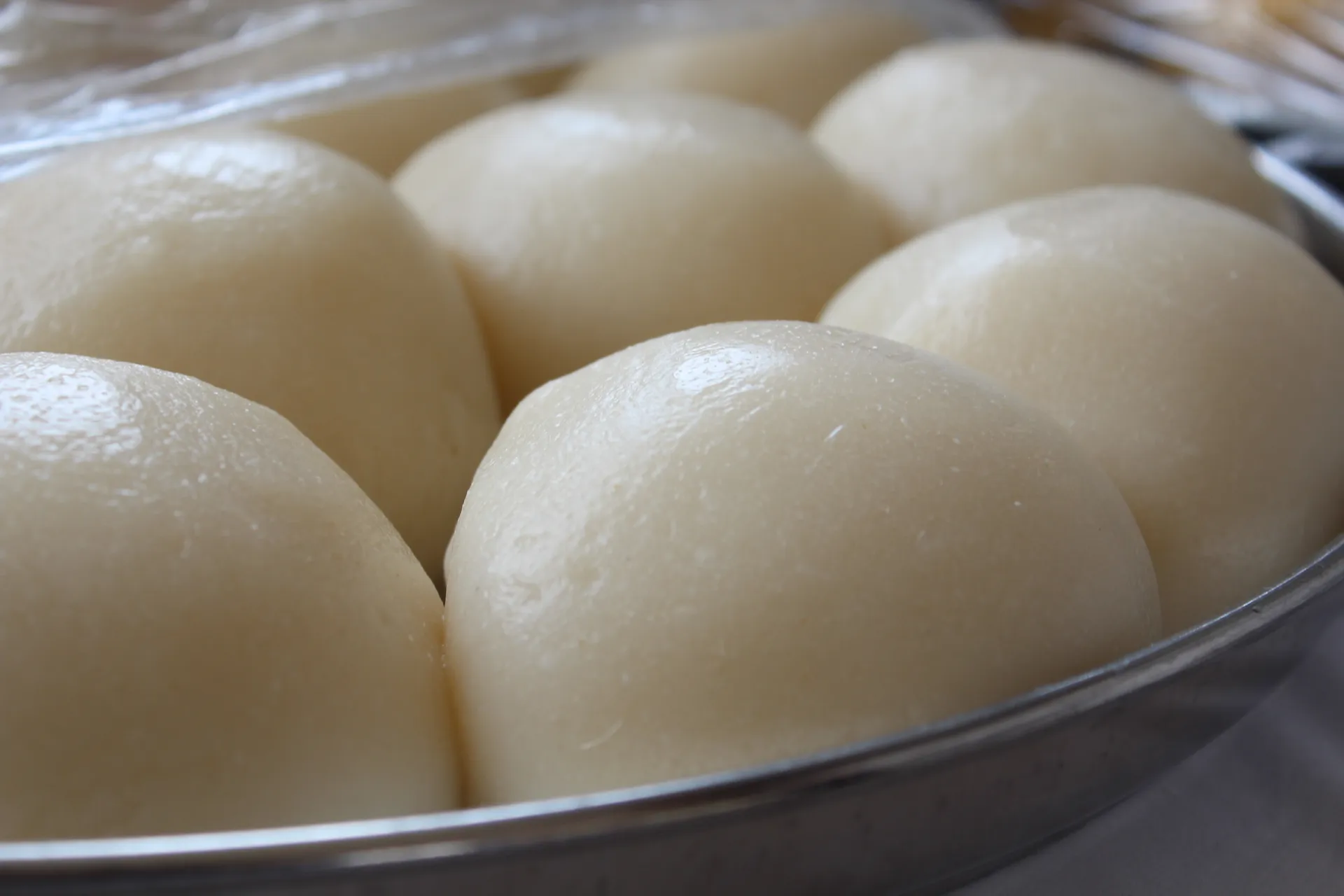
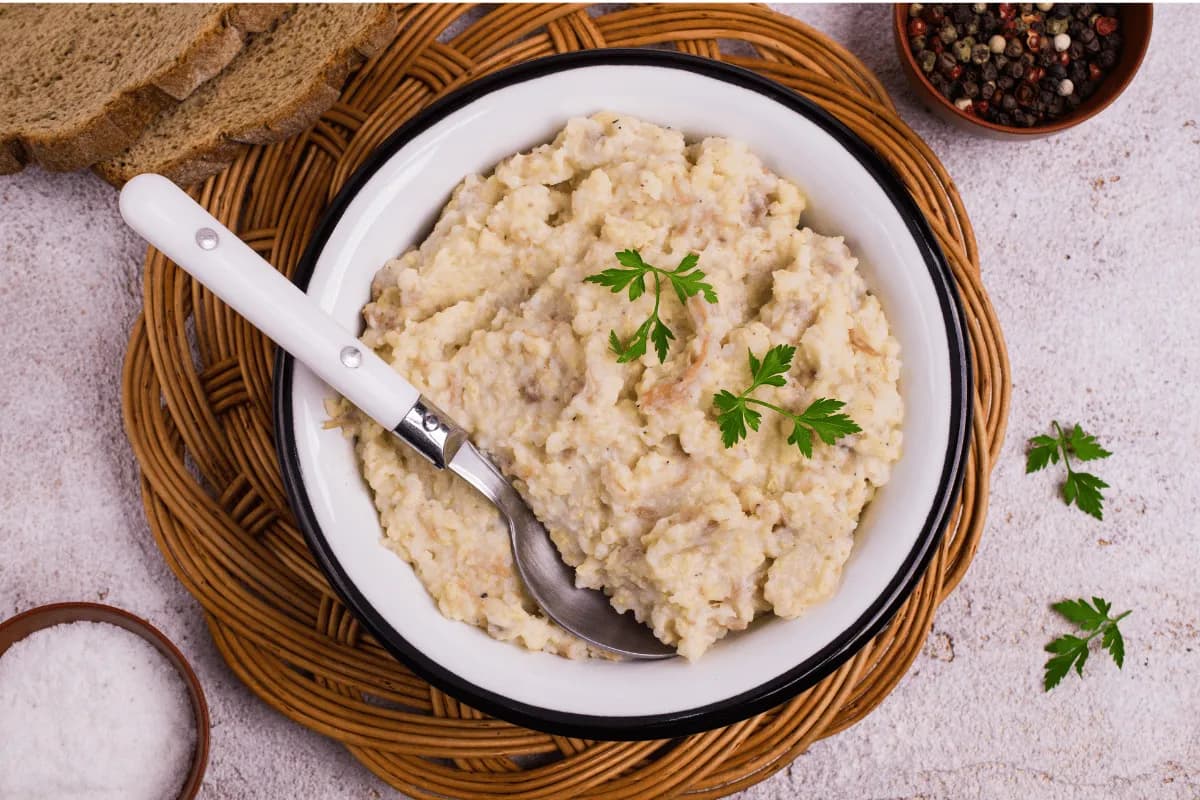
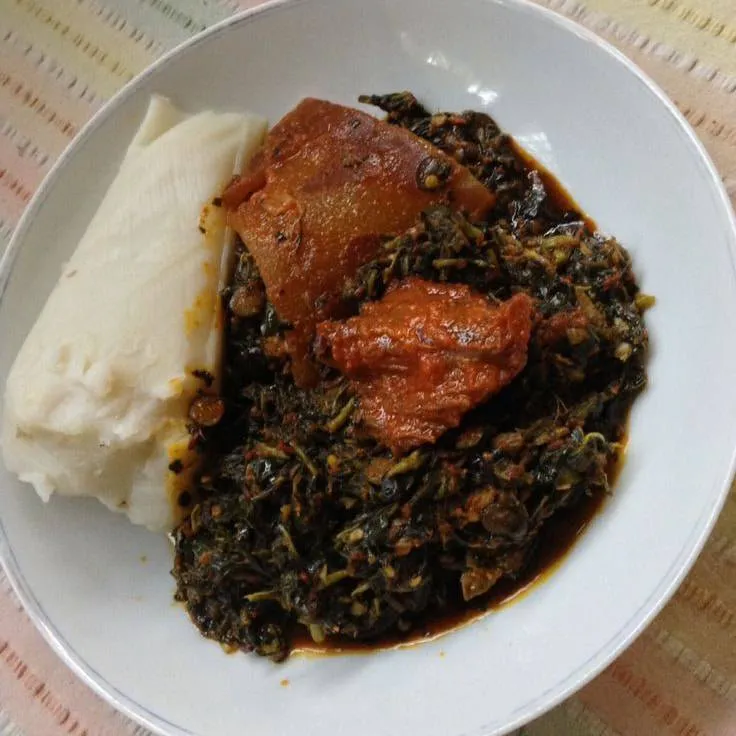
Eko and efo riro is a Yoruba pairing, and each half is a substantial dish in its own right. Eko, also called agidi, is a firm pudding set from fermented corn starch, sliced and eaten cold or at room temperature. Efo riro is the Yoruba vegetable stew, built on palm oil, blended pepper, locust beans and leafy greens with assorted meat and smoked fish through it.
The contrast is the point. Eko is cool, firm and slightly sour from the fermentation, with a clean corn flavour and almost nothing else going on. Efo riro is hot, oily, salty and densely flavoured. Putting them together works in the way that plain rice and a heavy curry work, and neither is quite right without the other.
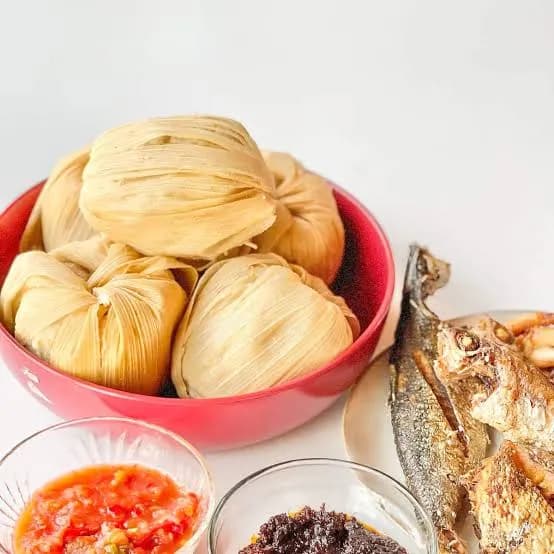
Eko is traditionally set in wrapped leaves, which give it its characteristic shape and a faint aroma the greased mould does not reproduce. It is sold that way across southwestern Nigeria, most often alongside akara or moin moin at breakfast, though the pairing with efo riro makes it an evening meal. Riro means stirred, and the name describes the technique: the vegetables are stirred into the finished stew base rather than cooked in it, so they hold their texture.
Dietary tags are provided by contributors as a guide, not verified by AFN, and they depend on the products you buy. If you have a serious allergy, check every ingredient yourself. Cooking, allergies and your own judgement